California Restaurant Labor Laws | A Step-By-Step Guide

Save Time and Money With Push

12 hrs+
Time savings per week
3%
Savings on labor costs
10 min
One-click payroll processing
Trusted by 1000s of Restaurants








Manage Your Team
- Manage all employee information in a single platform
- Complete tax filings, new hire reporting, and payroll setup
- Replace manual spreadsheets, filing, and paperwork
- Track document expirations, including licenses and work permits
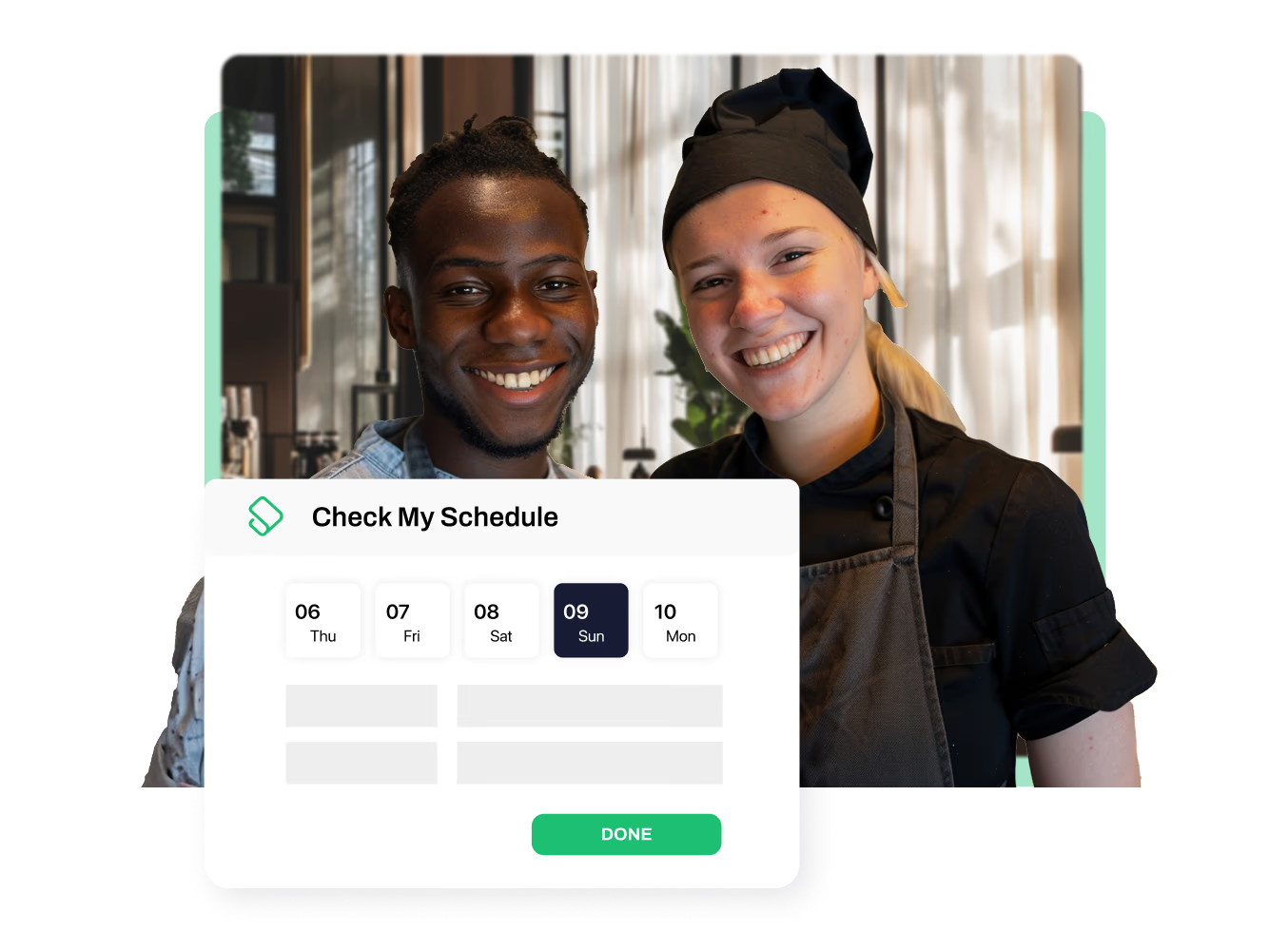
Schedule in Seconds
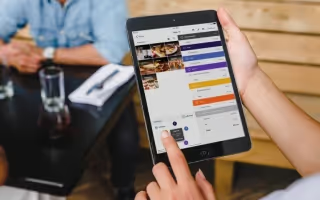
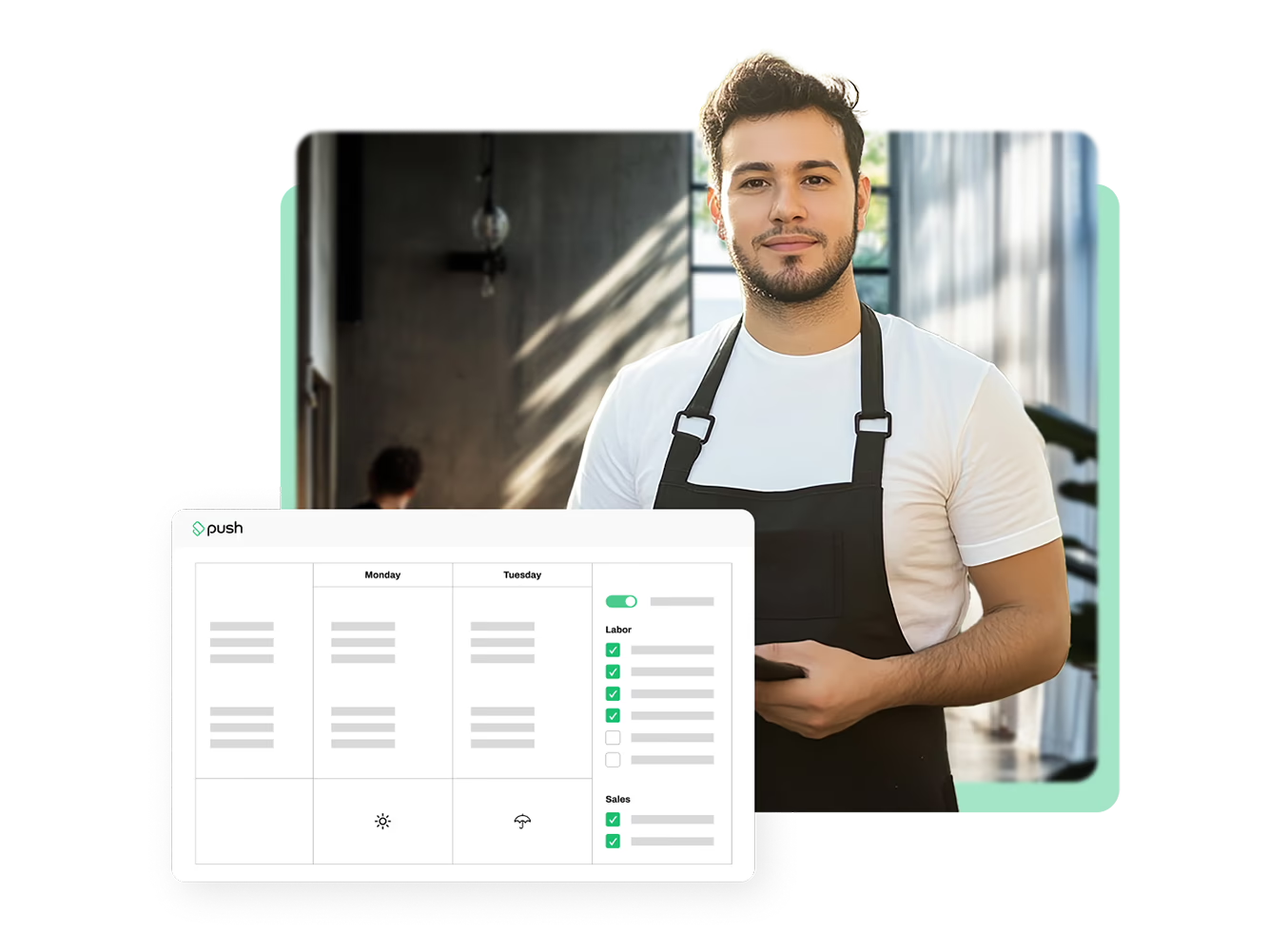
- Conveniently update schedules anywhere, anytime using the mobile app
- Auto-generate schedules with custom rules for easy planning
- Streamline hours directly into payroll for one-click processing
- Manage shift swaps, releases, and time-off requests from a single view


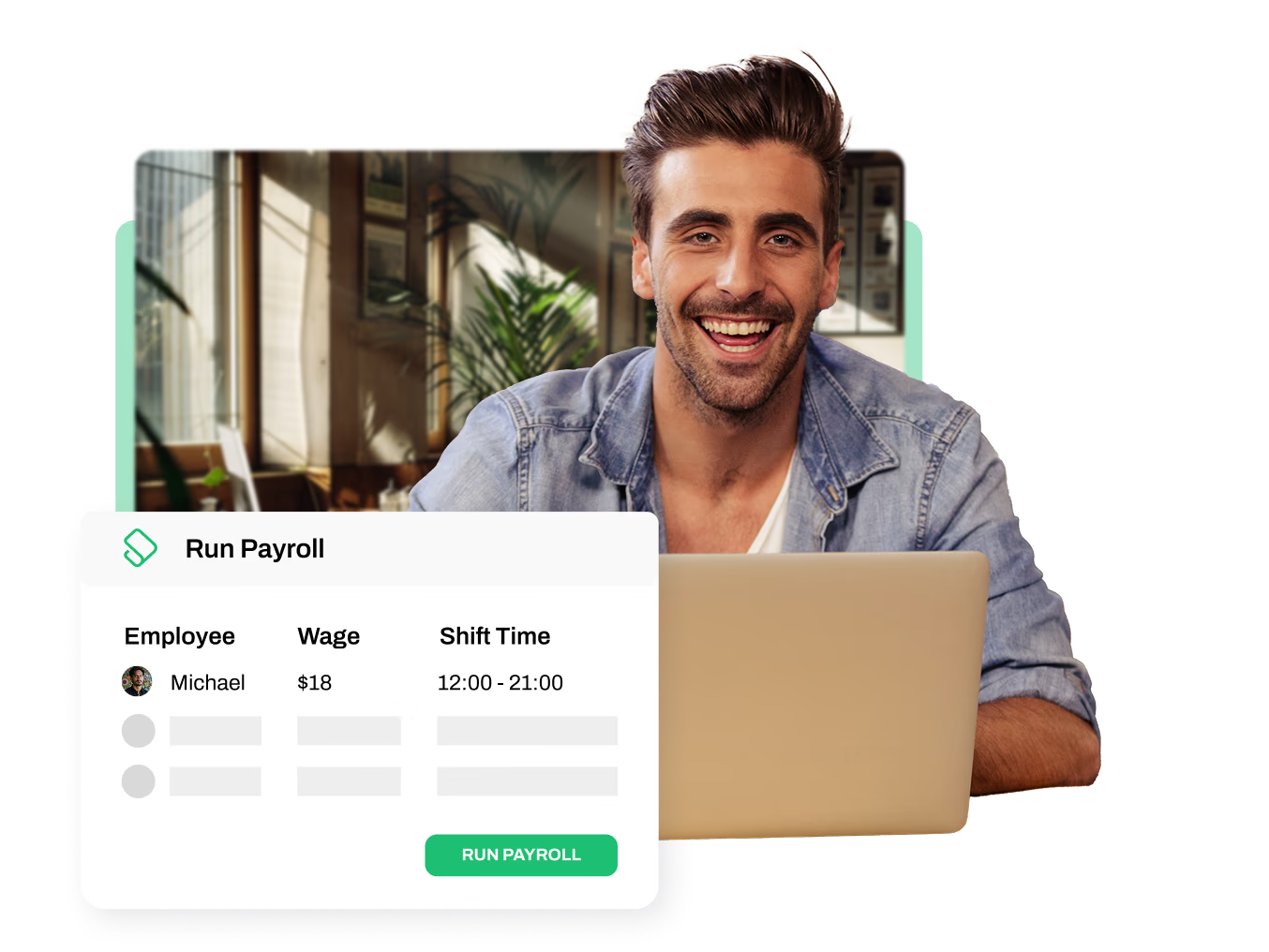
One-Click Payroll
- Process payroll in under 10 minutes
- Eliminate manual payroll calculations
- Save thousands with accurate employee payments
- Automate hourly pay, holiday pay, and tax calculations
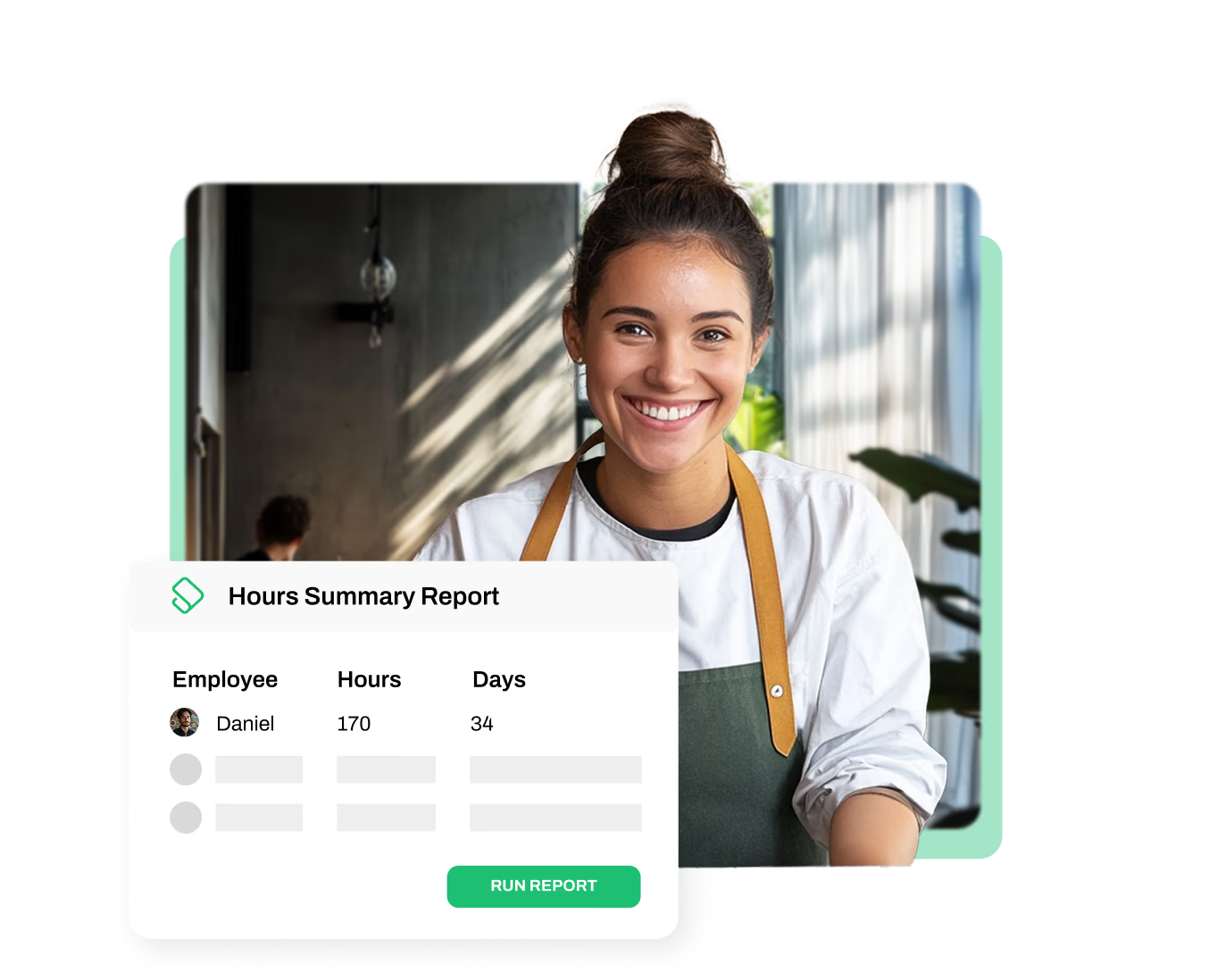
Track Hours Like Clockwork
- Send employee labor tracking data straight to payroll
- Save thousands by automating clock-in rules and tracking
- Prevent buddy punching with facial recognition and photo capture on mobile or tablet
- Flag and alert when employees work outside their scheduled shifts, including overtime

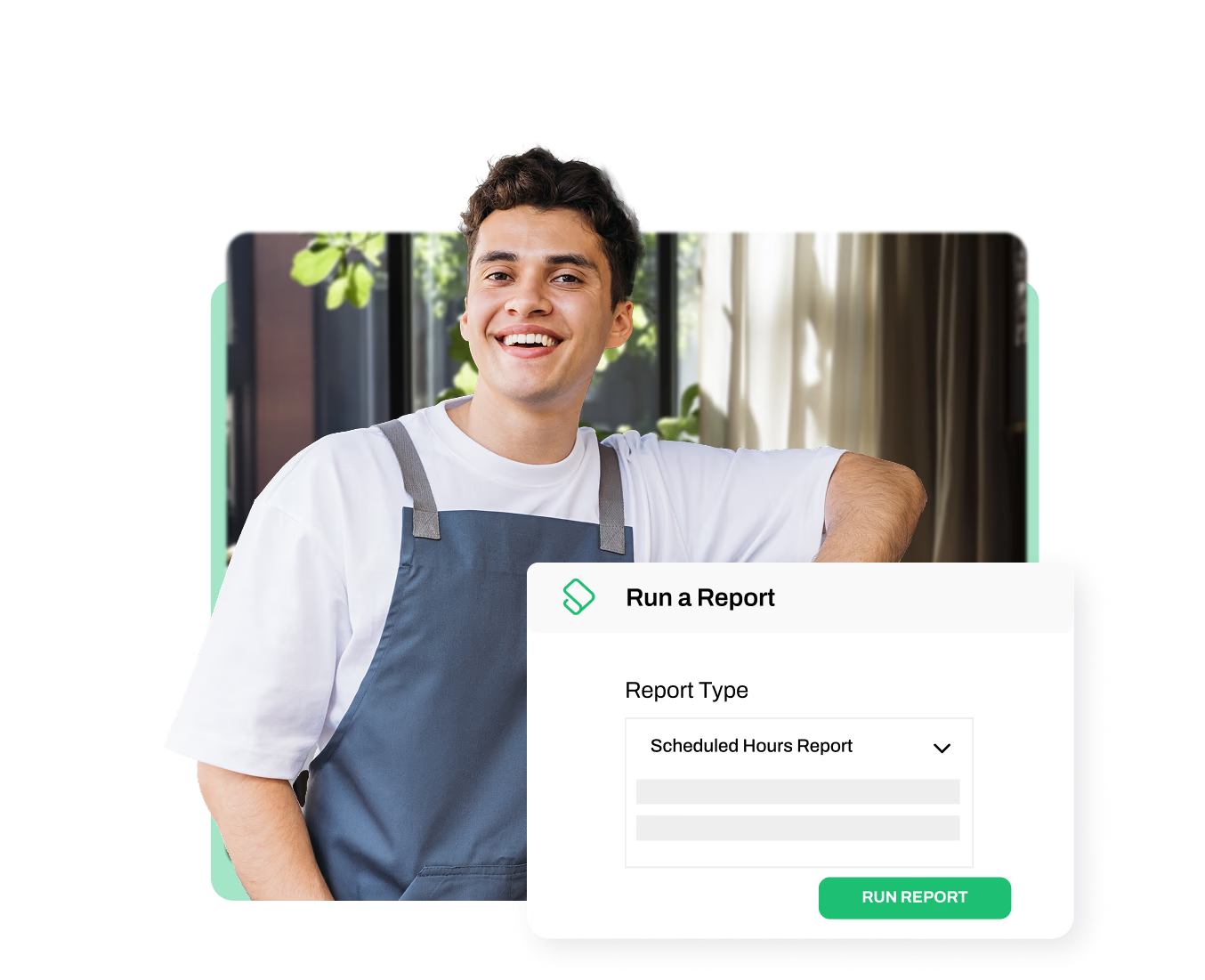
Customize Your Reports
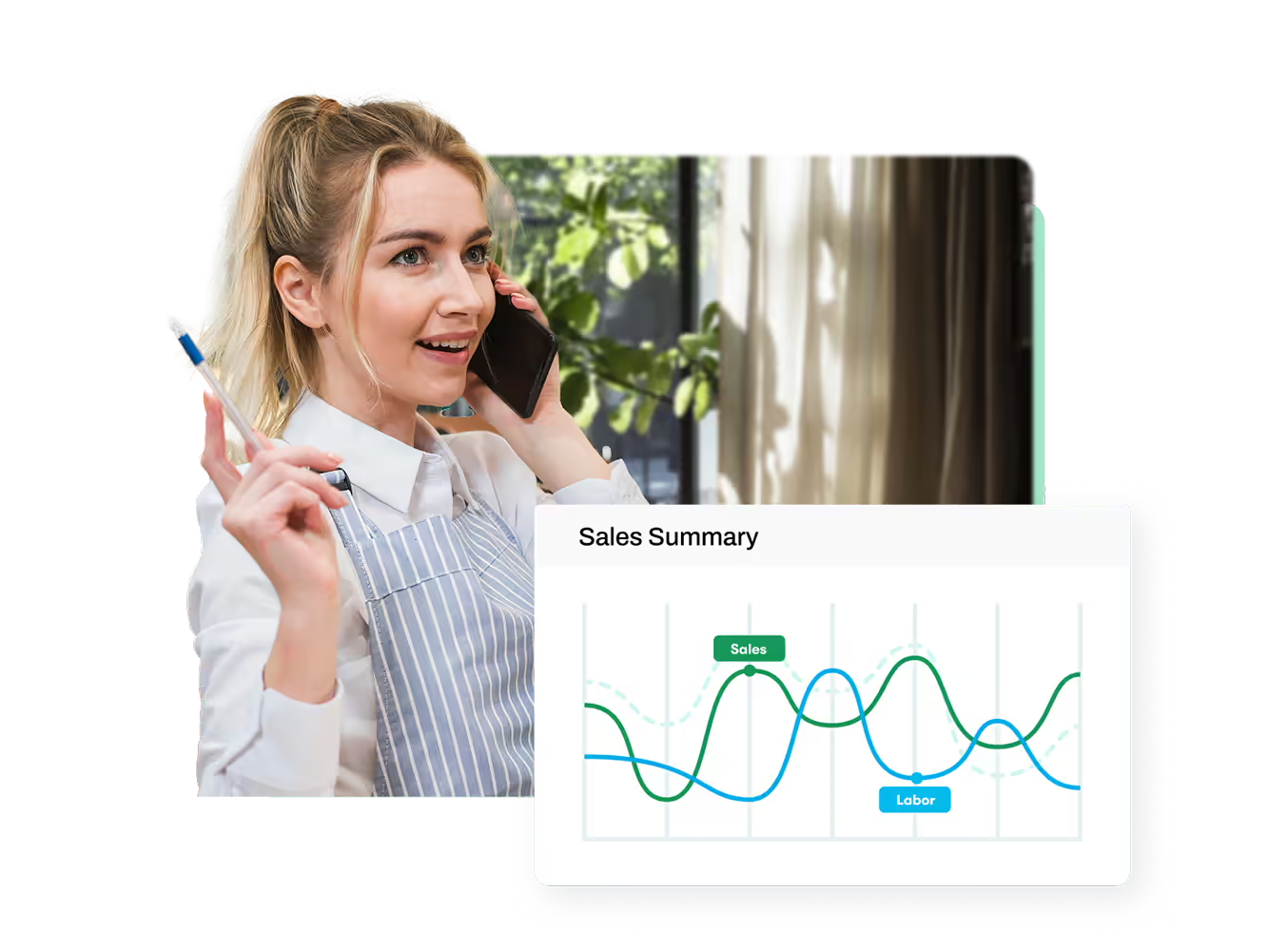
- View dashboards and metrics instantly with the click of a button
- Get real-time, customized KPI alerts when labor, sales, or other metrics exceed set thresholds
- Access your organization’s performance data in one comprehensive dashboard
- Integrate with POS systems for up-to-date labor and sales reports




Restaurant365
- Automatically send labor data from Push Operations to Restaurant365
- Employee jobs, clocks, and salaries sync straight into Restaurant365 for accurate bookkeeping
- Save time and reduce errors from manual entry with Push as the main source of truth for labor costs within Restaurant365

Maitre'D
- Push imports live and historical sales data at a granular level from Maitre'D to enhance labor cost management and operational efficiency.
- Maitre'D data integrates into Push, empowering precise scheduling, cost analysis, and decision-making.
- Push Scheduler displays sales insights, labor costs, and labor forecasts leveraging Maitre'D's historical sales data.
- Heat maps provide visuals of sales trends by time of day, optimizing staffing and operational strategy.
- Enterprise Dashboards consolidate sales and labor data across locations, enabling accurate forecasting and comparisons.

EightSix Network
- EightSix Network helps Push clients by connecting them with a pool of qualified candidates, streamlining the hiring process and improving accessibility to top talent.
- Seamlessly post jobs to EightSix Network directly from Push, with automated nightly syncs that keep your listings up to date.
- Through its vast network, EightSix Network provides Push clients with valuable industry insights and access to key connections for business growth.
- EightSix Network helps Push Operations clients enhance their employer brand, attracting and retaining high-performing employees with tailored recruitment strategies.

Deliverect
- Streamlined Online Order Management and Workforce Scheduling: Deliverect consolidates online orders from various delivery platforms into a single system, ensuring accurate order processing. By utilizing Deliverect and Push, restaurants can efficiently manage online orders and optimize staff scheduling, leading to improved operational efficiency.
- Enhanced Data-Driven Decision Making: Deliverect provides real-time analytics on online sales and order trends, while Push Operations offers insights into labor costs and employee performance. Combining these data sources enables restaurants to make informed decisions on menu offerings, staffing levels, and promotional strategies, ultimately driving profitability.
- Deliverect supports multi-location businesses by providing a centralized system that simplifies managing multiple sites and delivery channels.

Incentivio
- Enhance Customer Experiences: Incentivio offers Push clients guest engagement tools.
- Data-Driven Decision Making: Both Push and Incentivio offer robust analytics—Push Operations focuses on labor data, and Incentivio on guest behavior. Combining these insights allows restaurants to make informed decisions on staffing, menu offerings, and marketing strategies, leading to improved profitability.
- Incentivio uses AI to automate upselling recommendations during checkout, personalizing the guest experience and boosting revenue.
Get a Taste of Push






California Restaurant Labor Laws | A Step-By-Step Guide
Table of contents
While California boasts a thriving restaurant industry, it’s also known for having some of the most stringent labor laws in the country. As a business owner, keeping up with these extensive labor regulations can be a challenge, but they serve an important purpose: protecting both employers and employees.
Ensure you stay compliant with everything from minimum wage and overtime to meal breaks and tip pooling with this step-by-step guide.
Understanding California Labor Lawsuits and Penalties
California’s robust labor laws come with hefty consequences for violators. Just this past January, a four-location Manteca restaurant was ordered to pay back over $824,000 in wages and damages after failing to pay employee overtime. Despite trying your best to stay compliant as an employer, accidental violations can still happen.
Over the past few years, PAGA lawsuits have shown no signs of slowing down. Here are some key statistics to consider:
- 5,117 PAGA lawsuits were filed in 2023. This is over double the amount filed in 2017, which was 2,555.
- The most common possible reasons for these PAGA lawsuits are related to meal and rest break regulations and the calculation of flat sum bonuses.
- PAGA court cases average a total settlement amount of $1,118,777 with an average payment of $1,264 to employees.
Whether intentional or accidental, these violations can trigger penalties if an employee files a claim. The Labor Enforcement Task Force (LETF) levies fines based on the infraction:
- Minimum Wage/Overtime Violations: Full wages owed, plus penalties.
- Rest/Meal Break Violations: Full wages owed, plus penalties.
- Missing Pay Stubs: $250 per employee, per pay period.
- Employee Misclassification (Independent Contractor): $5,000-$25,000 per violation, plus unpaid payroll taxes.
- Health & Safety Violations: Up to $25,000 per violation, with potential equipment shutdowns.
- Worker Retaliation: Back wages, fines up to $10,000 per employee, job reinstatement.
- Missing Workers' Compensation Insurance: Fines of $1,500+ per employee, work stoppage until coverage is secured.
The potential consequences extend beyond fines, including lawsuits and even jail time – highlighting the importance of proactive compliance. Staying up-to-date on labor laws prevents costly backtracking and legal headaches. By prioritizing proactive measures, you can navigate California's restaurant scene with confidence and ensure a positive environment for both your staff and your business.
Payroll and Tip Pooling
As of January 1, 2024, all employers in California, including restaurants, must pay a minimum wage of $16.00 per hour, while fast food workers must be paid at least $20.00 per hour starting April 1, 2024. All California workers must be paid the full state minimum wage, regardless of tips.
Tip Pooling and Eligibility
California law protects employee tips. Section 351 of the California Labor Code states that "every gratuity is hereby declared to be the sole property of the employee or employees to whom it was paid, given, or left for." While tip pooling isn't explicitly addressed, it's generally considered legal as long as the rules are fair and reasonable. Employees who directly interact with customers ("direct table service") or contribute to the overall guest experience ("chain of service") are typically eligible for tip pooling. Management is typically excluded from tip pooling, even if they occasionally serve tables or contribute to the service chain. Failing to follow these fair distribution principles could be a violation of Labor Code 351, considered a misdemeanor, and result in fines up to $1,000 or potential jail time.
Scheduling, Split Shifts, and Overtime
In this section, we’ll cover key considerations to ensure restaurant compliance with scheduling, reporting time pay, split shift premium, and overtime. Push makes scheduling a breeze with our Smart Scheduling feature and auto-scheduler. Smart Scheduling takes into account sales vs. labor data with POS integration, holidays, and even the weather to ensure you’re efficiently staffed at any time of the day.
Reporting Time Pay
Most restaurants often face fluctuating customer volume and restaurant managers should be mindful of reporting time pay regulations when sending staff home early during slow periods. This law requires compensating employees who report for their scheduled shift but are sent home early due to insufficient notice. Essentially, if you dismiss an employee before half their shift is complete, you're obligated to pay them for half their scheduled hours. This compensation shall be no less than two hours of pay, and no more than four. While sending staff home might seem like a cost-saving measure, remember the potential reporting time pay liability.
The Split Shift Premium
Restaurants thrive on meal rushes, but the lull between them can create staffing challenges. Split shifts offer a solution for restaurant owners seeking to optimize labor costs. As defined by the California Department of Industrial Relations, a split shift is when an employee works two separate shifts interrupted by an unpaid, non-working break set by the employer.
When it comes to split shifts, the specific criteria must be met:
- Both shifts must occur on the same day.
- The break between shifts must exceed a standard meal period (30 minutes).
- This break cannot be a designated meal or rest break.
- The split schedule must benefit the employer, not solely the employee's convenience.
While split shifts can be cost-effective, employers must be aware of the mandated "split shift premium." This premium, as dictated by the Industrial Welfare Commission Wage Orders 1-15, Section 4, requires employers to pay employees one hour's worth of wages at either the state or local minimum wage, whichever is higher. There's no split shift premium obligation if the employee voluntarily takes on the extra shift.
One thing to note is that hourly rates exceeding the minimum wage can offset the split shift premium amount. The higher the employee's regular wage, the lower the premium owed. Lastly, remember that employers are legally responsible for maintaining accurate timekeeping records that reflect split shifts and any associated premiums. Push’s recordkeeping features make it easy to store and access digital employee records all in one place – no need for messy paperwork.
Overtime
Restaurants tend to operate on tight margins, and overtime costs can feel like a significant financial burden, sometimes it’s unavoidable. To ensure compliance with current regulations, here's a breakdown of California's overtime laws:
- Overtime Eligibility: Only non-exempt employees qualify for overtime pay.
- Daily Overtime: Overtime kicks in after eight hours worked in a day. You'll owe time-and-a-half for all hours between eight and twelve, and double-time for anything exceeding twelve hours.
- Weekly Overtime: Similar to daily, employees working more than 40 hours in a week receive time-and-a-half for all hours over 40.
- Seventh Day Overtime: An additional layer applies to employees who work more than six days in a row. In this scenario, the first eight hours on the seventh day qualify for time-and-a-half, with anything beyond that paid at double the regular rate.
Don’t let overtime costs creep up on you – Push’s overtime alerts keep your labor costs low and your employees happy. Each time you try to schedule an employee into overtime, you’ll get an alert, so you can proactively avoid racking up overtime pay.

Time Tracking and Rounding
Keeping accurate track of employee hours worked is essential for ensuring fair pay and compliance with California labor laws. Open communication is key, especially regarding shift start and end times and approving timesheet adjustments to minimize errors and build trust with employees.
In this section, we’ll be diving into the ins and outs of time tracking and recordkeeping, including the practice of rounding.
Rounding Rules
Tracking employee hours often involves rounding time to the nearest quarter-hour. This practice is allowed by the Fair Labor Standards Act (FLSA) as long as it's neutral (e.g., rounding down for minutes 1-7, rounding up for minutes 8-14). After all, the FLSA's regulations date back to 1938, a time when paper punch cards were the norm. Modern technology, with its minute-by-minute tracking capabilities, seems to make rounding outdated. An example of this is Push’s time tracking software which allows employees to clock in or out from their phones or a tablet using their location or facial ID recognition.
However, California law takes a stricter stance than FLSA regulations. In the July 2023 case Woodworth v. Loma Linda Univ. Med. Ctr., the California Supreme Court ruled in favor of the employee, emphasizing the need for employers to pay for "all the time" worked. The court's decision highlights California's focus on precise timekeeping, regardless of federal regulations for rounding.
Recordkeeping Requirements in California
California law mandates that employers maintain detailed employee records for a minimum of three years. This includes:
- Timekeeping Records: Tracks employee start and end times for each work period, including details on split shifts, overtime hours, and total daily hours worked.
- Payroll Records: Tracks total wages paid during each pay period.
- Meal and Rest Break Records: Tracks meal and rest breaks taken throughout each work period.
- Pay Stubs: These documents provide employees with information on the number of hours worked during the pay period, their pay rate, any overtime calculations, and deductions made from their wages.
It's important to remember that employee records must be readily accessible upon reasonable request, such as if they believe they haven’t been paid accurately or fairly. All records stored in Push are accessible at any time by the employee, fostering a culture of transparency and trust.
Meal and Rest Breaks
In a fast-paced work environment, like a restaurant, it’s easy to forget about breaks. However, breaks are crucial for staying focused and maintaining employee well-being. California recognizes this by incorporating meal and rest breaks in the state’s Labor Code 512.
Don’t let a meal time rush become an excuse for non-compliance – prioritize break schedules to let your team recharge throughout the day. With Push’s Break Roster, you won’t have to worry about break scheduling or missed breaks. Create a break schedule that balances both the needs of your employees and business all in one place.
Meal and Rest Break Rules
California's labor laws ensure employees receive well-deserved breaks. Here's a breakdown:
- Meal Breaks: These are unpaid, 30-minute breaks required for any employee working over five hours in a day. Breaks should be scheduled to prevent an employee from working more than five consecutive hours without a chance to eat. If a shift is less than six hours, the meal break can be waived with mutual consent of the employee and employer.
- Second Meal Break: Employees working over 10 hours are entitled to a second meal break before the tenth hour. This second break can be waived for shifts under 12 hours, but only if both the employer and employee agree and the first meal break was taken.
- Rest Breaks: Shorter and paid, rest breaks are 10 minutes for every four hours worked. These breaks should be uninterrupted and scheduled as close to the midpoint of the shift as possible.

Meal and Rest Break Penalties
California takes missed breaks seriously. If an employee doesn't take a mandated meal or rest break through no fault of their own, you're required to pay a penalty equal to one hour of their regular pay. The lone exception is for shifts lasting six hours or less, where both you and the employee can mutually agree to waive the meal break.
When it comes to waiving meal and rest breaks, a break waiver isn’t required, but it’s recommended. A break waiver acts as protection for both the employer and employee any time both parties agree to waive a break. Break waivers have never been easier with Push’s break waiver forms. Fill them out with a push of a button, so both you and your staff can get back to serving up success.
Mileage
California's Labor Code protects employee wallets through Section 2802. This law mandates that employers reimburse employees for "all necessary expenses incurred" as a direct result of their job duties. In simpler terms, if a task requires an employee to use their personal vehicle for anything beyond their usual commute, reimbursement is a must. For restaurants, this typically applies to delivery drivers, employees who pick up supplies, or catering staff. Remember, failing to reimburse these work-related expenses can lead to penalties and even lawsuits.
Standard Mileage Reimbursement Rates
California law doesn't set a specific minimum mileage reimbursement rate, but employers can rely on the IRS's annual standard mileage rate as a safe and reliable option. This rate is calculated by the IRS based on yearly studies of vehicle operation costs and factors in both fixed expenses (like depreciation) and variable expenses (like gas or electricity).
As of 2024, the standard rate sits at 67 cents per business mile driven, regardless of vehicle type (car, van, electric, hybrid, etc.). Using this federally established rate protects employers, as employees could argue they're undercompensated if reimbursed at a lower rate. Ultimately, the IRS minimum provides a clear benchmark to ensure fair reimbursement and avoid potential legal issues.
Avoid Costly California Labor Law Mistakes and Simplify Your Restaurant Compliance with Push
A thriving California restaurant relies on two key ingredients: happy employees and satisfied customers. Following labor laws isn't just legal, it strengthens your team and creates a positive guest experience, leaving them coming back for more. Make compliance a priority, and your restaurant will be known not only for delicious food but also for ethical business practices.
Push makes navigating California's labor laws a breeze. Our all-in-one people management software designed specifically for restaurants can help streamline your operations. From hiring and onboarding to time tracking and payroll, Push simplifies everything HR. Book a demo today and see how Push can revolutionize your approach to employee management.

Disclaimer: This document is provided by Push Technologies Inc. ("Push Operations") for information purposes only. This is not an official or legal document and should not be taken as legal advice. Push Operations does not guarantee or warrant the accuracy or completeness of the information provided. For the most accurate and up-to-date information, please check with the proper governing authority.