How Can Restaurants Automate Payroll Processing Efficiently?

Payroll is one of the most time-consuming and error-prone back-office tasks in the restaurant world. Between high turnover, hourly wage variations, tips, and complex tax requirements, getting payroll right every pay run feels like a juggling act. Yet there is a smarter way forward — payroll automation.
Restaurants adopting automated payroll software are saving hours each week, eliminating costly errors, and ensuring compliance across jurisdictions. With modern technology, payroll can now be processed in under 10 minutes using solutions such as Push Operations. This article explores how automated payroll processing works, why it matters, and how restaurant owners, operators, and HR managers can implement it effectively.
Why Does Payroll Processing Matter So Much in Restaurants?
Payroll processing is more than simply issuing paychecks. It involves calculating wages, managing tips and overtime, processing deductions, and ensuring taxes are filed accurately and on time. In restaurants, this process is particularly challenging. Staff schedules shift constantly, hourly rates vary, and tip reporting adds layers of complexity.
A single manual error can cascade — from underpaying staff to misreporting taxes, leading to compliance issues and penalties. Automating payroll ensures every dollar and deduction is handled correctly, reinforcing employee trust and protecting the business.
Automated payroll systems such as Push Operations integrate scheduling, time tracking, and payroll into one platform, removing the manual data entry that introduces human error. For a restaurant with fluctuating labor needs, automation ensures accurate calculations for every employee, every time.
How Does an Automated Payroll System Work?
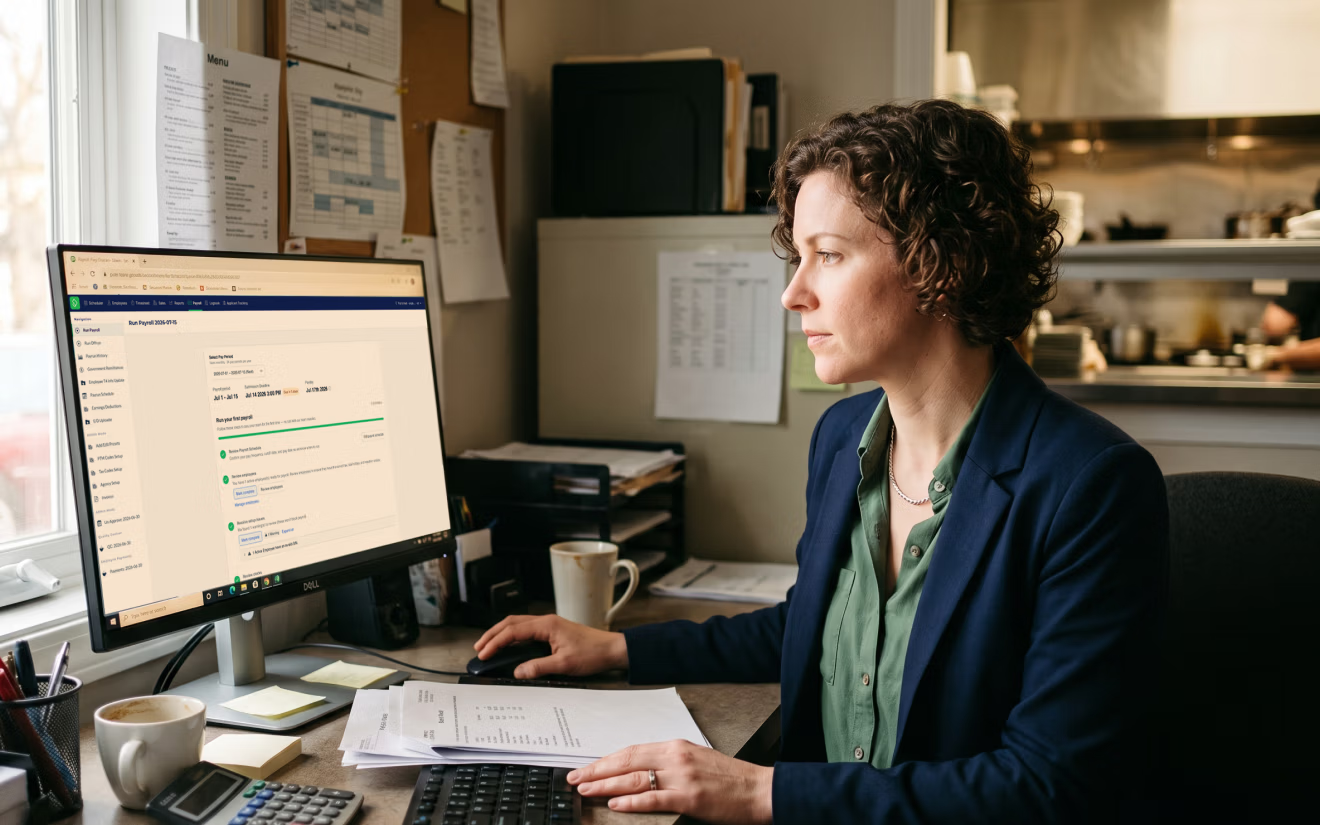
An automated payroll system connects critical back-office functions such as scheduling, attendance, and compensation in one cloud-based solution. Data flows seamlessly from the point-of-sale (POS) system and scheduling tools into payroll. Once verified, the system automatically calculates gross pay, applies deductions, generates pay stubs, and initiates direct deposits.
Core Functions of Automated Payroll Systems
- Automated tax deductions and remittances: The software calculates and files taxes across federal, state, and local levels, reducing the risk of missed filings.
- POS integration: It syncs employee hours and tips directly from the POS system for accurate wage calculation.
- Real-time labor cost insights: Managers can track labor expenses instantly, helping optimize scheduling and control overhead.
With automation in place, restaurant operators gain an end-to-end view of labor operations — from clock-in to paycheck — without spreadsheets or manual recalculations.
What Are the Key Benefits of Automating Payroll in Restaurants?
Automation does far more than speed up payroll processing; it transforms how restaurants manage operations.
1. Time Savings: Manual payroll can take hours, especially with complex staff rosters. Automation reduces that process to minutes, freeing management to focus on front-of-house performance and guest experience.
2. Compliance Assurance: Compliance is non-negotiable in the restaurant sector, where multi-jurisdictional labor laws and tax regulations change frequently. Integrated systems automatically file taxes and support year-end reporting to eliminate costly oversights.
3. Cost Control: With real-time visibility into labor costs, restaurant managers can make data-driven scheduling decisions and prevent unnecessary overtime.
4. Employee Satisfaction: Prompt, accurate pay builds trust. Automated payroll ensures employees receive their earnings correctly and on schedule, which supports retention in an industry known for high turnover.
Compliance and Risk Reduction
Payroll accuracy directly impacts restaurant compliance. Automated payroll solutions handle tax filings and remittances, minimizing the risk of errors that can lead to penalties or audits. As Push Operations demonstrates, automation delivers both operational efficiency and peace of mind.
How Can Payroll Automation Help Maintain Tax Compliance?
Payroll tax compliance is one of the most complex aspects of restaurant management. Owners must account for multiple tax levels — federal, state, and local — plus tip reporting, new hire documentation, and overtime regulations.
Automated payroll systems manage these requirements seamlessly. Integrated platforms handle tax calculations, submit filings on schedule, and maintain documentation for auditing purposes. They also update automatically when tax laws change, ensuring continuous compliance.
What Should Restaurants Look for in Payroll Software?
Not all payroll systems are built for the demands of the hospitality industry. Restaurant managers should prioritize software tools designed for their unique challenges.
Essential features include:
- Cloud accessibility: Manage payroll from anywhere, whether on-site or remote.
- Automation and accuracy: Ensure every calculation and payment is error-free.
- Compliance support: Manage tax filings, updates, and documentation.
- POS and HR integration: Connect scheduling, attendance, and payroll seamlessly.
- Tip and overtime management: Handle complex pay structures, overtime calculations, and tip outs.
- Scalability: Grow with the business and adapt to seasonal changes.
Should Restaurants Outsource Payroll Services or Manage It In-House?
Choosing between outsourcing payroll services and managing payroll in-house depends on team size, budget, and operational complexity.
- Outsourcing payroll: Ideal for restaurants with small teams and limited HR resources. Providers manage data processing, tax filings, and compliance, reducing the administrative load. According to Toast POS, outsourcing can save both time and error costs.
- In-house software: Best suited for restaurants seeking greater control and flexibility. With automated systems like Push Operations, managers can handle payroll internally while still benefiting from time-saving automation and compliance security.
For many restaurants, automation represents the best of both paths — maintaining internal oversight while outsourcing the “heavy lifting” of compliance and calculations to technology.
How Does HR and Payroll Integration Improve Restaurant Efficiency?
Integrated HR and payroll systems connect people data — from onboarding to scheduling — ensuring accuracy across business operations. This holistic approach eliminates double entry, reduces administrative effort, and enables management teams to respond faster to staffing needs.
- Accurate onboarding data automatically flows into payroll.
- Labor and tax data are shared across departments for effortless reporting.
- Synchronized scheduling prevents timecard discrepancies.
Real-World Application
In Push Operations, all HR and payroll tools live within one platform. When a new employee is onboarded, their tax information, pay rate, and clock punches automatically sync with payroll, guaranteeing accuracy. This unified process ensures that compliance and payroll integrity remain intact — even during peak turnover seasons.
Conclusion: Automating Payroll Is the Recipe for Efficiency
Restaurant success depends on managing time, costs, and compliance with precision — and payroll sits at the intersection of all three. Automated payroll systems remove manual burden, mitigate risk, and foster staff satisfaction by ensuring paychecks are always correct and on time.
Cloud-based payroll processing is not just a time-saver; it is a competitive advantage. Restaurants that embrace automation can reallocate hours once spent on spreadsheets toward improving service quality, training staff, and growing revenue.
Ready to streamline operations and simplify compliance? Book a demo with Push Operations to see how payroll automation can transform restaurant management — one accurate paycheck at a time.