2026's Top 20 Restaurant Franchises In the US: A Franchise Investment Guide


The Future of Restaurant Franchising is Bright
The restaurant franchise industry is on the rise, and 2026 is shaping up to be another year of exponential growth. In the US alone, the market for franchised restaurants is set to reach $925 billion by the end of this, reflecting an ongoing boom that shows no signs of slowing. As consumer preferences shift toward convenience, quality, and sustainability, restaurant franchises are adapting with innovative models that blend technology, operational efficiency, and personalized dining experiences.
In this roundup, we highlight the top 20 restaurant franchises in the US to watch in 2026. These brands are at the forefront of the restaurant industry, bringing fresh ideas and new growth strategies. Whether you’re a restaurant owner, potential investor, or a franchisee seeking inspiration, these names belong on your radar.
What’s Driving Restaurant Franchise Growth in 2026?
Restaurant franchises are reshaping dining with:
- Efficient operations: Streamlined back-of-house processes, labor optimization, and innovative store formats are keeping costs down while increasing profitability.
- Tech-driven solutions: Digital ordering, automation, and delivery options are creating convenience for consumers and simplifying operations for restaurant owners.
- Quality and speed: Consumers increasingly demand high-quality food served quickly, and the best restaurant franchises have mastered this balance.
In 2026, the next wave of restaurant growth will be driven by digital innovation, a strong franchisee support system, and brands that are agile enough to meet evolving consumer expectations.
The Top 20 Restaurant Franchises in The US
From tech innovators to rapid expansionists, these 20 restaurant franchises are setting the tone for what’s next in the US market.
1. Chick‑fil‑A
.avif)
Chick-fil-A continues to dominate the quick-service restaurant (QSR) sector, renowned for its high-quality food and exceptional customer service. With over 3,000 locations in the US, Chick-fil-A is seeing strong sales and maintains a consistent growth trajectory. Chick-fil-A has one of the highest sales per unit in the industry, often exceeding $8 million annually per restaurant. Their commitment to customer service and operational efficiency makes them a standout in the highly competitive chicken category.
Franchise Benefits:
- Low Franchise Fee: At just $10,000, Chick-fil-A’s franchise fee is significantly lower than many competitors.
- Comprehensive Support: Franchisees receive strong operational and marketing support, including location selection, training, and leadership development programs.
- Sales Performance: Average unit sales are exceptional, with top-tier franchisees generating significant revenue.
- Growth Outlook: Chick-fil-A is focused on maintaining high standards rather than aggressively expanding, which keeps demand high and supply tight.
2. McDonald’s
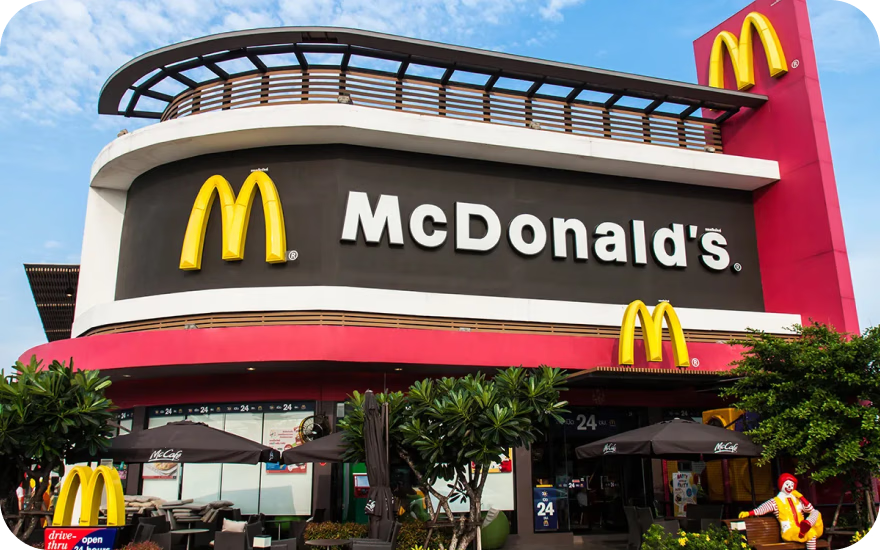
McDonald's remains the global leader in fast food, thanks to its relentless innovation in digital ordering and delivery services. As of 2025, McDonald's operates over 13,000 locations in the US and shows no signs of slowing down. McDonald’s tech upgrades, including self-service kiosks and mobile ordering, make it easy for consumers to enjoy their meals quickly, keeping the brand relevant.
Franchise Benefits:
- Brand Recognition: McDonald’s global brand awareness and marketing strength are unparalleled.
- Operational Efficiency: Franchisees benefit from an established supply chain, marketing programs, and cutting-edge technology.
- Training and Support: McDonald’s offers extensive training programs, including an in-depth 12–18 month leadership development course for new franchisees.
- Growth outlook: McDonald's is focusing on digital growth, aiming to open over 300 new locations by 2026, particularly in drive-thru and delivery formats.
3. Taco Bell
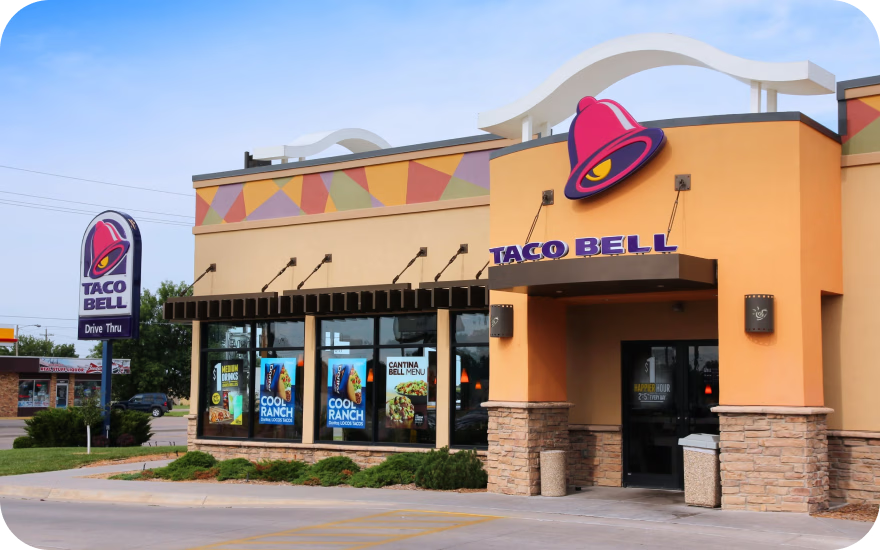
Taco Bell is a pioneer in blending bold flavor with a fast-casual dining experience. As one of the fastest-growing chains in the US, Taco Bell operates over 7,000 units, with aggressive plans to continue its expansion. Taco Bell's creative menu innovations and its embrace of digital technology have been key drivers of its success.
Franchise Benefits:
- Franchisee Support: Taco Bell offers comprehensive support, including marketing, technology systems, and real estate assistance.
- Competitive Fees: The initial franchise fee ranges from $25,000 – $45,000, with ongoing royalty fees around 5 – 5.5% of gross sales.
- Innovative Growth Strategy: Taco Bell is expanding in high-growth areas, including suburban markets, and emphasizing drive-thru, digital, and delivery-focused formats.
- Growth outlook: With ongoing menu innovation, digital-forward operations, and strategic expansion, Taco Bell is positioned to continue its rapid growth across suburban and urban markets.
4. Popeyes Louisiana Kitchen
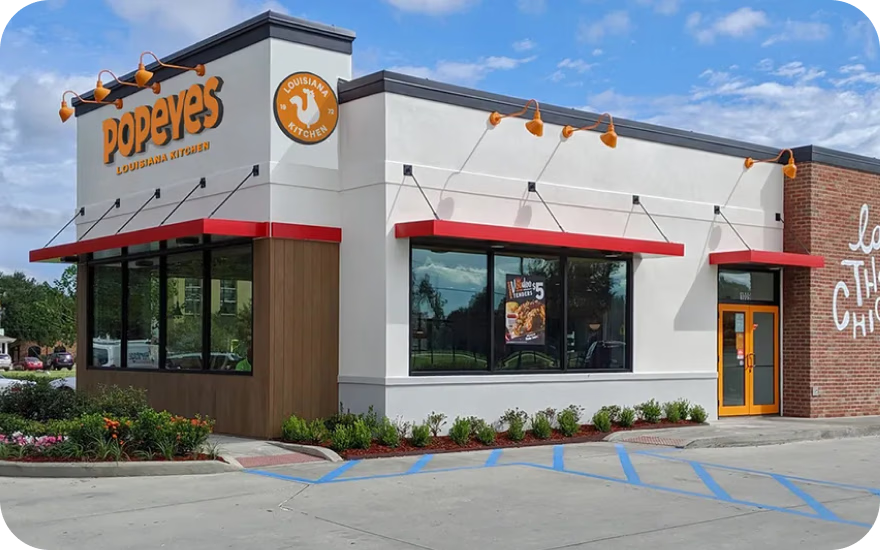
Popeyes has become a standout in the chicken segment, famous for its bold Louisiana‑style flavors and its iconic chicken sandwich. With approximately 3,168 locations in the US as of October 2025, the brand is firmly positioned for national expansion. Popeyes is expanding into digital channels, streamlining operations, and high-growth formats to capture modern consumers. By the end of 2026, Popeyes plans to roll out cloud-based POS systems, kiosks, order-ready boards, and upgraded kitchen equipment across its US network.
Franchise Benefits:
- Strong Brand: Franchisees benefit from a well‑known name, loyal customers, and distinctive menu offerings.
- Robust Training & Operational Support: Franchisees receive comprehensive onboarding, covering kitchen operations, inventory management, marketing, and customer service.
- Marketing & Promotions: Franchisees benefit from national advertising campaigns, regional promotions, and digital marketing initiatives, which help drive customer engagement and repeat business.
- Proven Unit Economics: Popeyes’ smaller footprint and efficient kitchen design reduce overhead costs while maintaining high sales per unit. The system leverages RBI’s (Restaurant Brands International) supply chain and technology to optimize profitability.
- Growth Outlook: Popeyes plans to grow its US and Canadian footprint to over 4,200 by 2028, supported by a focus on digital sales and “easy‑to‑run” kitchen formats.
5. Wendy’s
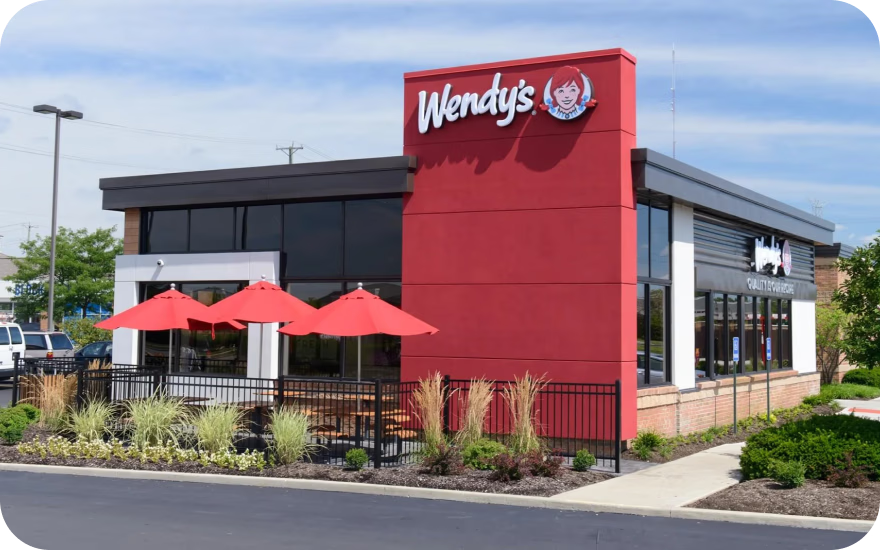
Wendy’s continues to build momentum through both innovative menu offerings and a strong digital focUS With nearly 6,000 US locations and digital sales reaching over 20% of total revenue in Q1 2025, the brand is enhancing convenience and driving repeat business across its network. Wendy’s is also investing in technology and loyalty‑driven strategies, reinforcing its position in a constantly evolving quick‑service market.
Franchise Benefits:
- Brand Loyalty & Recognition: Wendy’s enjoys a strong, established customer base and a recognizable brand built on quality and value.
- Digital Integration: Franchisees gain access to advanced technology systems, including mobile app ordering, delivery platforms, digital menu boards, and AI‑enabled drive‑thru tools, boosting efficiency and sales.
- Operational & Franchisee Support: Wendy’s offers comprehensive training, site‑selection guidance, marketing programs, and a proven business model to support profitability.
- Growth Outlook: Wendy’s is expanding aggressively, with a focus on drive-thru and delivery-optimized restaurants and a target of 3-4% annual net-unit growth in 2025, continuing its momentum in both US and international markets.
6. Burger King
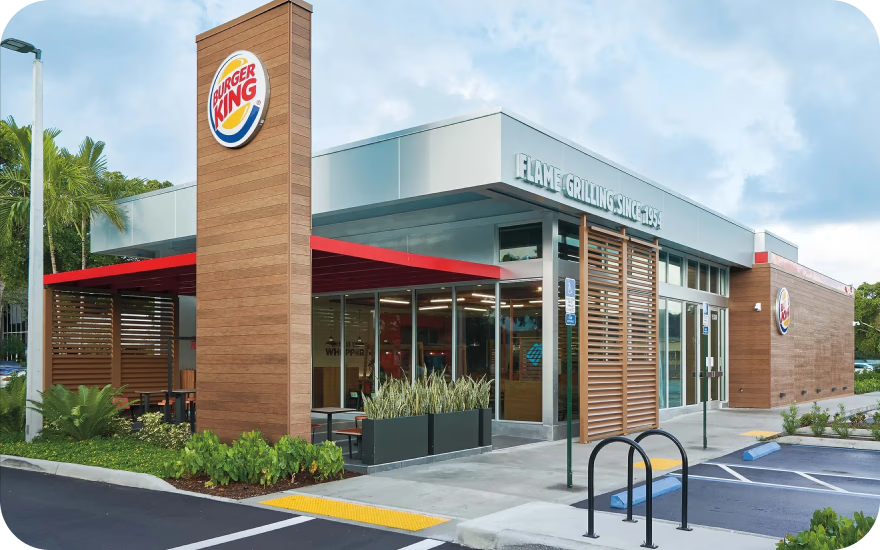
Burger King is a staple in the fast food burger sector, celebrated for its flame‑grilled burgers and consistent presence across the US with approximately 6,584 US locations as of September 2025, it remains a major brand in the category. Burger King continues to attract a loyal customer base while adapting to modern digital and delivery trends.
Franchise Benefits:
- Strong Marketing Support: Franchisees benefit from national advertising campaigns and promotions developed by Restaurant Brands International (RBI), the parent company, which helps enhance brand visibility.
- Proven Financial Performance: The brand reports an average unit volume (AUV) in the US of approximately $1.63 million, and franchisee profitability has seen significant improvements under its turnaround plan.
- Modernization & Tech‑Forward Support: Burger King is investing heavily, over US $300 million in 2024 alone, for remodels and technology upgrades (kiosks, drive‑thru enhancements) to improve service, speed, and efficiency.
- Growth Outlook: Burger King is focused on operational excellence and expansion with a current program to remodel roughly 400 US restaurants in 2025 as part of its “Reclaim the Flame” strategy, aiming to modernize 85‑90% of US stores by 2028.
7. Wingstop
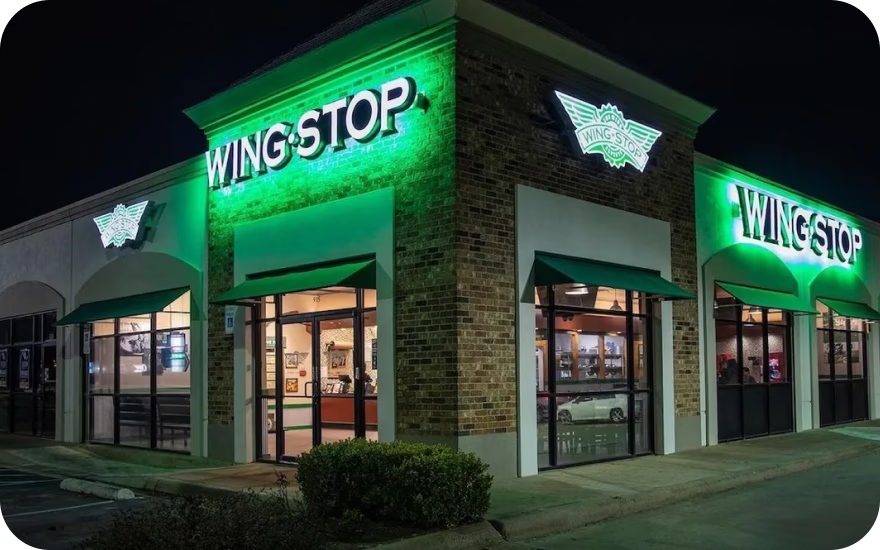
Wingstop has transformed the chicken wing category by growing rapidly through a focused, delivery-friendly model and a strong digital strategy. As of June 2025, Wingstop operates approximately 2,818 restaurants worldwide, including 2,411 in the US The brand emphasizes a streamlined menu of wings, tenders, and fries, maintains smaller footprints and optimized operations, and has digital sales among the highest in the industry with digital orders constituted over 70 % of system sales in 2024.
Franchise Benefits:
- Scalable Model: Wingstop’s new locations generate an average of $2.1 million in sales (2024), with a relatively low initial investment of around $535,000 (excluding real estate), making it a potentially strong cash‑flow opportunity.
- Flexible Formats: The brand supports multiple unit types, including smaller delivery- and drive‑thru‑friendly locations. Its lean footprint helps reduce overhead and makes it easier to enter new markets.
- Digital & Tech Focus: Over 60 % of sales come from digital orders, supported by Wingstop’s “Smart Kitchen” technology, which improves speed, accuracy, and efficiency.
- Growth Outlook: Wingstop aims for 17-18 % global unit growth in 2025, continuing its rapid expansion, particularly in digital-first and delivery-focused locations
8. Jersey Mike’s Subs

Jersey Mike’s Subs has carved out a leading position in the fast‑casual sandwich segment thanks to premium ingredients, strong community engagement, and rapid expansion. As of April 2025, the brand operates over 3,000 locations across the US, making it one of the fastest-growing sandwich franchises in the country. Its high sales per unit, efficient operations, and consistent focus on quality have firmly established Jersey Mike’s as a franchise to watch, attracting both loyal customers and new franchisees.
Franchise Benefits:
- Comprehensive Support: Offers full training, site selection assistance, and ongoing operational and marketing support.
- Strong Marketing: Combines national campaigns with community-focused outreach to build loyalty and visibility.
- High Sales Performance: The average unit volume (AUV) is approximately $1.3 million, with top stores exceeding $2 million annually.
- Growth Outlook: Opened 350 new locations in 2024 and plans to add 400+ more in the next few years. Entering new markets, including a development deal for 300+ locations in Canada.
9. Dunkin’
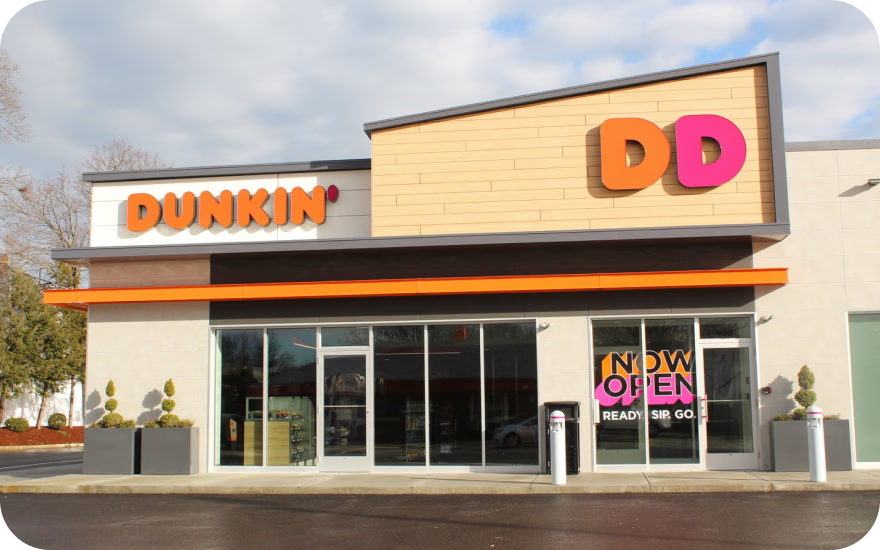
Dunkin’ dominates the breakfast and coffee space with its massive scale and broad appeal. With nearly 10,000 US locations as of mid‑2025, the brand has evolved well beyond a traditional coffee shop. Dunkin’ has embraced digital ordering and loyalty programs, with its “DD Perks” program boasting more than 12 million members, fueling repeat visits and enhancing customer engagement.
Franchise Benefits:
- Digital Integration: Dunkin’ provides franchisees with powerful technology platforms for mobile ordering and loyalty programs.
- Low Overhead Model: Dunkin's business model is optimized for fast service, and its low-cost investment option makes it accessible for new franchisees.
- Comprehensive Support: Dunkin' offers thorough training, operational support, and a proven marketing strategy that helps franchisees succeed.
- Growth outlook: Dunkin' is focused on expanding its footprint in new regions and upgrading existing units with modern digital features.
10. Domino’s Pizza
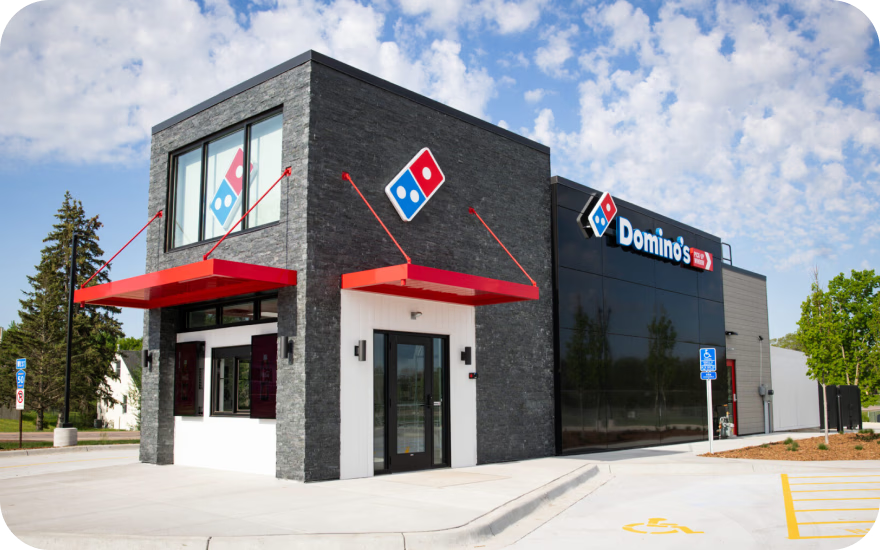
Domino’s Pizza has mastered the art of pizza delivery, becoming a leader in digital ordering and operational efficiency. With over 7,100 US locations as of 2025, Domino’s continues to evolve its model to serve a growing base of digital-savvy consumers. The brand focuses on technology, including mobile ordering, loyalty programs, and third-party delivery partnerships. Its streamlined, delivery-first process makes it one of the most efficient and dominant players in the pizza industry.
Franchise Benefits:
- Tech-Forward Support: Extensive digital platform, mobile ordering, loyalty integration, and delivery systems that help franchisees maintain service levels and drive sales.
- Training & Operational Guidance: Franchisees receive support in supply chain management, marketing, and service systems to streamline operations.
- Efficient Operations: The delivery- and carry-out-focused model, along with an optimized kitchen footprint, keeps overhead lower, improving unit economics.
- Growth Outlook: Domino’s is targeting over 1,100 new global store openings annually and expects growth of 7% or more in global retail sales over the coming years.
11. Culver’s
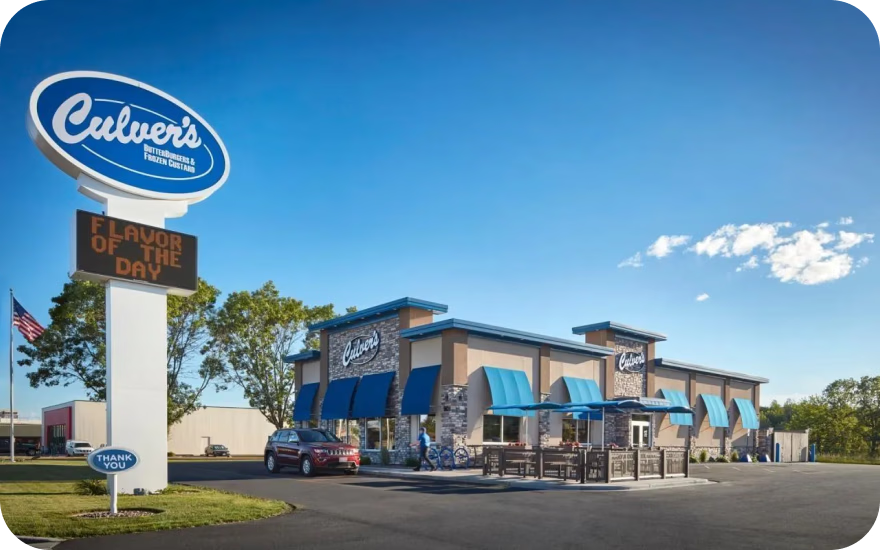
Culver’s has grown rapidly by offering a fast-casual experience centered on fresh, high-quality ingredients, such as its signature “ButterBurgers” and frozen custard. With over 1,000 locations in 26 states as of 2025, the brand combines strong unit economics with high customer satisfaction, making it one of the fastest-growing regional chains in the US Culver’s distinguishes itself from competitors through its consistent food quality, friendly service, and community-focused approach, creating a loyal customer base while maintaining profitability and operational efficiency.
Franchise Benefits:
- Brand Integrity: Franchisees benefit from a strong reputation for quality, guest satisfaction, and community engagement.
- Comprehensive Training: The company offers robust operational training, marketing support, and site‑selection assistance to help franchisees succeed.
- Flexible Growth Model: Multiple development opportunities exist, including suburban and urban sites, allowing operators to match their growth strategy to market conditions.
- Growth Outlook: Culver’s is maintaining aggressive growth, opening roughly 50-60 new restaurants annually, with plans to add approximately 55 additional locations by the end of 2025.
12. Whataburger
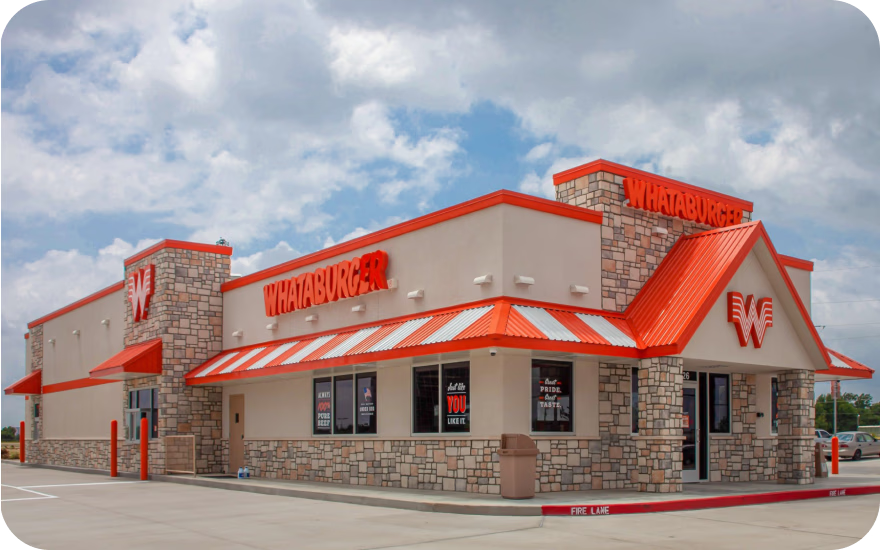
Whataburger is a beloved regional chain known for its made-to-order burgers, hearty breakfast menu, and signature shakes. Founded in 1950 in Texas, the brand has built a loyal following thanks to its commitment to quality and community. As of September 2025, Whataburger operates approximately 1,157 restaurants in 17 states, and its expansion into new markets is strengthening its national presence.
Franchise Benefits:
- Community‑Focused: With deep ties to local markets and a strong Texas heritage, Whataburger enjoys high customer loyalty and brand recognition.
- Robust Support for Franchisees: Whataburger provides ongoing operational and marketing assistance, including site selection, construction oversight, and brand-driven promotions.
- High-Volume Units & Proven Economics: The brand reports an estimated average unit volume (AUV) of about $3.5 million per franchised location in recent years.
- Growth Outlook: Whataburger is expanding rapidly beyond its Southwest base, entering new US markets while emphasizing delivery, digital ordering, and multi-unit franchise development to fuel growth.
13. Papa John’s

Papa John’s has kept pace with the digital transformation of the pizza industry and remains a major US player. As of 2025, the brand operates around 3,216 restaurants in the US (6,030 globally), with US system-wide sales of approximately $1.04 billion in Q3 2025. Its growth is fueled by menu innovation, digital ordering, and delivery-system enhancements. By investing in AI-driven voice ordering, cloud-based POS systems, and personalized marketing, Papa John’s continues to strengthen its competitive position and drive expansion across its domestic network.
Franchise Benefits:
- Robust Marketing Support: Franchisees benefit from national campaigns and locally targeted marketing strategies.
- High-Performance Systems: Owners have access to an efficient online ordering and delivery infrastructure that supports a robust carry-out and delivery business.
- Tech Solutions: The brand offers advanced online ordering and loyalty platforms, including proprietary systems that enhance customer convenience and drive repeat business.
- Growth Outlook: Papa John’s plans to accelerate its expansion, aiming for up to 1,800 net new restaurants globally over the next four years, supported by incentives for franchisees and a renewed development pipeline.
14. Pizza Hut
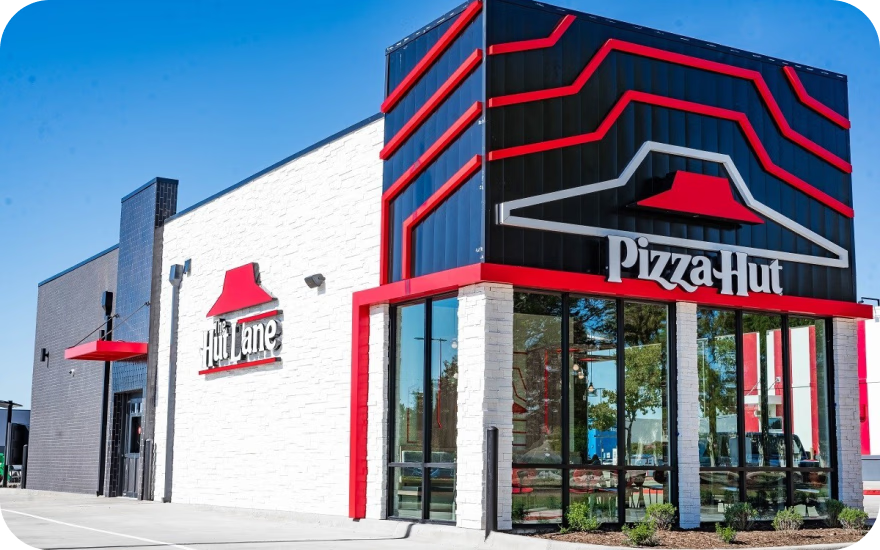
Pizza Hut is one of the world’s most recognized pizza brands, known for its iconic pan pizza, stuffed crust, and a wide range of menu offerings, including pasta, wings, and desserts. The brand has grown into a global powerhouse, with approximately 6,474 US locations and more than 19,900 restaurants worldwide as of Q1 2025. Pizza Hut has been expanding its digital ordering and contactless delivery capabilities to meet modern consumer preferences.
Franchise Benefits:
- Established Brand & Global Reach: Franchisees benefit from the scale, recognition, and marketing power of a worldwide brand.
- Proven Investment Options: Startup costs vary from US$579,000 to US$2,053,500 depending on store format, location, and build-out requirements, providing flexibility for both single-unit and multi-unit franchisees.
- Support & Operational Systems: Franchisees gain assistance with site selection, construction, store remodels, technology integration, and ongoing operational support.
- Growth Outlook: Pizza Hut is focused on revitalizing its US footprint through menu innovation, digital ordering, and delivery-first formats. The brand aims to leverage its global scale to modernize stores, improve efficiency, and return to growth in competitive markets.
15. Freddy’s Frozen Custard & Steakburgers
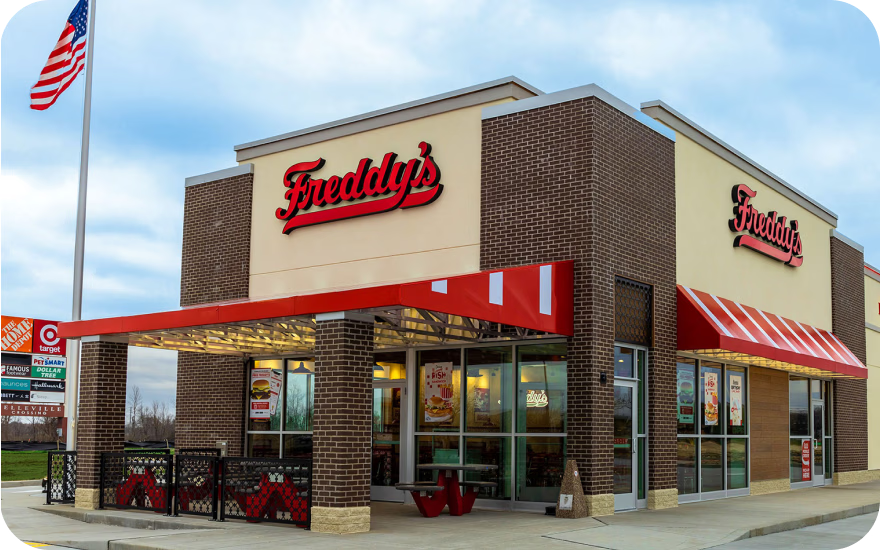
Freddy’s Frozen Custard & Steakburgers has quickly established itself in the fast-casual burger and custard market. Known for its cooked‑to‑order steakburgers, all‑beef hot dogs, shoestring fries, and freshly churned frozen custard, the brand had surpassed 500 operating locations across 36 US states by early 2025. Its concept blends nostalgic Americana with premium ingredients and fast-casual convenience, backed by a robust operational strategy that includes centralized training and innovation, a simplified yet flexible menu, digital tools for catering and delivery, and a franchise model focused on quality, hospitality, and scalability
Franchise Benefits:
- Strong Brand & Proven Concept: Freddy’s has a recognized format with over 500 units, providing franchisees with a trusted brand to build upon.
- High-Performing Units: Top 25% of stores report an average annual revenue of US $2.6 million, demonstrating strong unit economics.
- Comprehensive Support: Franchisees receive extensive training, site selection guidance, marketing assistance, and operational support to help ensure success.
- Flexible Development Opportunities: Options include traditional and non-traditional formats, plus multi-unit and international growth opportunities in development pipelines.
- Growth Outlook: Freddy’s is targeting ambitious expansion — with a goal of 800 operating restaurants by 2026. The brand is entering new regions (like Maryland, North Dakota) and international markets (Canada).
16. A&W Restaurants
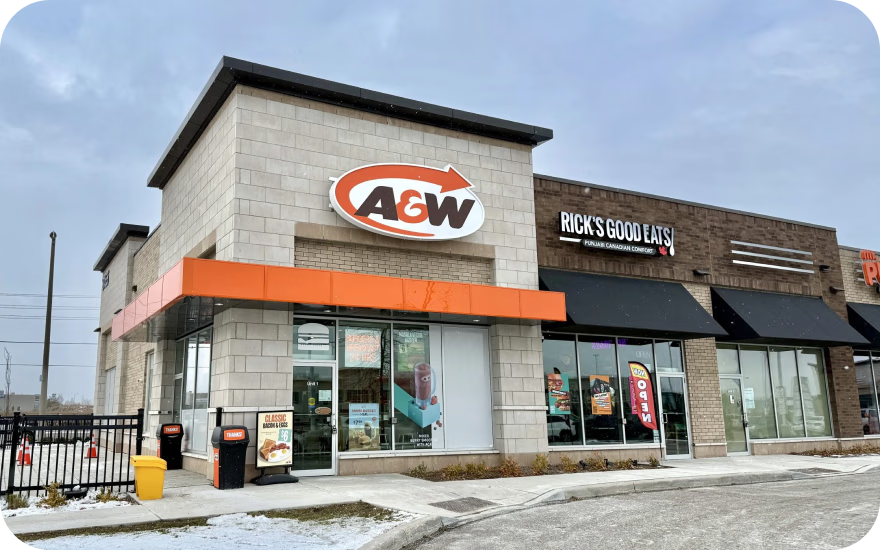
Founded in 1923 in Sacramento, California, A&W Restaurants is one of America’s most nostalgic quick‑service brands, famous for its frosty mugs of root beer, burgers, hot dogs, and drive‑in ambiance. With about 460 locations in the US as of early 2024 across 35 states. A&W’s operational strategy emphasizes consistency, franchisee support, and customer experience, with a focus on streamlined menu offerings, training programs for franchisees and staff, and modernized kitchen operations that preserve the brand’s classic flavors while driving efficiency.
Franchise Benefits:
- Heritage Brand & Proven Concept: A&W is 100 % franchisee‑owned, giving owners a strong voice in the brand and access to a well‑recognized format with deep roots.
- Robust Franchisee Support: From initial training (“A&W University”) to site selection guidance, construction and format options, and national and local marketing support, franchisees benefit from comprehensive back-office and operational assistance.
- Flexible Development Opportunities: A&W offers various formats (free-standing drive-thru, inline, and co-branded units) and is actively expanding into new markets through strategic development agreements.
- Growth Outlook: Looking ahead, A&W is accelerating its US expansion, with new franchise agreements already in the pipeline for 2025 and beyond. The brand plans to open additional locations in emerging markets, including states like South Carolina and Wisconsin, while continuing to support franchisees with operational training and marketing resources.
17. Twin Peaks

Twin Peaks has carved out a niche in the casual dining/sports‑bar segment with its lodge‑inspired atmosphere, scratch‑kitchen menu, and premium beer selection. As of mid‑2025, the brand operates approximately 116 locations across 26 states, with a strong pipeline of signed franchise units geared for growth. Its flexible expansion strategy includes converting legacy restaurant sites and legacy Smokey Bones locations into Twin Peaks lodges, supporting rapid growth while managing cost.
Franchise Benefits:
- Proven High‑Volume Model: The brand reports annualized average unit volumes (AUVs) above US $5 million, with top units reaching up to $9 million-$14 million in sales.
- Strong Brand Differentiation: Twin Peaks stands out with its “ultimate sports lodge” concept, crafted menu items (burgers, wings, brisket), cold beer, big screens, and a themed ambience that draws customers and creates loyalty.
- Robust Franchise Opportunities & Pipeline: More than 100 signed franchised units are in development, and the brand’s strategy emphasizes a high franchise‑to‑company‑owned mix (targeting ~75‑80% franchised) to accelerate growth.
- Growth Outlook: Twin Peaks plans to open 10–15 new franchised restaurants per year from 2025 onwards while leveraging significant expansion opportunities through both new-build restaurants and conversions of existing restaurant sites into Twin Peaks lodges.
18. Firehouse Subs
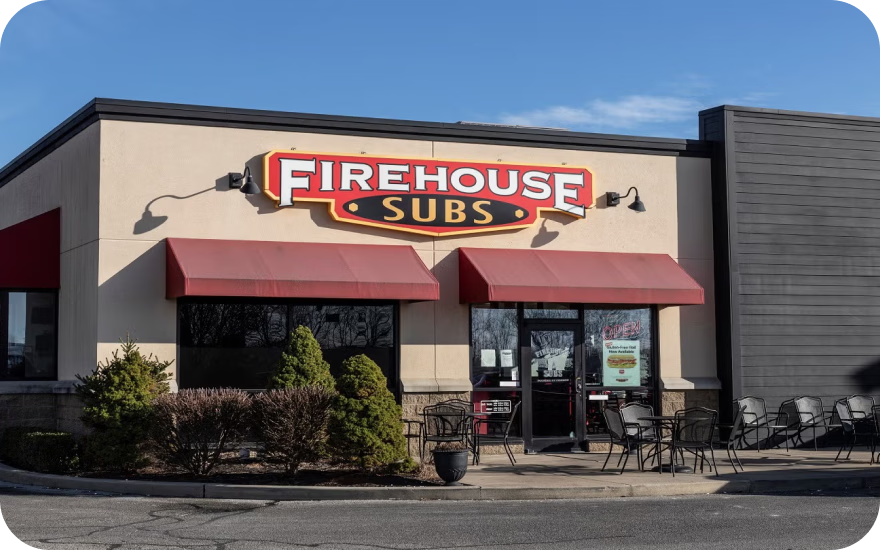
Firehouse Subs has built a strong presence in the US sandwich market with made-to-order hot subs, salads, and a firefighter-themed dining experience. As of 2025, it operates over 1,200 locations nationwide, supported by streamlined operations, consistent training, and high-traffic site selection. Franchisees benefit from a proven model, operational support, and strong brand recognition, helping maintain efficiency, quality, and customer loyalty across the system.
Franchise Benefits:
- Moderate upfront investment: Initial investment for a US location ranges from approximately $379,650 to $795,600, depending on restaurant format and location.
- Proven business model & brand recognition:With decades of experience, franchisees gain access to a trusted name, a strong operational system, and a loyal customer base.
- Comprehensive support: Firehouse Subs provides extensive training (270+ hours), site-selection assistance, marketing support, and ongoing operational guidance to help franchisees succeed.
- Growth Outlook: Firehouse Subs continues to expand its US footprint and select international markets through both company-owned stores and franchised units. The brand emphasizes high-traffic locations, multi-unit franchise development, and operational efficiency to drive sustainable growth in the coming years.
19. KFC
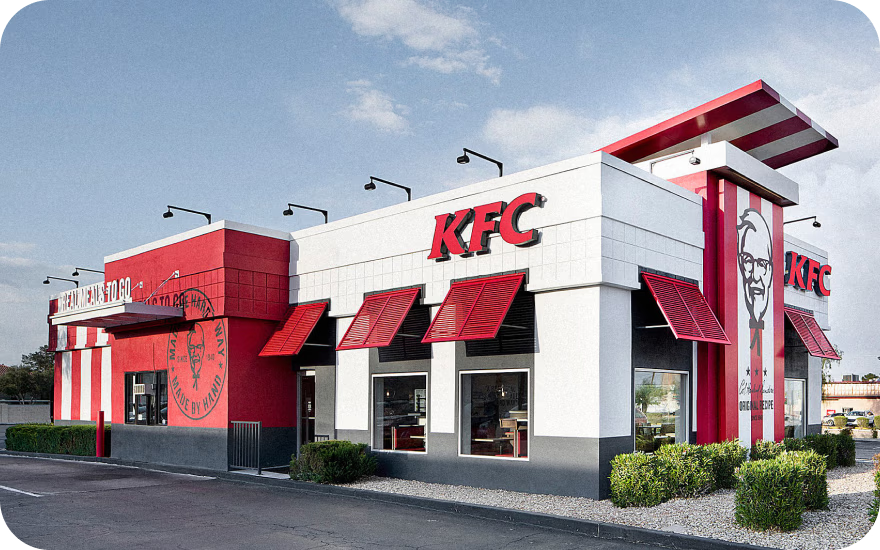
KFC (Kentucky Fried Chicken) is a legendary fast‑food brand, best known for its Original Recipe fried chicken and global reach. In the US, KFC operates approximately 4,047 locations as of November 2025. Globally, the chain has exceeded 30,000 worldwide. While some US units have closed, KFC is focusing on store modernization, menu innovation, and digital ordering to drive growth and stay relevant in a competitive fast-food landscape
Franchise Benefits:
- Established Brand & Global Reach: KFC is one of the largest chicken restaurant chains worldwide and belongs to Yum! Brands. Franchisees benefit from strong brand recognition and global operational support.
- Diverse Formats & Operational Flexibility: The brand supports traditional restaurants, drive-thru formats, and has experimented with non-traditional models, offering franchisees multiple development pathways.
- Comprehensive Support & Innovation: Franchisees receive training and site-selection assistance, and benefit from KFC’s push into digital/delivery platforms, as well as menu innovation (e.g., tenders, sandwich formats), to stay competitive.
- Growth Outlook: While US same-store sales faced pressure in recent years, KFC is undergoing a comeback strategy focused on modernizing its stores, optimizing drive-thru and off-premises formats, and leveraging international growth opportunities as the brand expands rapidly.
20. Sonic Drive-In
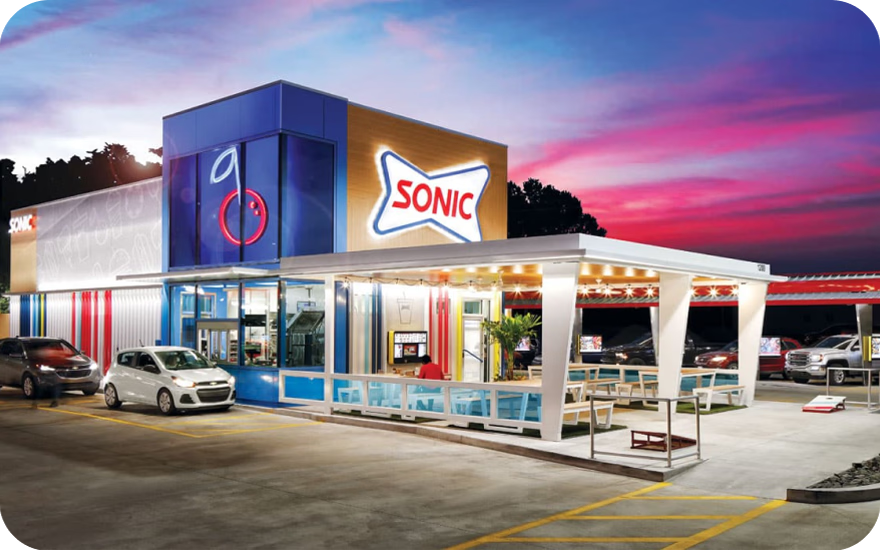
Sonic Drive‑In has become one of America’s most recognizable drive‑in quick‑service restaurants — famous for its car‑hop service, expansive menu of burgers, hot dogs, tater tots, and slushes, and a modern digital and ordering‑ahead model. As of September 2025, Sonic operates approximately 3,435 locations across 47 states, with Texas alone accounting for 928 units. Sonic’s operational strength lies in its drive-in model combined with digital innovation, enabling high throughput and strong unit economics.
Franchise Benefits:
- Proven Brand & National Footprint: With over 3,400 locations, franchisees join a well‑known brand with strong consumer recognition.
- Attractive Incentive Structure: Sonic offers enticing franchise incentives, including reduced initial franchise fees and royalty and advertising discounts for new restaurants.
- Flexible Format & Digital Focus: Franchisees benefit from Sonic’s format flexibility, traditional drive‑in stalls, drive‑thru only, or dual formats, and a strong digital ordering infrastructure that supports incremental sales and modern guest expectations.
- Growth Outlook: Sonic is positioned for future growth through targeted development in under‑penetrated markets (especially outside its traditional strongholds in the South and Midwest), and via format optimization that emphasizes drive‑thru and digital‑ordering convenience.
The Road Ahead for Restaurant Franchises
The US restaurant franchise market continues to thrive, with total franchise economic output projected to exceed $320 billion by 2025. Consumer demand for convenience, quality, and tech-driven dining experiences is reshaping the industry, rewarding brands that invest in digital ordering, delivery, and operational efficiency.
The 20 brands featured in this report represent both established leaders and high-growth challengers. Their success underscores that strong unit economics, robust franchisee support, and a forward-thinking growth strategy matter just as much as brand recognition in today’s competitive landscape.
Key Takeaways for Investors and Franchisees:
- Brand & Unit Economics: A strong brand draws customers, but sustainable margins and high-performing units drive long-term success.
- Growth Potential: Expansion into new markets, digital-first formats, and non-traditional units can offer higher returns.
- Support & Innovation: Robust training, marketing, technology, and remodel programs help franchisees stay competitive.
- Risk vs. Reward: Emerging brands may offer higher upside but come with greater risk; established brands provide stability with more predictable returns.
Franchisees can use Push Operations to streamline multi-location operations, team management, and cross-location reporting, ensuring higher productivity and better employee engagement across all locations. Schedule a demo to maximize profitability and long-term success for all your franchises!