How AI Scheduling for Restaurants Is Transforming Multi-Unit Workforce Management

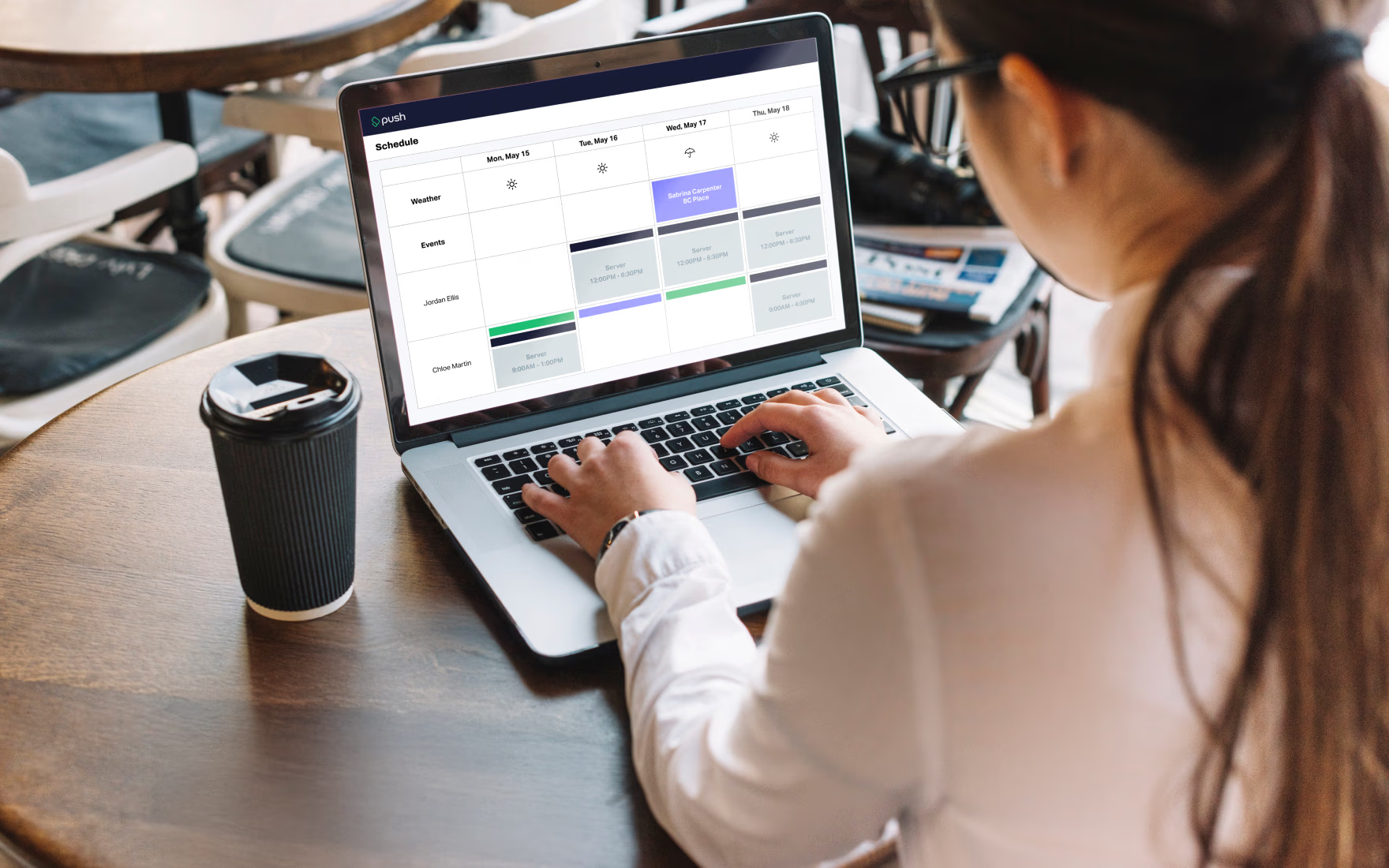
Managing restaurant schedules has never been more complex. With ongoing labor shortages, last-minute callouts, and compliance challenges, many operators across multi-unit businesses spend hours every week trying to balance coverage with costs. This is where AI scheduling for restaurants is transforming how leaders run their operations. By using data-driven automation, restaurant owners can create smarter schedules that align labor needs with real-time demand — reducing manual work while keeping employees engaged.
As artificial intelligence becomes more accessible, tools like Push Operations’ AI-powered scheduling software are helping restaurants streamline scheduling, forecast labor costs, and scale efficiently across all locations.
Why Does AI Scheduling Matter for Restaurants Today?
The restaurant industry is evolving fast, and workforce management has become a high-stakes challenge. According to Restaurant Dive (Feb 2026), 26% of U.S. restaurant operators are already using AI tools — a number expected to rise sharply as new solutions mature. Labor remains one of the biggest operational expenses, and in a tight employment market, efficient scheduling is crucial not only for cost control but also for retention.
The National Restaurant Association (2025) found that more than 80% of operators agree technology provides a competitive advantage. For multi-unit operators, AI scheduling introduces a scalable way to manage labor across locations consistently — ensuring compliance, optimizing shift coverage, and reducing costly inefficiencies.
Simply put, AI allows restaurants to serve both guests and teams better. By automating repetitive scheduling tasks, managers gain more time to focus on guest experience and team development instead of constantly adjusting rosters manually.
What Is AI Scheduling for Restaurants and How Does It Work?
AI scheduling for restaurants refers to using machine learning algorithms to predict labor needs and automatically generate optimal shift schedules. Instead of building spreadsheets by hand, the system learns from historical data — such as sales volume, foot traffic, weather patterns, and employee availability — to anticipate future demand.
Key Components of AI-Driven Scheduling Systems
- Predictive modeling: AI identifies patterns from past performance to forecast busy periods accurately.
- Automatic scheduling: It matches team members with shifts based on availability, skill set, and labor budgets.
- Compliance alerts: Built-in safeguards help ensure adherence to labor laws and prevent overtime or scheduling violations.
This data-driven sophistication is particularly useful for multi-location operators. Each location can have different sales rhythms, but AI can unify those patterns across the enterprise, giving leaders transparent visibility into labor performance and staffing gaps in real time.
Why Are Multi-Unit Restaurants Adopting AI Scheduling Systems?
Managing staff across several restaurant locations means handling unique business rhythms, sales patterns, and labor demands — all of which multiply with every additional site. In a Nation’s Restaurant News (2025) study, 37% of restaurant operators planned to adopt automated scheduling, and 28% were specifically investing in AI-driven systems. The most cited reasons: consistency, scalability, and reduced administrative overhead.
Consistency Across Locations
AI ensures that scheduling standards, pay rules, and compliance practices remain consistent across all units. Whether a brand has five or fifty locations, AI automates scheduling logic so every site follows the same operational rules and cost controls. For regional or franchise managers, this consistency simplifies oversight and improves reporting accuracy.
The result is greater alignment between the business’ staffing standards and local realities — ensuring each restaurant is fully equipped without exceeding labor budgets.
How Does Automated Restaurant Scheduling Improve Efficiency?
Traditional scheduling often involves endless spreadsheets, text threads, and last-minute coverage changes. Automated restaurant scheduling replaces these headaches with intelligent workflows that save hours each week.
AI-enabled systems like Push Operations Scheduling automatically populate shifts using real-time and predictive data, freeing managers from manual edits. The software predicts optimal labor allocation, flags potential gaps and compliance risks, and allows team members to request swaps or time off directly through an app. Intelligent and optimized schedules are created in minutes based on data, not guesswork.
Tangible Efficiency Gains
- Time savings: Managers reclaim hours previously lost to manual updates.
- Accuracy: Predictive algorithms reduce over- and under-staffing.
- Flexibility: Teams can easily exchange shifts while maintaining compliance.
By reducing the administrative burden, operators can focus more on coaching teams and enhancing guest experience — the areas that drive restaurant performance.
What Are the Main Benefits of AI-Driven Restaurant Staffing?
AI-driven scheduling has quickly become a must-have for modern workforce management because it enhances both business outcomes and employee experiences. According to QSR Magazine (June 2025), Yum China’s “Q-Smart” AI assistant helps managers streamline scheduling while lowering operational overhead.
The benefits extend beyond efficiency:
- Labor optimization: Real-time insights eliminate excessive shifts and idle time.
- Employee satisfaction: Transparent, predictable schedules improve morale and reduce turnover.
- Data-backed decisions: Operators get visibility into performance trends across units.
When staff perceive fairness and flexibility, morale and retention typically rise — resulting in a more engaged workforce and dependable service quality.
How Can AI Scheduling Help Optimize Restaurant Labor Costs?
Labor is often the largest controllable cost in restaurants, making optimization a top priority for operators. AI provides predictive forecasting that helps restaurants anticipate business fluctuations and adjust schedules accordingly, avoiding unnecessary labor expenses.
The National Restaurant Association (2025) confirms that more than four in five restaurant leaders view technology as critical for maintaining a competitive edge.
AI scheduling tools, particularly those integrated with payroll and POS systems like Push Payroll, allow operators to:
- Analyze hourly sales-to-labor ratios.
- Prevent overtime through automatic thresholds.
- Track real-time labor costs per shift or location.
The result is greater cost predictability. With AI’s ongoing learning capabilities, operators can fine-tune staffing over time — increasing efficiency without compromising guest service.
How Does AI Scheduling Enhance Compliance and Employee Satisfaction?
Compliance requirements, ranging from fair scheduling laws to mandatory rest periods, vary widely across states. AI scheduling automates compliance monitoring, issuing alerts for potential overtime violations or missed breaks before they happen.
Equally important, employees value transparency and predictability. AI-driven scheduling promotes both by generating balanced rosters and minimizing last-minute changes. This strengthens trust between staff and management — a key factor in retention.
When the technology prioritizes fairness and allows input from team members, schedules become more equitable and easier to manage — supporting both compliance and culture.
What Features Should Multi-Unit Operators Look for in Restaurant Staff Scheduling Software?
Not all restaurant staff scheduling software is created equal. Choosing the right system depends on scalability, integration possibilities, and the sophistication of its AI components.
Top Features to Prioritize
- Centralized dashboards for enterprise-wide scheduling.
- Predictive analytics for accurate labor forecasting.
- Seamless integrations with POS, payroll, and attendance tracking systems.
- Mobile accessibility so teams can manage schedules on the go.
Operators should evaluate how each system handles real-time data sharing across multiple platforms. Tools like Push Operations integrate scheduling, payroll, and labor compliance — offering a unified view that makes managing multiple restaurants simpler and more strategic.
What Does the Future of Restaurant Scheduling Look Like With AI?
The next phase of workforce management is predictive — and AI continues to lead the way. Tools like Fourth’s iQ 2.2 (Nov 2025) introduce advanced AI recommendations for inventory and compliance forecasting, while Toast’s Management Suite (Apr 2024) expands scheduling capabilities for enterprise brands.
In the near term, AI systems will do more than predict sales — they’ll anticipate employee sentiment, recommend training opportunities, and forecast turnover based on scheduling fairness.
As these technologies evolve, restaurants that embrace AI early will benefit from actionable insights that turn operations from reactive to predictive, setting a solid foundation for long-term growth.
Conclusion: Streamline, Save, and Scale With AI Scheduling
The era of manual spreadsheets is fading fast. AI scheduling for restaurants is creating measurable results — reducing labor costs, improving morale, and increasing consistency across multi-unit operators. This technology turns staffing into a strategic advantage, giving leaders the insights they need to manage smarter, not harder.
By integrating forecasting, automation, and compliance into one solution, restaurants can confidently scale while protecting profit margins and team satisfaction. Platforms like Push Operations empower operators to implement AI scheduling seamlessly — connecting workforce management, payroll, and analytics into one powerful ecosystem.
Ready to optimize workforce performance and reclaim more time for what matters most — running exceptional restaurants? Book a demo with Push Operations today and see how intelligent scheduling can help your business forecast smarter, schedule faster, and grow with confidence.