How to Compare Hiring Tools for Restaurants: A Category-by-Category Manager's Guide

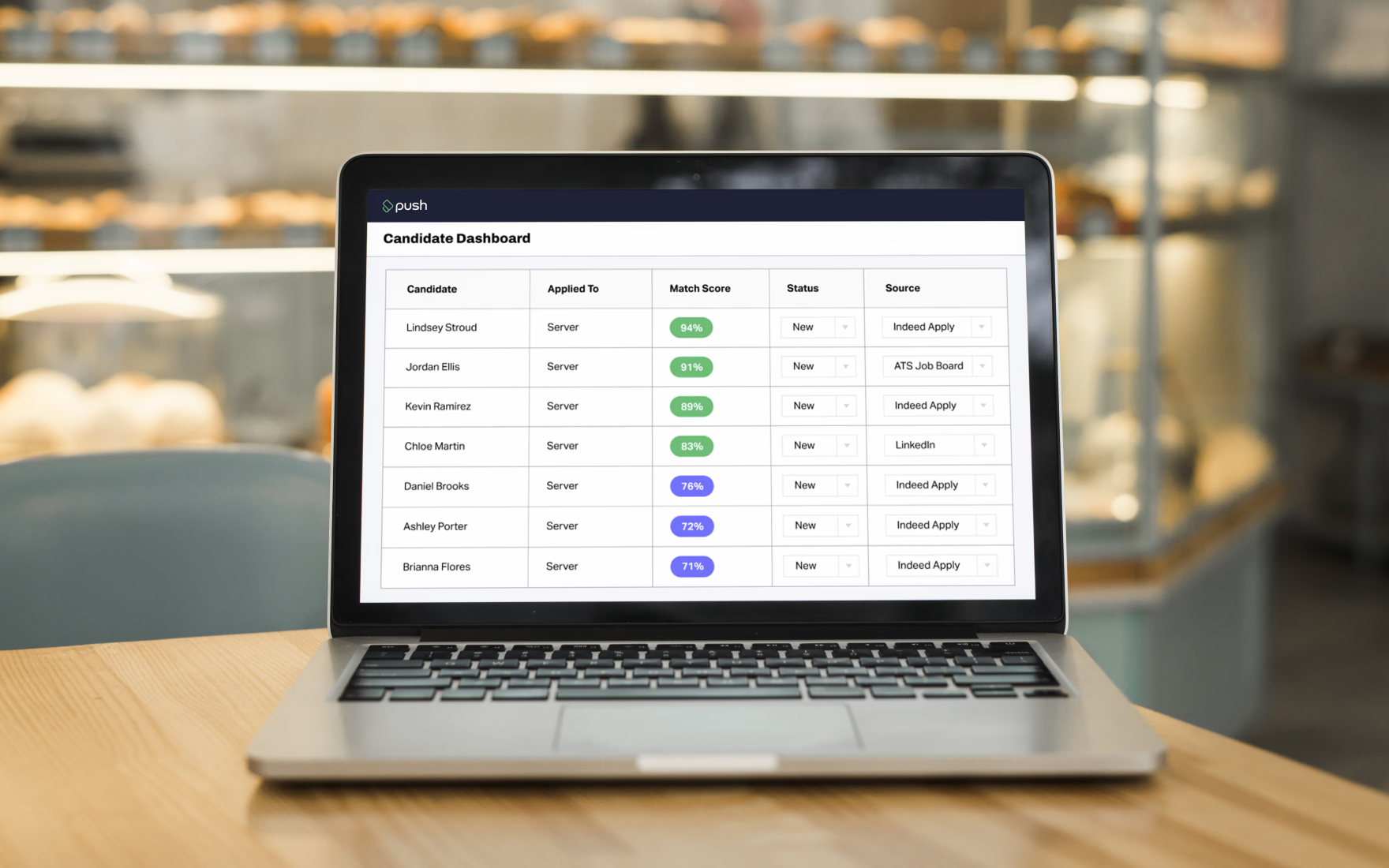
Ask ten operators what a "hiring tool" is and you'll get ten different answers. One means the job board where they post open server roles. Another means the texting app that screens dishwashers before a manager ever picks up the phone. A third means the system that runs offer letters, onboarding, and the first paycheck. They're all hiring tools — they just solve different parts of the same problem.
That's exactly why comparing them is so confusing. You can't line up a $59 job post against an enterprise applicant tracking system and pick a "winner," because they were never trying to do the same job. The useful comparison isn't tool versus tool. It's category versus category — figuring out which type of tool matches your hiring volume, your number of locations, and how much of the process you want living in one place.
Below, we break restaurant hiring tools into five categories, show what each one is actually for, and name real platforms in each so you can find the best solution for your team.
The Five Types of Restaurant Hiring Tools
Most tools operators call "hiring software" fall into one of five categories. Here's what each one is actually for, where the real platforms fit, and when it earns a place in your stack.
1. General Job Boards
Think Indeed, ZipRecruiter, and LinkedIn — the big general boards where most restaurant hiring still starts. Their advantage is raw scale. Few channels put your opening in front of more job seekers, and both Indeed and ZipRecruiter let you post for free and pay to sponsor listings for more visibility.
The tradeoff is that they're built for every industry at once, so nothing is tuned to a restaurant floor. You'll sort through applicants who've never worked a Friday dinner rush, and once someone accepts, the board's job is done — no onboarding, no I-9, no payroll handoff. A job board is a top-of-funnel source, not a hiring system, so most operators pair one with something that manages what happens after the application arrives.
2. Hospitality Marketplaces
Restaurant-specific platforms trade reach for relevance. Poached is one of the largest restaurant job boards in the U.S., with transparent pay-per-post pricing — a flat $59 for a 30-day listing — plus a shift-coverage option where you pay the worker's hourly rate plus a $39 service fee only after a shift is worked. Culinary Agents leans into networking: it distributes each job across a partner network of 500-plus affiliate sites including ZipRecruiter and LinkedIn, and uses AI matching against a community of more than 2.6 million hospitality members.
The candidates here already speak the language of the industry, which usually means less time explaining what "expo" or "86'd" means and fewer mismatched applicants. The catch is simple math: a niche board will never have the sheer volume of Indeed, so operators in smaller markets often run both.

3. Restaurant and Hourly ATS
Here's the part most hiring-tool comparisons get backwards. For hourly restaurant roles, the problem is rarely too few applicants. Turnover in these jobs runs high, and candidates tend to apply to several places at once and take the first offer they get. Operators aren't short on resumes — they're short on time to sort them. The real bottleneck is screening the flood and getting to an offer before a good candidate accepts somewhere else.
That's the job an applicant tracking system does: it turns a pile of applications into a process, purpose-built for the volume and speed of hourly hiring. And it's also where AI actually earns its place in restaurant hiring — not doing paid outreach to find more applicants you don't need, but screening the ones you already have, faster and more consistently than a manager reading resumes between shifts.
HigherMe is built specifically for franchise restaurants, with Text-to-Apply — candidates text a keyword to a number posted in-store and finish an application from their phone in under four minutes — plus NextMatch AI screening and paperless onboarding, all managed across locations from one dashboard. Fountain targets enterprise high-volume hiring, with the muscle to process tens of thousands of applications a week alongside automated interview scheduling, background checks, and eSignature. Workstream combines hiring and onboarding for hourly teams, layering in AI phone and video screening, Text-to-Apply via QR code, and compliance tools like I-9 verification and E-Verify.
These are the strongest fit for multi-unit and franchise operators drowning in applicant volume. The one thing to check: whether the ATS connects to your payroll and scheduling, or whether you'll be re-keying every new hire into a second system.
4. Scheduling-Led Tools With Hiring Built In
Some operators already live inside a scheduling app, and several of those have added hiring features. 7shifts includes a built-in ATS with a job post builder, custom screening questions, and a candidate pipeline — so you can take someone from new applicant to scheduled employee without leaving the tool you already use for shifts. Homebase offers basic job posting and applicant tracking on its free Basic plan (one location, up to 10 employees), posts openings to Indeed, ZipRecruiter, and Google, and offers an AI screening assistant as a paid add-on.
For a single location with a handful of openings a year, this is often all the hiring tooling you need — and the price of entry is low or free. The limiting factor is depth: hiring is a feature here, not the main event, so high-volume operators usually outgrow it.
5. All-in-One Workforce Platforms
The last category treats hiring as the front door to everything else — the same system that recruits a candidate also onboards them, schedules them, and pays them. That's the model Push Operations is built on.
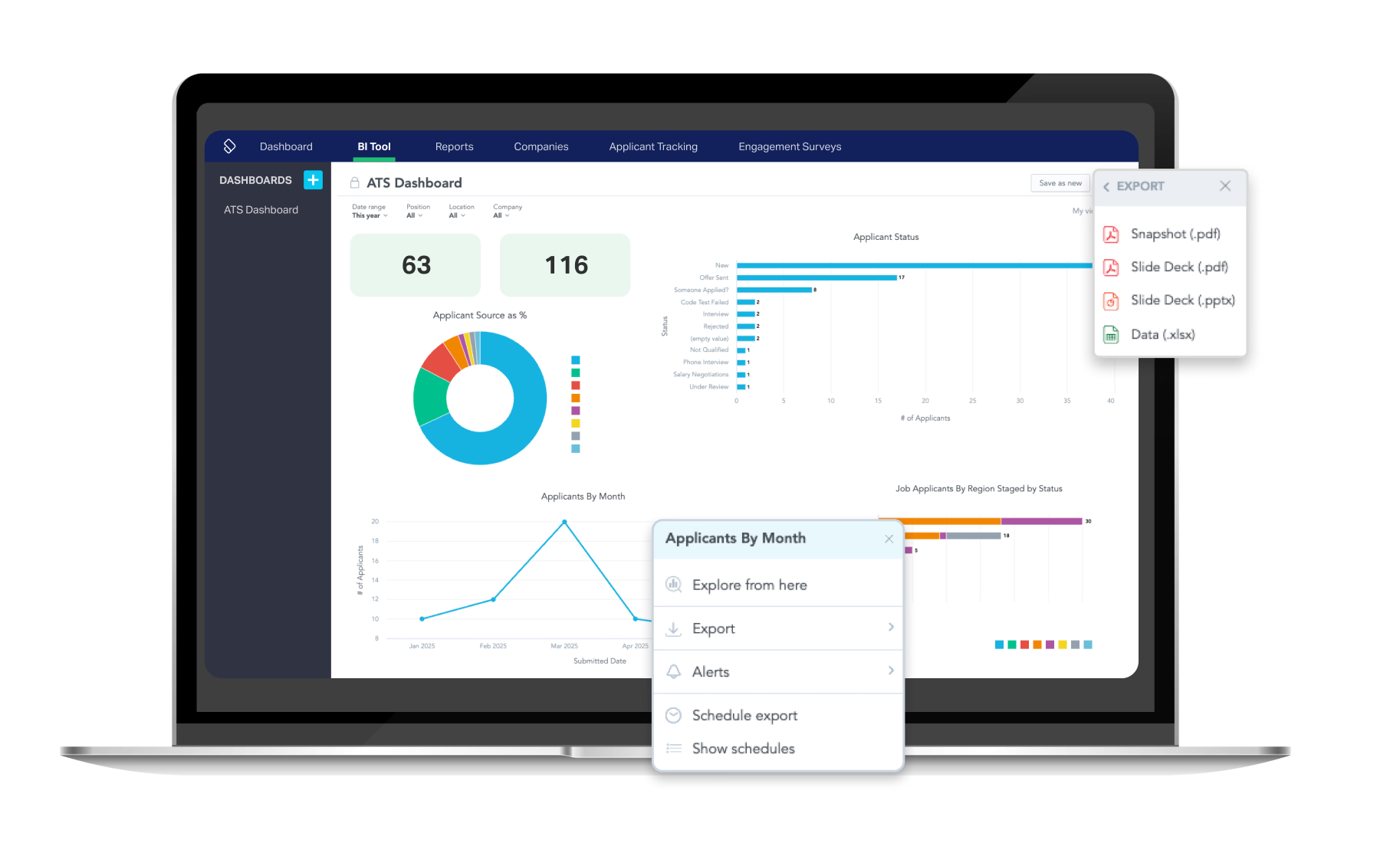
Push pairs an AI Resume Screener that surfaces top candidate matches against your job description with a centralized applicant tracking system, one-click offer letters, and a Job Description Builder for consistent, compliant restaurant postings — and it can push openings to boards like Indeed and LinkedIn. Once a candidate says yes, self-serve onboarding gets them document-complete and compliant before day one, in English, French, or Spanish. Because hiring lives in the same platform as payroll, scheduling, and time tracking, a new hire flows from offer to first shift to first paycheck without anyone re-entering their information.
That connection is the point. The tools that save the most time aren't the ones that hire fastest — they're the ones that don't hand you a mess to clean up afterward.
How to Choose the Right Hiring Tool
Match the category to your operation, not to the longest feature list:
- One location, a few hires a year: A general job board plus the free hiring tools inside your scheduling app usually covers it.
- Skilled or hard-to-fill roles: Add a hospitality marketplace like Poached or Culinary Agents to reach candidates who want restaurant work.
- Constant, high-volume hourly hiring: A restaurant ATS (HigherMe, Fountain, Workstream) with strong screening earns its keep.
- Multi-location or franchise: An all-in-one platform that connects hiring to payroll and scheduling removes the most manual work.
The single best filter is integration. A tool that hires quickly but dead-ends into re-keying every new employee into payroll and scheduling will cost you more hours than it saves.

Comparing Hiring Tools for Restaurants FAQs
What's the Difference Between a Job Board and an ATS?
A job board (like Indeed or Poached) is a place to post openings and attract applicants. An applicant tracking system manages what happens next — screening, communication, interviews, offers, and often onboarding. Most operators use both: a board to source candidates and an ATS to move them through the process.
Do I Need Restaurant-Specific Hiring Software?
Not always. A single location with occasional openings can do well with a general job board and a free scheduling-app hiring feature. Restaurant-specific tools pay off when you're hiring hourly staff at volume or across multiple locations, where speed, mobile applications, and compliance handling matter most.
What's the Most Important Feature to Compare?
Integration with payroll and scheduling. The biggest hidden cost in restaurant hiring isn't the tool's price — it's the manual re-entry of every new hire's information into separate systems. A hiring tool that flows straight into onboarding and payroll eliminates that work.
How Much Do Restaurant Hiring Tools Cost?
It ranges widely. Some job boards are free to post with paid sponsorship; Poached charges a flat $59 per 30-day listing. Scheduling apps like Homebase offer free basic hiring for one location. Restaurant ATS and all-in-one platforms are typically quote-based, priced by location, employee count, or hiring volume.
Choosing a Hiring Tool That Doesn't Stop at "Hired"
The best hiring tool for your restaurant isn't the one that generates the most applicants — it's the one that carries the right hire cleanly from application to first paycheck. For most operators, that means recruiting, screening, interviewing, and onboarding in one place rather than across disconnected systems.
If you'd like to see how Push brings hiring, onboarding, scheduling, and payroll into one connected system, book a demo — we'll walk through it with your restaurant's numbers.