Why Your Restaurant Should Run an Employee Engagement Survey Before 2027


Your 2027 plan is about to get written. The people who will carry it out haven't been asked what should go in it. Here's why the next few weeks are the best time all year to ask.
It's early November. Holiday party bookings are filling the calendar, the seasonal job posts are up, and somewhere in a shared drive there's a 2027 budget with your name on it. Labor targets, a training plan, maybe a second location. Most of it will be built from your numbers and your gut.
What it usually won't include is what your team would tell you if anyone asked.
An engagement survey is the cheapest planning tool you have, and the end of the year is the one moment it does two jobs at once. It gives you real input before the plan locks, and it tells the people most likely to leave over the holidays that someone is listening. Here's why the timing matters, what happens when nobody asks, and how to turn the answers into a plan your staff recognize themselves in.
Why the End of the Year Is the Right Time to Ask
There are two reasons, and they pull in the same direction.
The first is planning. Feedback you collect in November lands while the 2027 plan is still a draft. The same feedback in February is a complaint about a decision that's already been made. If a server tells you now that the schedule drops too late to plan childcare around, you can build a posting deadline into next year's standard. If you hear it in March, you're apologizing.
The second is retention. Every restaurant in your neighborhood is hiring for the holidays right now, which means a cook or server who has felt unheard since the patio closed has more options this month than at almost any other point in the year. Some of them will take one.
January is the second-biggest month for departures on the Push platform, and it has grown every year: 5,945 documented departures in 2023, 6,349 in 2024, 7,126 in 2025, and 7,932 in 2026, according to The Restaurant Workforce Benchmark Report. Those exits don't get decided in January. They get decided over the holidays, while you're running your busiest weeks and have the least time to notice.
And nearly all of today's hiring is replacement hiring. In 2021, 58% of hires on the Push platform were for growth. By 2025, that share was 18%, which means 82% of hiring was replacing someone who had already left. Every person you keep through January is a hire you don't have to make in the slowest month of the year.

What Happens When Nobody Asks
Most turnover isn't a surprise to the person leaving. It's only a surprise to the manager.
In a Gallup study of US employees who quit voluntarily, 42% said their manager or organization could have done something to prevent it. Forty-five percent said that in the three months before they left, nobody in a leadership role talked with them about their satisfaction, their performance, or their future. More than a third never told anyone they were thinking about leaving before they decided.
Nearly half the people who quit were never asked how things were going.
The restaurant-specific picture is similar. In Toast's 2025 survey of US restaurant workers, only 42% said their opinions matter when management makes decisions. Difficult managers were a top frustration at 30%, and one in four said they felt unrecognized for their hard work.
None of those are pay problems. You can't always fix pay in the middle of Q4. You can almost always fix being unasked.
That's the part worth sitting with. The person drifting toward the door usually isn't angry. They've just concluded, quietly, that nothing they say would change anything. A survey, done properly, is the simplest way to prove that conclusion wrong.
What a Good Year-End Survey Looks Like
It doesn't need to be long. A pulse check of six to ten questions, answerable on a phone in a few minutes, will get you more honest responses than a 40-question annual review that people rush through on a break.
Ask about things you could realistically change in 2027. How far in advance the schedule is posted. Whether training prepared them for the job they're actually doing. Whether their manager notices when they do good work. What they'd change about the busiest shift of the week. Keep the scale questions consistent so you can compare them next time, and leave one open-ended question at the end. The open-ended answers are where the real plan lives.
Make it anonymous. Hourly staff will not tell you the schedule is a mess if their name is attached to the answer, and the whole point is to hear the thing nobody says out loud.
And send it from the top. A survey that comes from the owner or the operations lead, with a sentence about why you're asking now and what you'll do with it, gets taken seriously. One that arrives as a link in a group chat does not.
How to Turn the Answers Into a 2027 Plan
A survey you don't act on is worse than no survey. It teaches the team that asking was just for theatrics. Here's how to make sure that doesn't happen.
1. Share What You Heard
Within two weeks, tell the team what came back, including the uncomfortable parts. You don't need a slide deck. A short note or a pre-shift huddle that says "here's what you told us, here's what we're going to do about it, and here's what we can't change yet and why" does more for trust than any single policy you'll roll out next year.
2. Pick Two or Three Things and Put Them in the Plan
Don't try to fix everything. Choose the two or three themes that came up most, give each one a concrete change and a date, and write them into the 2027 plan next to the labor targets. "Schedules posted 14 days out by February" is a commitment. "Improve communication" is not.
3. Break the Results Down Before You Act
Averages hide the answer. A respectable overall score can cover a kitchen at one location that's quietly miserable, or a front-of-house team where everyone under 90 days feels lost and everyone past two years feels stuck. Those are different problems with different fixes, and you'll only see them if you can cut the results by role and location.
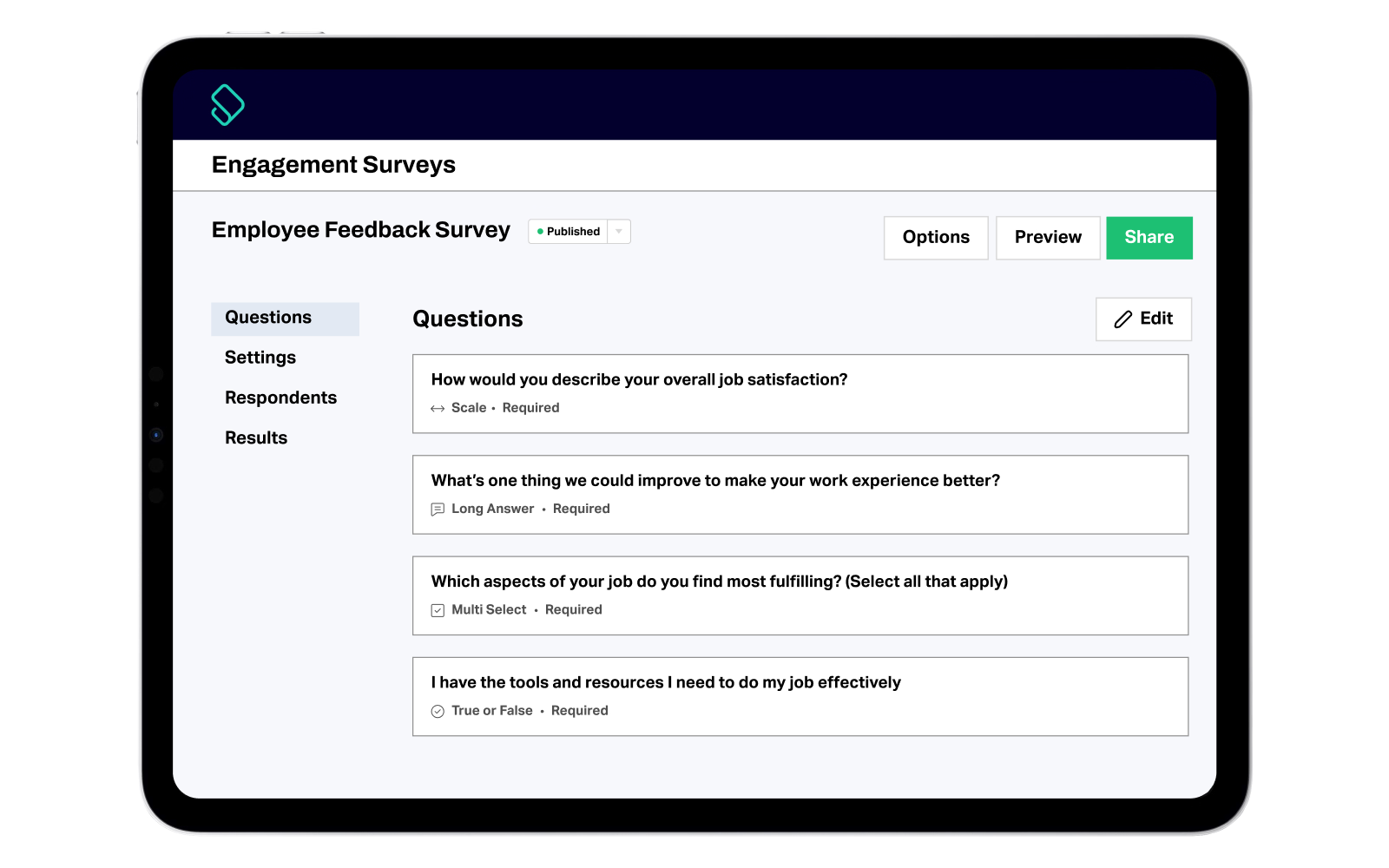
This is where having your survey tool in the same place as your scheduling and payroll pays off. Push Engagement Surveys run inside the platform your team already clocks into: you can send one anonymous survey to every location from a single dashboard, then filter the results by role or location and compare groups side by side, without building a spreadsheet to do it.
4. Ask Again in the Spring
One survey is a snapshot. Two is a direction. Run the same short check-in again in late March or April, when the January hires have settled and the summer plan is forming, and compare the scores. If the things you committed to in the plan moved the numbers, you'll know. If they didn't, you'll know that too, and you'll still have time to adjust before the busy season.
The Plan Your Team Will Actually Believe In
The best 2027 plan isn't the one with the most precise labor target. It's the one your team recognizes themselves in, because they helped write it.
The operators who come out of January with their crews intact aren't lucky, and they aren't necessarily paying more. They asked earlier, they shared what they heard, and they changed something visible. Everything else in the plan gets easier when the people executing it believe their voice counted.
Download The Restaurant Workforce Benchmark Report for the full departure calendar, role-by-role tenure data, and where retention effort pays off most.
If you'd like to see how Push helps operators run engagement surveys across every location and break the results down by role and location, book a demo and we'll walk through it with your team's numbers.

