How Franchise Workforce Management Technology Boosts Efficiency and Controls Labor Costs

Modern restaurant franchises face a tough recipe for success — rising labor costs, unpredictable staffing needs, and increasingly complex compliance regulations. Managing multiple locations only adds another layer of difficulty. But as labor challenges grow, franchise workforce management technology is helping restaurant operators find balance. By integrating scheduling, payroll, and compliance tools under one centralized system, franchises can reduce administrative burdens and gain real-time visibility into labor performance across every location.
This article explores how franchise workforce management systems empower restaurant leaders to control costs, standardize operations, and maintain flexibility — all while improving team engagement and compliance.
What Is Franchise Workforce Management and Why Does It Matter?
Franchise workforce management refers to the process of coordinating, tracking, and optimizing labor operations across multiple locations through digital systems. For restaurant franchises, this means integrating scheduling, payroll, time tracking, and HR tools into one platform. The goal is simple: create operational consistency that supports growth while maintaining compliance and profitability.
The restaurant industry continues to expand, with the National Restaurant Association projecting that it will add another 150,000 jobs annually through 2035. As brands scale, manual workforce management becomes unsustainable — leading to payroll inaccuracies, scheduling conflicts, and compliance issues. Technology closes these gaps by providing real-time insights into labor performance and resource allocation.
In short, franchise workforce management systems matter because they transform what used to be guesswork into a data-driven strategy.
How Can Standardizing Labor Across Franchises Improve Efficiency?
Standardization is the backbone of every successful franchise. Consistent job descriptions, clear expectations, and unified training protocols help ensure that customers receive the same quality of service in every restaurant. However, without digital systems to manage this, maintaining consistency across dozens of locations quickly becomes a logistical challenge.
According to Push Operations, standardizing job descriptions and onboarding templates helps streamline communication, so managers and employees understand expectations across all locations. When franchisees work from the same set of tools and standards, they can measure performance more accurately, improve compliance, and ensure equitable scheduling.
Best Practices for Implementing Labor Standardization
- Develop standardized templates: Create job description and training templates that can be easily replicated across all stores.
- Centralize systems: Use a single HR platform to manage employee data, documentation, and compliance.
- Train consistently: Ensure management training follows the same guidelines across every location to prevent operational inconsistencies.
The result is a workforce that operates more efficiently and confidently — freeing up leadership to focus on strategy, not manual oversight.
What Are the Benefits of Multi-Location Workforce Management Systems?
Managing multiple restaurant locations means dealing with varied staffing needs, different peak hours, and diverse team dynamics. A multi-location workforce management system bridges these gaps by centralizing scheduling, payroll, and HR processes across the entire business.
Centralized workforce management enhances efficiency and accuracy by giving franchise owners a clear view of all their labor data. For franchise leaders, this means they can:
- Monitor scheduling and labor costs across all stores.
- Maintain compliance with local wage and labor laws.
- Identify patterns in turnover or overtime that might indicate inefficiencies.
Common Challenges in Managing Multi-Location Teams
- Compliance Complexity: Varying regional labor regulations make manual tracking risky and time-consuming.
- Communication Gaps: Without centralized systems, miscommunication between franchise managers leads to inconsistent execution and staff confusion.
By digitizing key HR and operations processes, multi-location workforce management systems ensure that every location follows the same operational playbook while allowing flexibility for regional adjustments.
How Do Franchise Labor Management Solutions Optimize Scheduling and Staffing?
Unoptimized scheduling can erode profits and morale alike. Franchise labor management solutions are designed to align scheduling decisions with actual business demand — eliminating inefficiencies that come from overstaffing or understaffing.
According to Nation’s Restaurant News, using sales data to build schedules helps franchises forecast staffing needs more accurately, ultimately improving their bottom line. These systems analyze historical data, such as sales spikes, seasonal patterns, and labor-to-sales ratios, to automatically generate precise schedules.
Tools That Support Smarter Scheduling
- Self-scheduling and shift swaps: Empower employees to manage their own shifts, improving engagement and reducing absenteeism.
- Automated compliance alerts: Prevent scheduling violations such as overtime breaches or exceeding minors’ work-hour limits.
- Real-time labor tracking: Adjust on the fly to manage labor spend when sales volumes change unexpectedly.
By combining operational insights with flexibility, franchise labor management solutions help owners meet customer demand efficiently — without overspending on labor.
How Does Technology Help Ensure Labor Compliance for Franchises?
Compliance management remains one of the most complex — and critical — aspects of running a restaurant franchise. Local differences in overtime, sick leave, and minor labor laws can create significant compliance risk for multi-location operators. Workforce management technology minimizes these risks through automation and transparency.
Automation helps managers stay current with labor law changes and apply them consistently across the organization. Nation’s Restaurant News reports that smarter scheduling systems reduce compliance violations by automating alerts for potential breaches and flagging irregularities before they occur.
Digital records and audit trails also enhance accountability. With centralized systems, franchises can quickly verify wage accuracy, clock-in data, and break times — improving record-keeping and reducing exposure to penalties.
In short, technology simplifies compliance from a reactive process into a proactive safeguard.
How Can Franchises Balance Standardization and Flexibility in Workforce Management?
While consistency fuels operational success, flexibility drives employee satisfaction and local responsiveness. The challenge is finding the right balance. Too much rigidity can stifle morale, but too much flexibility can derail efficiency.
Franchises can maintain uniform standards — such as training, compliance, and performance metrics — while allowing local teams to adapt scheduling and staffing decisions to their markets.
Techniques to Maintain Balance
- Identify non-negotiables: Core policies such as payroll accuracy, career paths, guest experience, and compliance must remain consistent across all locations.
- Empower local judgment: Allow location managers flexibility in scheduling and shift assignments to reflect sales patterns and community needs.
- Encourage cross-training: Employees equipped with diverse skill sets can adjust to shifting demands, making operations more agile.
This hybrid approach allows franchises to uphold brand integrity while respecting local nuances and employee preferences.
How Can Data and Analytics Improve Labor Cost Control in Franchises?
Data-driven decision-making turns workforce management into a competitive advantage. Modern franchise workforce management software provides real-time insight into labor costs, employee performance, and operational efficiency — helping restaurant leaders control costs without sacrificing service quality.
Predictive analytics can forecast labor needs based on historical sales and seasonal trends, leading to smarter scheduling and reduced overtime. Monitoring key performance metrics, such as labor-to-sales ratio or employee turnover, allows owners to identify areas for improvement immediately.
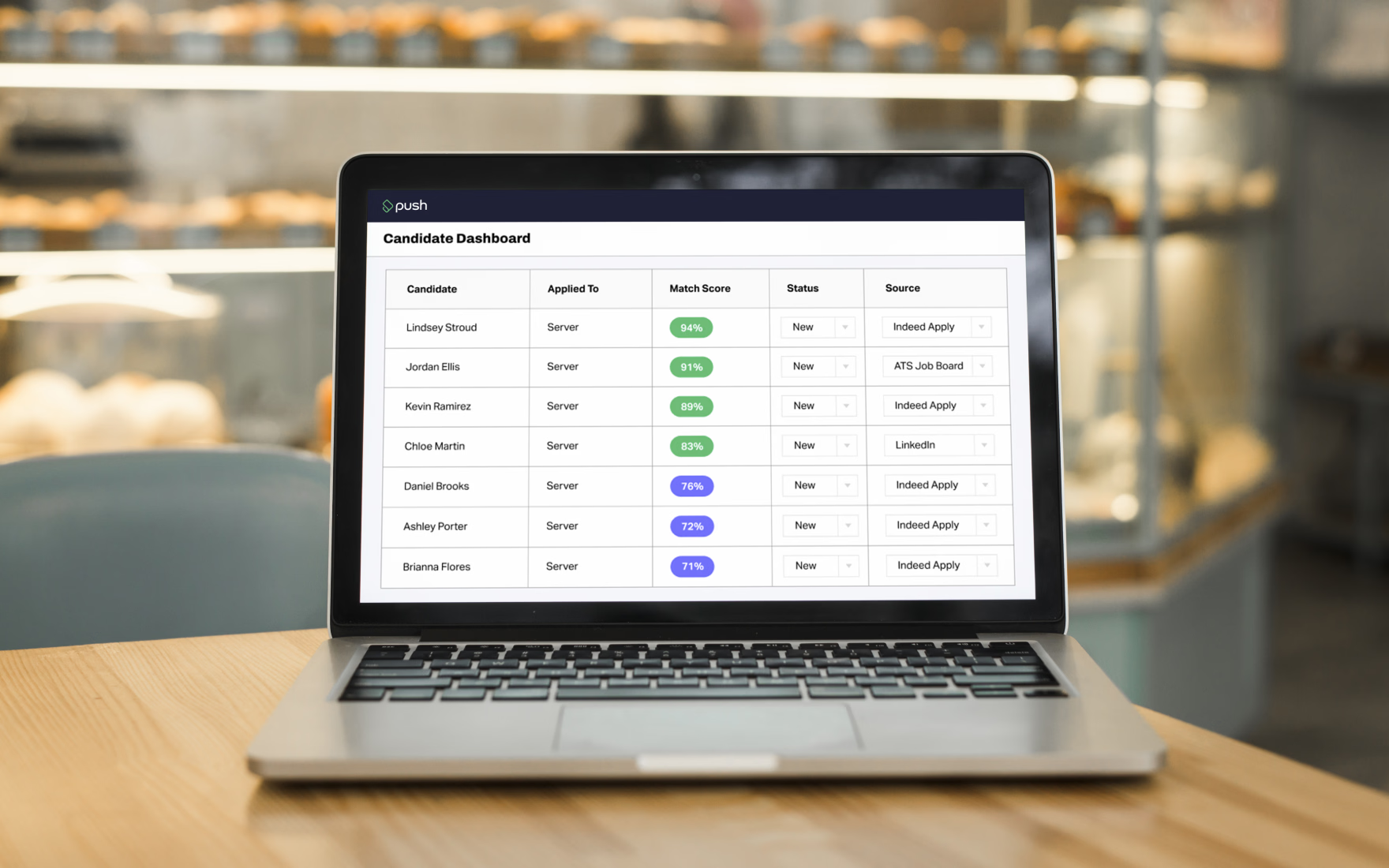
As seen across systems like Push Operations, integrated reporting dashboards turn complex labor data into actionable insights. By seeing exactly where and when labor dollars are spent, operators can trim unnecessary costs, improve scheduling accuracy, and enhance profit margins — all while maintaining a positive guest experience.
What Are the Best Franchise HR Practices for Sustained Growth?
Long-term success in franchise operations depends on people — not just technology. HR best practices, supported by digital tools, help create stable, engaged teams that deliver consistent results.
According to the National Restaurant Association, workforce technology contributes to faster hiring and longer retention in the restaurant industry. Franchises that invest in structured onboarding, leadership development, and recognition programs see measurable improvements in morale and retention.
Core HR Practices That Drive Success
- Structured onboarding: Streamlined digital training tools ensure consistency across locations.
- Employee engagement: Recognition systems and two-way feedback create stronger connections and reduce turnover.
- Growth through leadership: Developing internal talent builds loyalty and reduces recruitment costs.
Technology amplifies these practices, making them scalable and measurable across the franchise network.
How to Implement a Scalable Franchise Workforce Management Strategy
Building a scalable franchise workforce management strategy begins with a clear assessment of current processes and gradual adoption of integrated technology. Centralization not only improves oversight but also creates a smoother experience for staff and managers.
Step-by-Step Implementation Guide
- Assess existing operations: Identify discrepancies in scheduling, payroll, or compliance tracking.
- Integrate key systems: Connect payroll, HR, and point-of-sale data for unified reporting.
- Pilot automation tools: Test in select locations to refine workflows.
- Roll out company-wide training: Ensure all managers understand new systems and processes.
Modern workforce management platforms — such as Push Operations — offer seamless integration across scheduling, payroll, and compliance, making it easier to transition into an efficient, tech-driven model.
Conclusion: Future-Proofing Franchise Operations Through Technology
Restaurant franchises thrive when every location operates with consistency, transparency, and control. As labor costs and compliance complexities rise, workforce management technology is no longer optional — it is essential. From forecasting labor needs to ensuring compliance and empowering teams, centralized systems provide the clarity and efficiency needed for sustainable growth.
Franchise owners who embrace digital workforce management gain a strategic edge — controlling labor costs, improving service quality, and preparing their business to scale confidently. Book a demo with Push today to see how one unified workforce management platform can simplify and streamline operations across your franchise network.