From Barrel to Plate: The Rising Cost Crisis for Restaurants


A Looming Threat Beneath the Surface
It's no secret that the rising geopolitical tensions that disrupted flows through the Strait of Hormuz were to blame for the price of oil surging to $100 per barrel in early 2026. Immediate concerns focused on consumers at the gas pump, but the ripple effects go much further.
For restaurant operators, the real impact is far less visible and far more complex. Unlike sudden spikes in fuel prices, the effect of rising oil costs on the foodservice industry unfolds gradually, working its way through farms, freight systems, suppliers, and labor markets before ever appearing on a menu. By the time it does, much of the damage is already being absorbed by the restaurant industry.
Why Oil Prices Matter More Than You Think
Restaurants may not buy crude oil, but nearly everything they rely on is tied to it. The average food item travels between 1,000 and 1,500 miles before reaching a plate.
That journey requires energy at every stage:
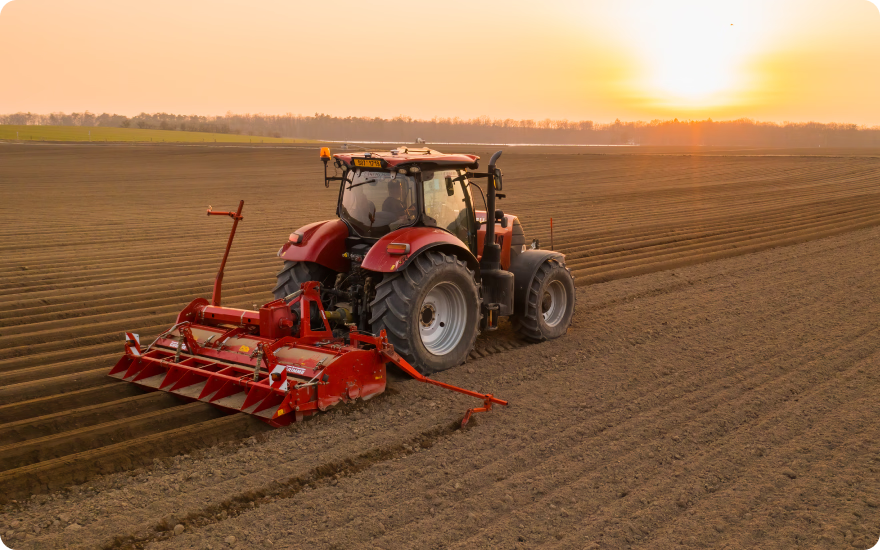
- Agriculture: Diesel fuels tractors, irrigation systems, and harvesting equipment
- Fertilizer production: Nitrogen-based fertilizers depend heavily on natural gas
- Processing and packaging: Energy-intensive facilities rely on oil and gas inputs
- Transportation: Trucks, ships, and planes move food across regions
- Cold storage: Refrigeration systems consume enormous amounts of energy
As oil prices rise, costs increase incrementally at each step. These elevated costs create a complex rippling effect that eventually reaches restaurant operators through higher supplier pricing.
The Price Lag Effect
One of the most challenging aspects of this crisis is timing. Fuel prices can spike overnight while food costs don’t. Instead, they move through a delayed cost pipeline shaped by supplier contracts, inventory cycles, distributor pricing structures, and agricultural production timelines.
According to the USDA Economic Research Service, food prices are expected to rise in 2026:
- 3.6% overall food price increase
- 3.9% increase in food-away-from-home (restaurant) prices
While these numbers may appear modest, they represent an average across the entire system. For individual operators, especially independents, the increases can feel quite a bit higher depending on supplier dependence and menu composition.
Fertilizer Costs
The most critical, but least considered, factor is fertilizer. Ammonia-based fertilizers are tied to natural gas prices. When fertilizers become more expensive, they increase the cost of growing crops months before they reach the market.
With U.S. anhydrous ammonia prices surging to an 18% increase as of March 2026 and nitrogen products soaring to increases that range anywhere from 31% to 42%, fertilizer is far more expensive today than this time last year. Adding to the issue is market volatility, with suppliers changing prices multiple times each week.
These increased fertilizer costs unfold as higher agricultural production expenses. That, in turn, leads to elevated wholesale food prices, which will result in restaurants having to pay more for the food they intend to prepare for their guests.
It is also important to note that while fuel surcharges may fluctuate weekly, fertilizer-driven price increases can persist across entire growing seasons. Because of this, higher costs may be locked in for months beyond what might be expected.
Labor Pressures
Rising oil prices do not just affect ingredients — they impact people. Employees who commute longer distances pay more at the pump. This can often lead to employees seeking and securing jobs closer to home or asking for pay raises to offset their increased transportation costs. For restaurants already facing tight and competitive labor markets, this creates a second wave of financial pressure.
Higher turnover rates lead to increased hiring and training costs and reduced service consistency. This, in turn, can create operational instability. In effect, oil prices indirectly drive labor inflation, which tightens margins even further.

The Illusion of Stability
Despite these mounting pressures, many diners have not experienced dramatic price increases. That is not because costs are not rising. It is because operators are actively shielding customers from the full impact.
Common strategies to shield customers from rising costs include:
- Reducing portion sizes
- Swapping for lower-cost ingredients
- Simplifying menus
- Absorbing short-term losses
However, this approach has limits, as sustained increases in oil prices will eventually translate into higher food costs for consumers. At some point, operators must either raise prices or sacrifice profitability.
A Global Issue with Local Consequences
The current surge in oil prices is tied to disruptions in the Strait of Hormuz, a critical global oil transit route responsible for roughly 20% of the world’s supply. These disruptions are what are driving the increased delivery costs, supplier price volatility, and increasingly unpredictable cost forecasting.
While a 10-20% increase in fuel costs will not translate into a one-to-one price increase for a restaurant operator, it will eventually filter down through multiple layers to result in an increase to the bottom line.
How Restaurants Can Respond to Rising Oil Costs
While restaurant operators cannot control oil markets, they can control how they respond. Here are five strategic approaches gaining traction across the industry:
1. Menu Engineering for Margin Protection
Reevaluate menu items based on these three factors:
- Ingredient cost volatility
- Contribution margins
- Supply chain stability
Shifting toward dishes with stable, lower-cost inputs can help offset rising expenses without drastic price increases.
2. Regional and Hyper-Local Sourcing
Shortening the supply chain reduces exposure to fuel-driven transportation costs. This can lower freight expenses and improve supply reliability. It will also create stronger relationships with local producers.
3. Supplier Diversification
Relying on a single distributor increases risk. Restaurant operators need to build multiple supplier relationships. Spend some time comparing pricing more frequently and negotiating shorter, more flexible contracts with the best vendors for your needs.
4. Operational Efficiency and Energy Management
Reducing internal energy use can offset external cost increases. Some key tactics to accomplish this in the short term include:
- Upgrading to energy-efficient kitchen equipment
- Maintaining refrigeration systems for optimal performance
- Adjusting hours or service models during slower periods
5. Data-Driven Decision Making
Modern operators are leveraging data to stay on top of things. Things like real-time inventory tracking, demand forecasting, waste reduction strategies, and dynamic purchasing adjustments will benefit your restaurant operations in both the short and long term. In an environment of rising costs, precision matters more than ever.
A Reshaped Industry
The restaurant industry has always been vulnerable to external pressures, but rising oil prices highlight just how interconnected the system truly is. What began as a geopolitical conflict affecting global oil supply is quickly becoming a localized operational challenge. It impacts everything from ingredient sourcing to staffing decisions.
If elevated energy prices persist, the industry may undergo lasting changes. There can be increased reliance on regional supply chains. Greater emphasis on efficiency and automation will become a great asset. Restaurants may adopt more dynamic pricing models and accept tighter margins as the new normal
Final Takeaway
For restaurant operators, oil prices are no longer a distant economic indicator but a daily operational reality. The effects may be delayed, but they are cumulative and unavoidable. Those who adapt early through smarter sourcing, tighter operations, and data-driven decision-making will be best positioned to weather the storm.
Because in today’s restaurant economy, the journey from barrel to plate has never been more expensive — or more important to understand.