How Restaurant Tip Systems Are Evolving and What Operators Need to Know


The Hidden Costs of an Outdated Tip System
Your tip structure might be costing you more than you think. Not just in dollars, but in turnover, morale, compliance headaches, and even lost revenue.
With evolving guidance from the Canada Revenue Agency (CRA), changing provincial labor standards, and a workforce that expects transparency and fairness, yesterday’s tip system may quietly be sabotaging today’s business performance.
The truth? Many operators don’t know whether their tip structure is compliant, competitive, or fair. And in 2026, not knowing isn’t a safe place to be.
Tipping Trends Are Shifting
Guest behaviors have changed, payment methods have evolved, and staff expectations are higher than ever. According to the 2026 Tipping Industry Trends Report, average tip percentages continue to rise in full-service environments, and cashless tipping is no longer a “trend”; it’s the new standard. Guests expect seamless digital checkout experiences, and employees expect tips to be processed accurately and quickly.
Many restaurants still rely on manual processes, managing tip pools in spreadsheets, distributing cash by hand, and using structures built for a different operating environment. This gap between industry standards and day-to-day operations can lead to inefficiencies, higher administrative workloads, and challenges with staff retention.
High-performing restaurants are moving toward cashless tip distribution, automated compliance tracking, transparent reporting, tiered or weighted tip pools, and faster access to earned tips. If your system can’t support that shift, your competitors’ systems probably can.

Understanding Tip Compliance in Canada
Beyond operational efficiency, tip management has important compliance implications. Under CRA rules, tips fall into distinct categories that determine how they must be treated for CPP, EI, and tax purposes.
Controlled Tips (Employer-Controlled)
Controlled tips are tips that the employer has before distributing them to employees. This includes mandatory service charges, employer-managed tip pools, or cash tips deposited into the employer’s bank account. Employers must withhold income tax, CPP, and EI, and report these tips on T4 slips. Most restaurants that run tip pools are dealing with controlled tips.
Direct Tips (Employee-Controlled)
Direct tips are paid directly from the customer to the employee, such as cash left on the table or tips returned in full at shift end. Employers don’t withhold taxes or report them on T4 slips, though employees must declare them as income.
Declared Tips (Quebec Only)
In Quebec, employees must declare even direct tips to their employer. Declared tips are included in EI insurable earnings, though CPP is not withheld. Quebec is the only province with this requirement, but it’s a reminder that tip compliance isn’t uniform across Canada.
For restaurant teams, the complexity isn’t just understanding these categories; it’s consistently applying them across payroll, reporting, and day-to-day operations. Compliance isn’t a spreadsheet exercise anymore; it requires automation and clarity.
What to Look for in a Modern Tip System
Systems like TipHaus are designed to help restaurants manage these complexities more efficiently. By automating tip calculations, compliance tracking, and cashless distribution, TipHaus ensures that controlled, direct, and declared tips are handled correctly according to Canadian law. It also supports tiered or weighted tipping structures, provides faster access to earned tips for employees, and generates transparent reports for operators.
For Canadian operators navigating CRA rules, provincial legislation, and rising employee expectations, TipHaus helps eliminate costly errors, reduce compliance risk, and simplify tip management across every location.
Fairness Matters (Even If You’re Compliant)
Even if your system checks all the legal boxes, your team might still feel it’s unfair. And perception drives retention. Today’s hospitality workforce places a high value on transparency. Teams want to understand how tips are calculated, how pools are distributed, and when payouts occur.
Structures that lack visibility, rely heavily on manual processes, or distribute tips without reflecting role contribution can create friction over time.
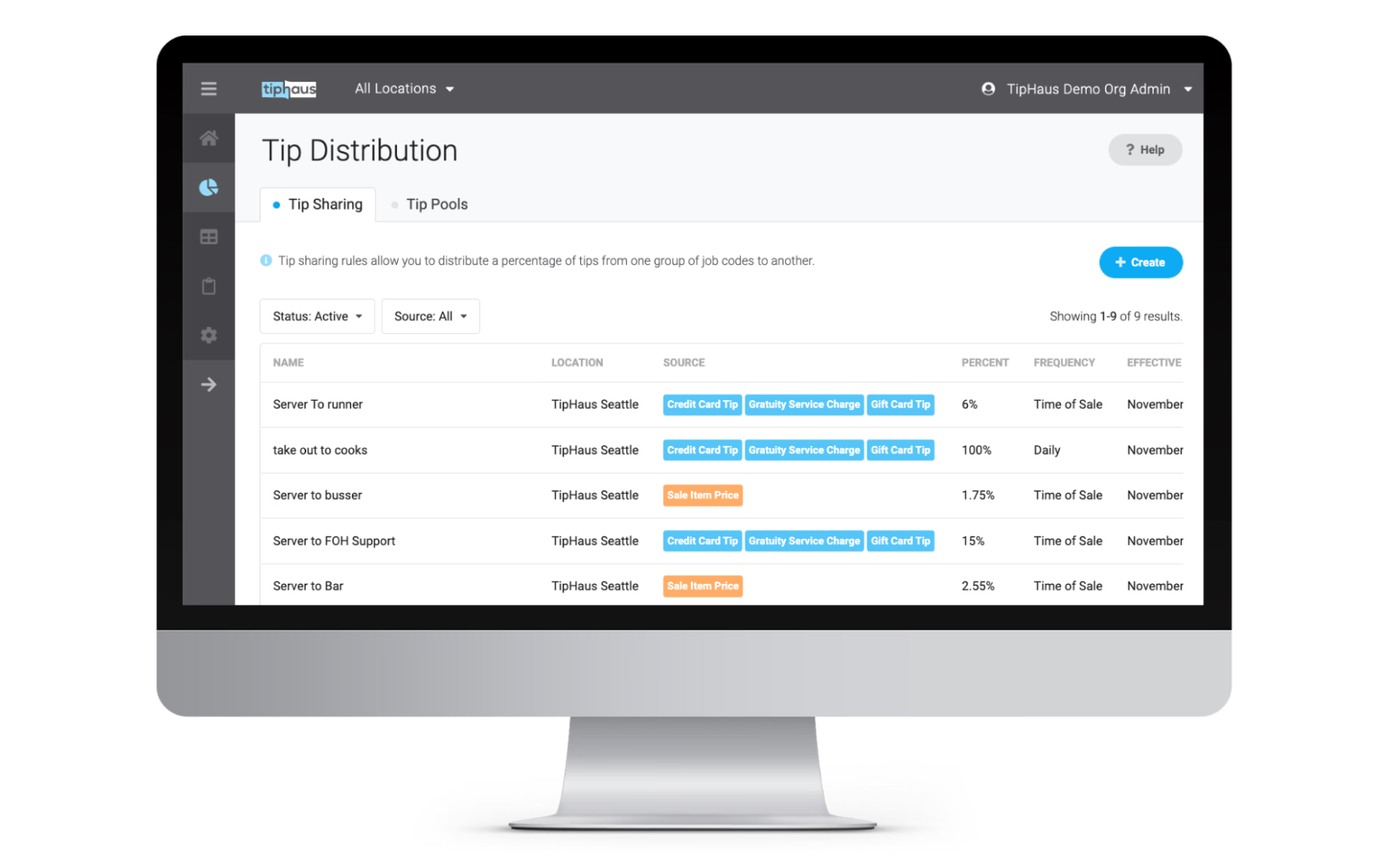
Restaurants using TipHaus have implemented weighted and tiered systems that better align tip distribution with employee contribution, helping improve morale, trust, and retention while removing the risks of spreadsheet-based processes.
The Shift Toward Cashless Tip Distribution
Cash tip-outs carry more risk than most operators realize.
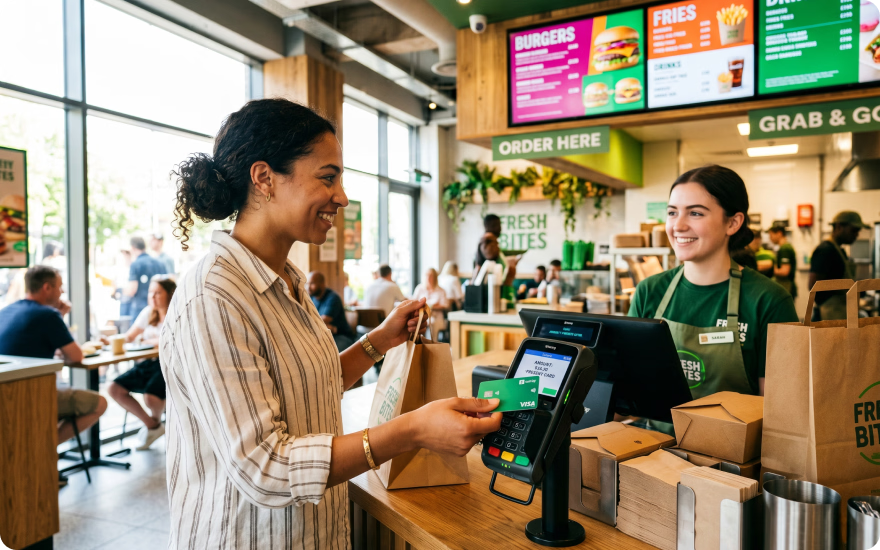
Operators using TipHaus report that digital tip payouts reduce reconciliation issues, improve security, and eliminate time-consuming shift-end cash handling. Staff adoption is often smoother than expected, especially as digital payouts become standard across the industry.
Cash handling creates reconciliation risks, security concerns, time-consuming shift-end processes, and extra labor costs. In Canada, where controlled tips need to be tracked for payroll compliance, going cashless also gives operators a clear, defensible paper trail that cash simply can't provide.
Faster Access to Earnings
Employees want faster access to their earnings.
For many operators, providing faster access to earned tips has become a major differentiator in hiring and retention. Daily digital tip payouts can reduce employee financial stress while helping teams feel more valued and supported.
For multi-unit operators, that adds up quickly. For employees, daily tip access reduces financial stress and increases job satisfaction, which is critical in a tight labor market.
Proven Results: Nando’s Improved Efficiency with TipHaus
One hospitality brand that modernized tip operations with TipHaus is Nando’s. Before implementing TipHaus, the company relied on a highly manual process for pooling and distributing tips, consuming significant payroll time each cycle and creating uncertainty for staff around earnings.
After switching to TipHaus, Nando’s reduced payroll processing time by more than 50%, cutting monthly tip administration from 32 hours to 8 hours, and saving approximately 24 manager hours every month. The platform also eliminated manual calculations and errors, increased transparency for employees, and helped support compliance across multiple markets.
According to Zach Allen, Director of Operations Services at Nando’s:
“TipHaus has been a game-changer for our staff. They finally have transparency around their tips, allowing them to budget effectively. This boost in satisfaction goes hand-in-hand with reduced turnover, and even helps us attract top talent.”
The results demonstrate how automated tip systems can improve operational efficiency while strengthening employee trust and retention.
Why It Matters for Operators
An outdated tip system costs more than just money. It drives turnover, increases payroll risk, consumes administrative time, invites audit exposure, lowers morale, and quietly erodes trust. Tips are one of the most visible parts of compensation; if the system feels opaque or unfair, your culture will reflect that.
Canadian operators face a mix of CRA rules, provincial standards, employee expectations, technology shifts, and competitive hiring pressures. Legacy tip pools just weren’t built for this environment.
Modern restaurants are adopting structured, transparent, automated systems that ensure CRA compliance, distinguish between controlled and direct tips, support Quebec’s declared tip rules, enable tiered distributions, facilitate cashless operations, provide faster tip access, and reduce payroll risk.
Bring Daily Digital Tip Payouts to Your Team in Canada
TipHaus launched its Earned Tip Access® beta in Canada this April and is actively looking for hospitality operators to join as early beta partners.
With Earned Tip Access® (ETA), employees can receive tips through HausDirect using their preferred or existing debit card, through the HausMoney debit card, or on their regular paycheck, giving teams fast, secure, and transparent access to earnings. Interested? Join the beta group!
Learn more about how Earned Tip Access works!
Evaluate Your Current Approach
If you’re unsure whether your tip system is compliant, competitive, or scalable, now is the time to find out. In today’s hospitality landscape, tipping isn’t just about gratuity; it’s about strategy.
Book your personalized TipHaus walkthrough today and see how automation can simplify tip management, improve transparency, and save your team hours every payroll.