Summer Patio Scheduling: How to Staff for the Rush, the Rain, and Your Labor Budget

Your patio is the highest-variance real estate in your restaurant. Here's how to staff it for the rush, the rain, and everything in between.
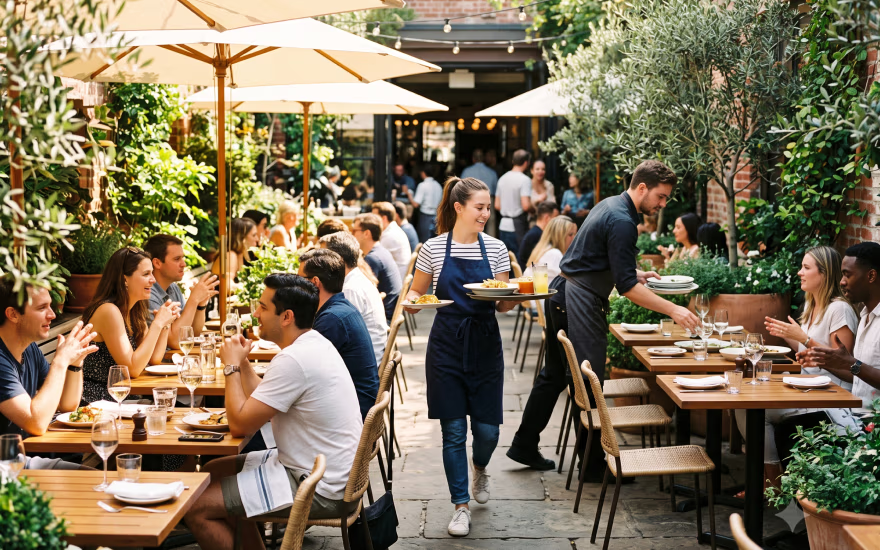
It's the first genuinely warm Friday of the season. By 6 p.m. every patio table is full, there's a wait at the host stand, and you've got two servers trying to cover a section built for four. Drinks are slow, tables are turning cold, and the five-star night you could have had is quietly becoming a two-star one.
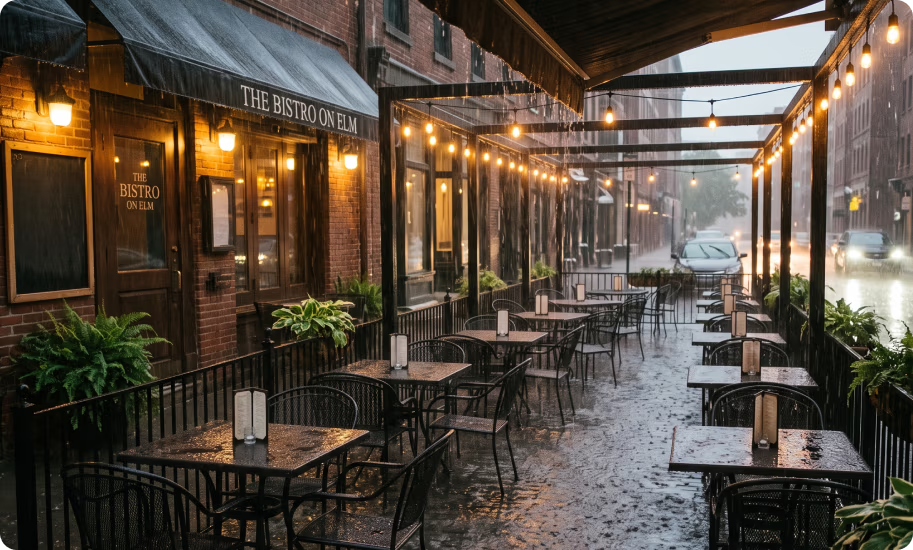
Now flip it. The forecast said sunny, you scheduled for a packed house, and a wall of clouds rolled in at 4. The patio sits empty, you're paying a full floor to lean against the bar, and your labor number for the week just ate the weekend.
Patios live between those two nights. They're the most profitable square footage you have when the weather cooperates and the most punishing when it doesn't. Getting the staffing right isn't about throwing more bodies at the problem — it's about matching coverage to demand you can actually see coming. Here's what the data says about summer coverage, and how the sharpest operators schedule for it.
Why Is a Summer Patio So Hard to Staff?
Summer is the season diners want to be outside, and they vote with their reservations — travel, tourism, and warm weather all push traffic up, and patios and rooftops are a big part of why. Restaurants are expected to add roughly 450,000 seasonal jobs in summer 2026, according to the National Restaurant Association. But that number is down from 469,000 in 2025 and marks the third straight year of seasonal hiring coming in below 500,000 — a sign that the people you need to cover the patio are getting harder to find.
The labor pool that traditionally fills those shifts is thinning, too. The number of 16-to-19-year-olds in the workforce sat around 6 million this spring, down about 200,000 from the same point in the prior two years. So you're staffing your busiest, most weather-dependent season with a smaller bench than you had a couple of summers ago.
And then there's the weather itself, which doesn't care about your schedule. A severe storm can turn a fully booked night into a run of no-shows, and a surprise heat wave can pull a crowd you didn't plan for. Your patio season isn't even everyone's season: the Northeast posts some of the strongest summer gains, while Florida actually sheds restaurant jobs in summer because its peak is winter. The point is that patio demand is local, seasonal, and volatile all at once — which is exactly what makes it hard to staff by feel.
What Poor Patio Staffing Really Costs You
Overstaffing and understaffing aren't equal-and-opposite mistakes — they both cost you, just in different currencies. Understaffing costs sales and goodwill on the nights you can least afford to lose them. Overstaffing quietly bleeds your single largest controllable expense.
Here's the math that should focus the mind. Among full-service operators, wages and benefits ran a median of 36.5% of sales in 2024, according to the National Restaurant Association. But operators who actually turned a pre-tax profit held labor to a median of 34.2% — more than two points lower. That gap is the whole game. On a patio, where a single misread shift can swing your labor percentage for the week, those two points are won or lost one schedule at a time.
The difference between a profitable summer and a breakeven one is rarely one big decision. It's a hundred small staffing calls.
How to Staff a Summer Patio for Maximum Coverage
The operators who win the patio season don't have better instincts — they have better inputs. These five moves turn patio staffing from a nightly guess into a repeatable system.
1. Forecast Patio Demand From Your Own Sales Data
The single biggest reason managers overschedule is that they don't have forward-looking demand data, so they bring people in early and keep them late "to be safe." The fix is to build the schedule against a real forecast — your historical sales by day and daypart, adjusted for what's actually coming: local events, holidays, and the weather window. When you can see that next Thursday is likely to run 30% hotter than an average Thursday, you staff Thursday like the night it's going to be, not like the one on the template. Push's schedulerp pulls your POS sales data directly into the forecast so the number you're staffing against is yours, not an industry average.
2. Build "Patio Open" and "Patio Closed" Schedule Templates
Your restaurant is really two floor plans depending on whether the patio is live. Trying to rebuild the schedule from scratch every time the forecast shifts is how errors creep in. Instead, pre-build a "patio open" template with full outdoor coverage and a "patio closed" template that pulls that labor back inside, so you can flip between them cleanly as the week firms up. It turns a stressful last-minute scramble into a two-minute decision.
3. Stagger Start Times to Match the Patio Rush
Patios don't fill on the same curve as the dining room. The outdoor rush often builds later and lingers, especially as evenings stay light. Rather than starting everyone at clean half-hour blocks, stagger start times in 15-minute increments to match when tables actually turn — a couple of servers on early for the after-work crowd, the rest phased in as the patio fills. You get coverage exactly when you need it and stop paying for a full floor during the lull.
4. Cross-Train Staff and Keep a Weather Flex Layer
Weather volatility is the argument for flexibility, not for overstaffing. Cross-train enough of your team that a server can pick up a section, run food, or step behind the bar when the patio suddenly fills — so one call-out or one rush doesn't sink the night. Pair that with a small on-call or short-notice flex layer during peak weeks: a couple of people who know they might be called in if the sun comes out, or sent home early if it doesn't. It's coverage insurance that costs you nothing on the nights you don't use it.
5. Track Labor in Real Time and Adjust Mid-Shift
The schedule is a plan, not a prophecy. The best operators check labor against sales during the shift, not after payroll runs. If the patio's dead by 8 and you're overstaffed, you can cut early; if a walk-in crowd materializes, you can see it and hold your team. Real-time labor tracking and live reporting turn every shift into information you can act on now — and into a better forecast for next Friday. Push's BI Insights surface your labor-to-sales ratio as the shift unfolds, so the adjustment happens while it still matters.
Summer Patio Scheduling FAQs
How Far in Advance Should I Post Summer Patio Schedules?
Aim to publish at least two weeks out so staff can plan around a busy season, then use flexible tools — swaps, on-call layers, and templates — to adjust as the weather forecast sharpens closer to each shift. Predictability for your team and agility for you aren't mutually exclusive.
How Do I Staff a Patio When the Weather Is Unpredictable?
Plan for weather as a variable, not a surprise. Build your schedule against a demand forecast that includes the weather window, keep a small on-call flex layer during peak weeks, and cross-train your team so you can shift coverage indoors or outdoors quickly. The goal is a schedule that bends without breaking.
What's a Healthy Labor Cost Percentage for a Full-Service Restaurant?
The 2024 industry median was 36.5% of sales, while full-service operators who turned a profit held labor closer to 34.2%. Patios, with their swing between packed and empty, are where that gap is most often won or lost — which is why demand-based scheduling matters most during patio season.
Do I Need Separate Schedules for Patio and Indoor Service?
You don't need separate schedules, but you do need separate templates. A "patio open" and a "patio closed" version of your schedule lets you move labor in and out cleanly as conditions change, without rebuilding the whole shift each time.
The Bottom Line on Summer Patio Staffing
A summer patio is one of the best margin opportunities your restaurant has all year — and one of the easiest to give back through guesswork. The operators who come out ahead aren't the ones with the biggest teams. They're the ones who match coverage to demand they can actually see, adjust in real time, and treat the weather as data instead of fate.
The intelligence behind your restaurant starts with how you schedule it. If you'd like to see how Push helps operators forecast demand, build patio-ready schedules, and keep labor calibrated to sales through the busiest stretch of the year, book a demo — we'll walk through it with your numbers.