The First Five Shifts: How to Onboard a Seasonal Hire Who Actually Stays

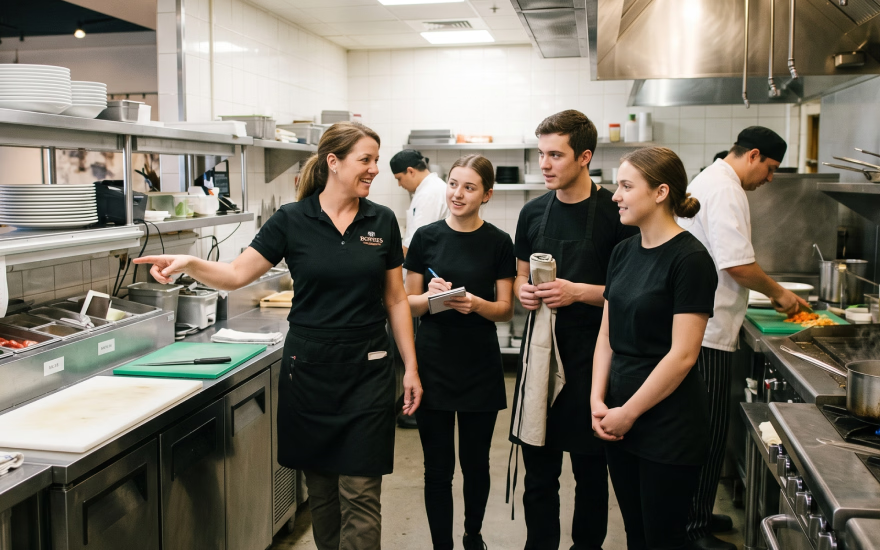
The decision to quit a restaurant job is almost always made in the first month. Here's how to make sure your summer hire doesn't make it before their second weekend.
Your new hire walks in for their first shift on a Tuesday at 3 p.m. The GM is on the floor pulling silverware. The manager who interviewed them is off. The host stand looks up, says "oh, you're the new server, right?", and points them toward a clipboard.
Long before dinner service even starts, she's already forming a view of your restaurant. That view tends to stick — and for nearly a third of new hires, it's the view that decides whether they finish out their first 90 days.
Hiring is the easy part. Most operators we talk to have their summer roster filled by the end of May. The harder part — the part that decides whether your labor cost looks anything like your plan come August — is what happens between the offer letter and the second weekend on the floor. The first five shifts are where seasonal hires decide if they're staying. Most operators are running a process that assumes they will. The data says they shouldn't.
Here's what the first five shifts actually need to look like — and why almost every part of it matters more than the offer letter you sweated over.
What Your New Hire Decides in the First Five Shifts
The National Restaurant Association puts 20% of restaurant turnover inside the first 45 days of employment. Broader workforce research finds that 30% of new hires leave within their first 90 days. The leisure and hospitality sector runs one of the highest separation rates of any industry — well over 70% annually, and structurally higher in summer.
Here's the part that matters: most of the people who leave didn't decide to leave in month two. They decided in week one, and the next two months were a formality.
Cornell's Center for Hospitality Research puts the average cost of a single hourly restaurant turnover at $5,864 — recruiting, screening, training, and the lost productivity while a new hire ramps up. Run that against a 40-person seasonal cohort with even a quarter of them gone before Labor Day, and you're looking at six figures in churn that almost no operator carves out as a line item.
The good news: structured onboarding has been shown to lift new-hire retention by as much as 82% — and to make new employees 69% more likely to remain at a company three years out. The first five shifts aren't a paperwork problem. They're the entire conversation about whether your hire wants to be there.
Day Zero: The Work That Happens Before They Walk In
The fastest way to lose a new hire on day one is to make them feel like an inconvenience.
That sounds harsh. It is. But that's what it feels like to walk into a restaurant where the host doesn't know you're coming, the uniform doesn't fit, the I-9 packet is still sitting on the GM's desk, and your first 45 minutes get spent filling out forms while the lunch rush winds down five feet away. Your time doesn't matter. That's the message — even if no one says it.
Day zero is the day before the first shift. The work that happens here is what separates "they're treating me like an adult" from "they didn't even know I was starting."
A few things that pay back disproportionately well:
- Provide every piece of paperwork before day one. I-9, W-4, direct deposit, handbook acknowledgment, harassment training. Push's Hiring & Onboarding workflow sends new-hire packets electronically before day one and pulls completed forms straight into payroll — so day one starts on the floor, not at a folding table, and the first paycheck lands without a correction email.
- Fit the uniform in advance. Mike Bensi's onboarding research, shared by the NRA, calls out uniforms specifically: hand them the shirt or apron when they sign the offer, not on the morning of their first shift. A uniform that doesn't fit is a tiny thing that lands as a big thing.
- Tell the team the new hire is coming. A name, a photo if you have it, the time they'll arrive, the role they're starting in. The host who looked up confused at 3 p.m.? That's a culture problem you can fix with a Slack message the night before.
- Send the first-week schedule before day one. A new hire who sees their five-shift schedule the day before they start can plan a ride, a babysitter, a second job. A new hire who finds out their shifts at the end of day one is already mentally calculating whether this is going to work.
One operator we talked to puts it bluntly: day zero is whether you've earned the right to ask someone to show up.

Day One: Don't Hand Them a Stranger
The single highest-leverage moment in the entire onboarding arc is the first 15 minutes of day one. Almost every long-tenured restaurant employee can tell you what those 15 minutes looked like at the job they stayed at — and at the job they left.
Three moves consistently win those 15 minutes:
The manager is there. Gallup's onboarding research found that when managers are actively involved in onboarding, new hires are 3.4 times more likely to call their experience exceptional. And 70% of the variance in team engagement is attributable to the manager. The manager who interviewed the hire should be on the floor the day they start. If they can't be, the manager who's there should know the new hire's name before they walk in.
A buddy is assigned, by name, in advance. Not "whoever isn't busy." A specific server, line cook, or barista whose job for the day is to walk the new hire through where the bathroom is, where to put their phone, how the POS logs in, what the family meal situation is, who handles tip-out, and what the bar staff calls the GM behind his back (just kidding). The NRA piece makes the buddy system a specific recommendation for the same reason every operator who runs one swears by it: it gives the new hire someone who isn't management to ask the questions they don't want to ask management.
Break bread. It's a restaurant. A first-day shift meal with the manager or the buddy is one of the cheapest, highest-return onboarding moves available. It signals that the hire is part of the team before they've done anything to earn it — which is exactly when they need to believe it.
The opposite of all three is the new hire who spends day one in the office, filling out the paperwork that should have been done at home, while the team they're supposed to belong to runs lunch service without them. Five hours of that, and the only question is whether they tell you they're leaving or just don't come back on Wednesday.

Days Two Through Five: Train for Confidence, Not Just Competence
Most restaurants train new hires the way they train new menu items: explain it once, run it for a shift, hope it sticks.
The problem is that menu items don't care if they feel stupid on a Saturday night. People do.
Toast's research on restaurant training found that more than 80% of staff who received at least three weeks of training rated it good or very good, compared to 45% who got less than a week. For seasonal hires, three weeks is unrealistic — but the principle is exactly right. The fastest way to lose a new hire in week one is to put them on the floor before they feel competent, watch them fail, and then act surprised.
A five-shift ramp that actually works looks something like this:
- Shifts one and two: full shadow. They follow a tenured server, line cook, or barista for an entire shift. They take notes. They observe how a regular gets greeted, how a four-top closes, how the line communicates when a ticket pops up at the same time as a 12-top dessert order. They do not run their own section yet.
- Shift three: shadow plus shared section. They split a section with their buddy. The buddy takes the lead; the new hire takes orders, runs food, runs the POS, but never alone.
- Shift four: solo section, lunch or off-peak only. This is the first time they own anything. It should never be a Saturday night. Schedule it for a Tuesday lunch or a Sunday brunch tail. Let them learn before the rush teaches them.
- Shift five: solo section, with a check-in at the start, middle, and end. The manager pulls them aside before service to ask what they're nervous about. Mid-shift, they walk by and ask one specific question. End of shift, they sit down for five minutes and ask how it went.
That last shift, with the three check-ins, is where the hire decides whether they're a long-term part of this team or whether this is going to be a paycheck that gets them through to fall. Three minutes of attention from the manager will outperform a $200 raise. It costs nothing.
What you're training in those five shifts isn't really how to run a section. It's confidence — the feeling that they can show up on Friday night and not embarrass themselves. Operators who confuse competence training (how to use the POS) with confidence training (knowing they'll be supported if a four-top sends back the entrée) lose hires they thought were settled.
The Schedule Is Part of the Training
The single most under-discussed onboarding tool in the restaurant industry is the new hire's schedule.
Most operators build the rookie's first two weeks the same way they'd build a veteran's: plug them into the holes that need to be filled. That's how you end up with a hire who's never run a solo section getting handed a four-table patio block on a Saturday at 7 p.m. because the manager needed a body.
A few small changes pay back fast:
- Build the ramp into the schedule. The five-shift sequence above only works if it's in the schedule. That means the new hire's shift one is on the same day as their buddy's shift, in the same section.
- Publish the schedule early — at least seven days out, ideally two weeks. New hires plan their lives off whatever you give them. A schedule that drops Thursday night for Friday morning isn't onboarding, it's hazing. Operators who publish two-plus weeks ahead see meaningfully lower voluntary turnover — and the effect is biggest with new hires who are still deciding whether you respect their time.
- Don't make new hires the callout cushion. When somebody else calls out, the temptation is to text the hire who said "let me know if you need anything." Resist it. The first two weeks should run on the schedule you committed to, not the one you needed at 11 a.m. Sunday. (This is one of the places Push Scheduling earns its keep — self-service shift swaps among the experienced team get the coverage without putting the cost on the rookie.)
A schedule that feels predictable, fair, and planned is itself an onboarding signal. It says: we planned ahead for you, and we trust you.

The Manager Is the Onboarding
Every piece of restaurant onboarding research lands in the same place: the manager is the variable.
Gallup found that only 12% of employees strongly agree their organization does a great job onboarding new hires. The other 88% almost universally describe the same failure mode — a manager who was too busy, too absent, or too distracted to make the new hire feel seen.
The fix is the simplest thing on this entire list, and the thing the most operators skip:
- Day one: a five-minute conversation. Not an interview. A conversation. What are you nervous about? What's a thing nobody told you yet that you want to know?
- End of week one: a phone call or a sit-down. "How did your first week go? What did we do well, what did we miss? Is there anything I should know before next week starts?" The NRA's onboarding piece calls this out specifically — call the new hire at the end of week one and gather feedback early.
- End of week two: a name-and-face thank-you. "I noticed you stayed late to help close on Thursday. Not expected, but very appreciated." Two sentences. Free.
This is the part of onboarding that doesn't scale. You can automate the I-9. You can systematize the buddy assignment. You can build a five-shift training template that any manager can run. You can't automate the manager noticing.
That's the whole game. The manager noticing is the onboarding. Everything else is logistics.
What This Actually Saves You
Let's run the math on a small group, just to be clear about the stakes.
A restaurant hires 12 seasonal employees in May. By Labor Day, 30% have left — three of them quit in the first 30 days, one more by mid-July. Conservative replacement cost at the Cornell figure of $5,864 per turnover, and you've absorbed nearly $24,000 in churn cost on this summer alone — not counting the strain on the team that had to cover their shifts.
Now do the same math at half the turnover. Two hires leave instead of four. You've kept roughly $12,000 in your budget, and you've kept two trained people on the floor through the busiest stretch of the year. The team you started July with is still your team in August.
That math isn't theoretical. Structured first-week experiences cut 90-day turnover by 30 to 50% across studies, with the best programs lifting first-year retention by as much as 82%.
But more than the dollars, the thing you're protecting is the team. Every seasonal hire who quits in week three is two more shifts your veterans are picking up, one more day your line cook is doing prep solo, one more callout your bar manager is absorbing because there's nobody else. The cost compounds. So does the goodwill, when you do it right.
The Bottom Line
Onboarding isn't paperwork. It's the first thing you tell a new hire about who you are.
The restaurants that win the summer aren't the ones who hire the most people. They're the ones whose hires walk in on day one and immediately understand that someone planned for them — that the team knew they were coming, that the manager remembered their name, that the schedule was made with their week in mind, that the first time they ran a section they weren't alone.
That's a culture decision. The five shifts decide whether your hire believes you've made it. Everything else — the wage, the LTO menu, the patio shifts, the stay bonus you'll write in August — is a follow-up to whatever you said to them in the first five days.
If you'd like to see how Push helps operators get paperwork out of day one, build a schedule that ramps a new hire instead of overwhelming them, and keep the manager focused on the floor instead of the back office, book a demo — we'll walk through it with your team's actual workflow.
The first five shifts will happen whether you plan them or not. The question is whether the hire walking in tomorrow is going to stay through Labor Day, or decide by Friday that they won't.