How to Prepare Your Restaurant for the Summer Rush

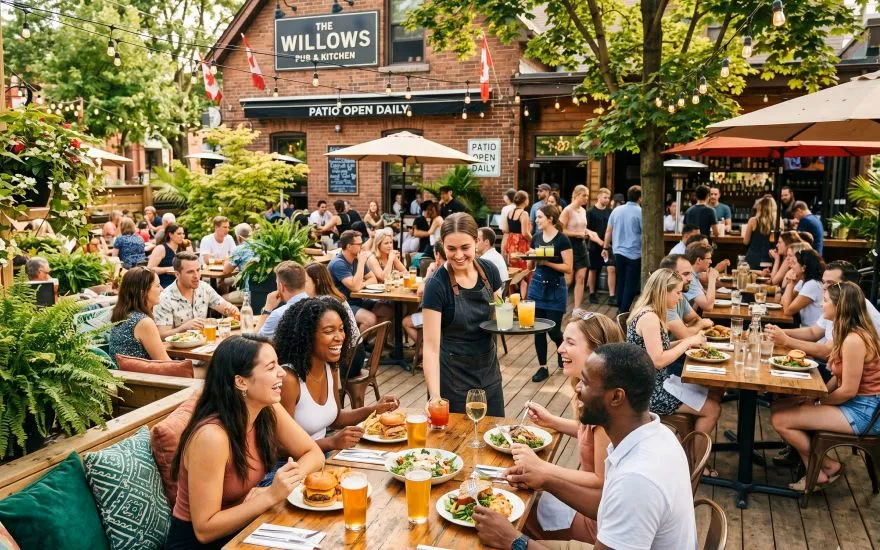
Patios are opening back up, Memorial Day weekend is in the rearview, and the calendar is about to flip into the busiest stretch most restaurants will see all year. Same-store sales rose 2.3% across the industry last August — but median labor cost ran 36.5% of sales for full-service operators, well above historical norms. Summer is where you make the year's margin, or where it leaks.
Whether you operate a handful of locations or a multi-state franchise group, the next twelve weeks will compress more covers, more new hires, and more operational variance than any other quarter. The restaurants that come out of summer with a healthy P&L are the ones that prepared in May — not the ones that reacted in July.
This is the playbook North American operators are using to get ready: how to forecast the rush, staff it without blowing up labor cost, refresh the guest experience, and protect your back-of-house from the heat.
Start With Your Data, Not Your Gut
Summer demand is one of the most forecastable patterns in the restaurant business — but only if you actually look at the numbers. Before you post a single job or print a single new menu, pull last summer's sales by week, by daypart, and by location. You're looking for four things:
- The weeks where covers spiked (often tied to local events, school-out dates, or tourism waves)
- The dayparts that shifted — most operators see lunch soften and late-afternoon/early-evening swell as patios fill
- Patio mix as a percentage of total covers
- The two or three SKUs that disproportionately drove summer revenue
For multi-unit operators, run this analysis location-by-location, not as a group average. A downtown lunch spot and a suburban patio location with the same logo can have nearly inverse summer curves, and a one-size-fits-all summer plan will overstaff one and undercut the other.
One layer worth pulling out separately: your local events and tourism calendar. Plot every festival, concert, sports schedule, school break, and major tourism inflow (conferences, hotel high-season, big graduations) onto the same view as your sales forecast. The peaks rarely fall where intuition says they should, and the operators who win summer schedule against that overlay — not against last summer averaged into a single curve.

Forecast Labor Before You Schedule It
The National Restaurant Association's 2025 Restaurant Operations Data Abstract puts the median full-service labor cost at 36.5% of sales — but profitable operators ran closer to 34.2%. Two points of labor is the difference between a good summer and a forgettable one.
The fix isn't cutting hours. It's matching them to demand. Take last summer's sales data by half-hour and build this summer's schedule against a realistic projection: typically last year ±5–10% for like-for-like locations, adjusted for any known local factors (a new competitor across the street, a festival that's not returning, a hotel that just opened down the block).
A few tactical moves that consistently move labor cost without hurting service:
- Stagger start times in 15-minute increments instead of clean half-hour blocks. You'd be surprised how much over-scheduled labor lives in those gaps.
- Pre-build "patio open" and "patio closed" templates so the schedule shifts cleanly with the weather forecast.
- Cap salaried manager hours before peak weeks. Burned-out GMs are the single biggest cause of August turnover.
Workforce management platforms like Push pull POS sales data directly into the scheduling tool so labor-to-sales targets are visible while you're building the schedule, not after payroll runs.
Get Ahead on Seasonal Hiring and Onboarding
The mistake operators make every year is treating seasonal hiring like a May activity. Industry guidance is to start eight to twelve weeks ahead of peak demand, because by the time the first 80-degree weekend hits, the strong candidates have already taken jobs elsewhere. If you haven't started, start this week — and prioritize in this order:
- Re-recruit last summer's top performers. They already know your menu, your POS, and your standards. A text from the GM goes further than any job board.
- Mine your referral pipeline. Current staff who already understand the culture refer candidates who fit it. Build the referral bonus into the budget now.
- Target the calendars that match yours. Teachers, college students, and recent grads have summer availability windows that line up with your demand curve almost perfectly.
- Then post broadly. Indeed, Poached, Workstream, and your own careers page — but post last, not first.
For onboarding, the math is unforgiving: every shift a new hire spends learning the POS is a shift they're not contributing to service. Push every piece of digital paperwork — I-9, W-4, direct deposit, handbook acknowledgment, harassment training — to new hires before day one. An automated HR and onboarding workflow can collapse two days of paperwork into 20 minutes. Day one belongs on the floor with a shadow partner, not at a folding table with a clipboard.
And don't let the focus on hiring eclipse retention. The most expensive turnover of the year happens between mid-July and Labor Day, when burnout meets the school-restart squeeze. Build a mid-summer stay bonus into the labor budget now — a modest cash incentive paid the second week of August is one of the highest-ROI lines you'll spend. Keep the schedule equitable so your veterans aren't carrying every Saturday, and make sure your best returners hear "thank you" before they need to.
Refresh the Guest Experience for the Season
The summer guest is a different guest. They're walking in off a hot sidewalk, they're often with out-of-town family, and they're making a quicker decision than a regular Tuesday-night diner.
Three plays consistently win them:
Lean into seasonal menus, but lightly. A small limited-time-offer section — three to five items featuring local summer produce, a frozen cocktail, and one shareable — gives servers something to upsell without overhauling the kitchen's prep load. Pick items the line can execute under a 12-ticket rail.
Treat your patio like a P&L center, not an overflow zone. Patio seats can drive a remarkable share of summer revenue — TouchBistro's 2026 Patio Season Guide found 35% of operators with outdoor seating say patio represents more than 40% of their average daily sales, and 15% say it tops 70%. Walk it the way a guest does. Are the umbrellas clean? Is the shade math right at 2 p.m. and 6 p.m.? Are servers assigned to patio sections with the same discipline as indoor sections, or is patio still a rotating chore?
Make the wait the experience. Long waits are coming whether you want them or not. QR-code menus at the host stand, a curated playlist outside, a waitlist app that texts guests instead of a buzzer — these shave perceived wait time without adding labor.

Stress-Test Your Back-of-House Before You Need To
Summer breaks equipment. Ice machines run at full duty cycle, walk-in compressors fight 95-degree kitchens, HVAC works overtime, and dishwashers process double their winter volume. A 20-minute walkthrough this week beats a Saturday-night emergency call in July.
A short pre-rush checklist:
- Test ice machine output against spec in pounds-per-day. Clean filters, clear ambient airflow.
- Log walk-in and reach-in temps daily. Spot-check each unit against the built-in display with a handheld thermometer.
- Service the HVAC and replace filters. A 90°F kitchen is a turnover engine.
- Verify dish machine wash and rinse temperatures. Renew your detergent contract.
- Audit the cold chain from receiving to station — perishable handoffs, prep-area refrigeration, walk-in door discipline. One mistimed protein on a hot Saturday becomes a guest-illness report on Monday.
- Stress-test POS hardware under load. Receipt printers, KDS screens, and payment terminals on every patio table.
Tech is the other half of this. If your POS, scheduling, time-tracking, and payroll systems aren't talking to each other, summer is when that surfaces — usually as a payroll error on a stat holiday or a missed break that becomes a compliance issue. Audit the integrations now, while you have margin to fix them.
Summer Rush FAQs
How many weeks before summer should I start hiring?
Eight to twelve weeks ahead of peak demand. By the time the first 80-degree weekend hits, the strongest candidates are already placed. Re-recruit last summer's top performers first, then work referrals, then post broadly.
What's a healthy labor cost target during the summer rush?
The 2024 industry median was 36.5% of sales for full-service operators; profitable operators ran closer to 34%. Use last summer's actual labor-to-sales ratio as your benchmark and aim for one to two points of improvement through smarter scheduling, not blanket hour cuts.
How do I forecast summer demand for a new location with no history?
Borrow data from comparable concepts in the same market or a sister location with a similar footprint, then adjust for known local factors — tourism flow, residential density, nearby competitors. Staff slightly under projection in week one; over-staffing is harder to course-correct than under-staffing.
Should I add summer menu items or stick with what works?
A limited-time summer specials menu of three to five items featuring seasonal produce is enough. Full menu overhauls tax the line at exactly the moment it needs to run clean.
The Operators Who Win Summer Plan in Weeks, Not Days
The pattern across every summer prep guide and every operator who runs a clean season is the same: pull the data early, schedule against demand, onboard before the rush, and walk the building before the equipment does it for you. Twelve weeks of summer is enough time to make a year's profit — or to spend it. The work you do over the next two weeks decides which one.
If you'd like to see how Push helps multi-unit operators forecast labor, onboard seasonal hires, and keep payroll clean through the busiest stretch of the year, book a demo — we'll walk through it with your numbers.