How to Hire a General Manager: Best Practices for Restaurant Owners and HR Managers

The restaurant industry is evolving at an incredible pace. As operations grow more complex and competition intensifies, the role of the general manager (GM) has never been more essential. According to the National Restaurant Association's 2026 State of the Restaurant Industry report, consumer spending is projected to push industry sales to $1.55 trillion nationwide, with the restaurant industry expected to employ 15.8 million people. Amid this expansion — and the persistent pressures of rising costs and shifting consumer habits that come with it — one position consistently stands at the core of sustainable success: the general manager.
This article explores how to hire a general manager who can drive operational excellence, nurture strong teams, and adapt to the demands of a rapidly changing industry. From identifying essential qualities and conducting effective interviews to leveraging technology and onboarding efficiently, restaurant owners and HR leaders will learn proven best practices to build high-performing management teams.
Why Is Hiring the Right General Manager Crucial for Restaurant Success?
A restaurant’s success depends heavily on the strength of its leadership — and the GM is the keystone. They oversee operations, motivate teams, manage budgets, and maintain the brand culture that keeps both guests and employees coming back. Strong management leads to higher retention and profitability, while poor management contributes directly to turnover, low morale, and inconsistent service.
The general manager role has shifted to become more people-focused, emphasizing emotional intelligence and leadership development. Restaurants that invest in finding and retaining exceptional GMs often see higher guest satisfaction scores, better financial performance, and improved workforce stability.
With staffing growth expected well into the next decade, structured hiring and onboarding processes are vital for staying competitive. Learning how to hire a general manager strategically can give operators the edge needed to thrive in a landscape defined by tight labor markets and rising costs.
What Are the Qualities of a Good General Manager?
Identifying the right candidate starts with understanding what makes a great GM. Top-performing GMs demonstrate leadership, fiscal responsibility, and an unwavering service philosophy. They are also trustworthy, adaptable, and capable of balancing guest satisfaction with profitability.
Beyond technical know-how, modern general managers excel at soft skills — clear communication, empathy, and the ability to motivate diverse teams. Emotional intelligence, in particular, enables GMs to foster healthy workplace cultures where employees feel valued and supported.
Essential Leadership Traits
- Strategic thinking: The ability to anticipate challenges and plan for sustainable growth.
- Accountability: Ownership of results and transparent communication with staff.
- Conflict resolution: Constructively addressing issues to maintain morale and productivity.
Operational Excellence
Operational expertise remains central to GM success. Mastery of inventory control, labor scheduling, cost analysis, and profit optimization allows a manager to run efficient and compliant operations. Whether it is managing labor ratios or reducing waste, balancing tactical oversight with people-first leadership distinguishes truly exceptional GMs.
How to Define a Clear General Manager Job Description
Before beginning the recruiting process, restaurant owners should create a detailed and transparent job description. This step not only sets accurate candidate expectations but also helps attract applicants whose goals align with the brand’s vision.
A comprehensive general manager job description should outline:
- Core responsibilities: Operational oversight, staffing, vendor management, and guest relations.
- Required skills: Leadership, communication, budgeting, and workforce scheduling.
- Performance metrics (KPIs): Labor efficiency, profit margins, and employee retention.
- Experience needed: Years in hospitality management, multi-unit leadership background, or previous GM tenure.
- Compensation transparency: Include salary benchmarks and benefits, as transparency attracts qualified applicants while reducing negotiation friction.
Defining measurable goals and clear expectations provides structure and accountability from day one. It also serves as a foundation for onboarding and ongoing performance evaluation, ensuring that both the operator and the GM are working toward shared business outcomes.
What Should You Look for When Interviewing a General Manager?
The interview phase offers an opportunity to evaluate not only a candidate’s competencies but also their alignment with the restaurant’s culture. To choose the right leader, operators should combine behavioral and situational questions that reveal how candidates handle real-world challenges.
Behavioral Interview Questions
- “Describe a time you improved team performance. What was your approach?”
- “Can you share how you managed turnover during a labor shortage?”
These questions uncover leadership style, decision-making, and adaptability.
Situational Scenarios
Simulated scenarios, such as asking how a GM would resolve a guest complaint or a staffing shortage, demonstrate communication style and problem-solving ability.
As Nation’s Restaurant News notes, many operators now use technology like video introductions to assess early-stage candidates, improving personality screening and response times. Combining these methods results in a holistic evaluation of skill, temperament, and fit.
How Can Technology Streamline the General Manager Hiring Process?
Technology has reshaped restaurant recruiting. According to Nation's Restaurant News, 37% of operators plan to adopt automated labor management tools, while 28% expect to invest in AI-driven solutions. Automation improves accuracy, shortens time-to-hire, and enhances compliance — all while allowing teams to focus on candidate quality.
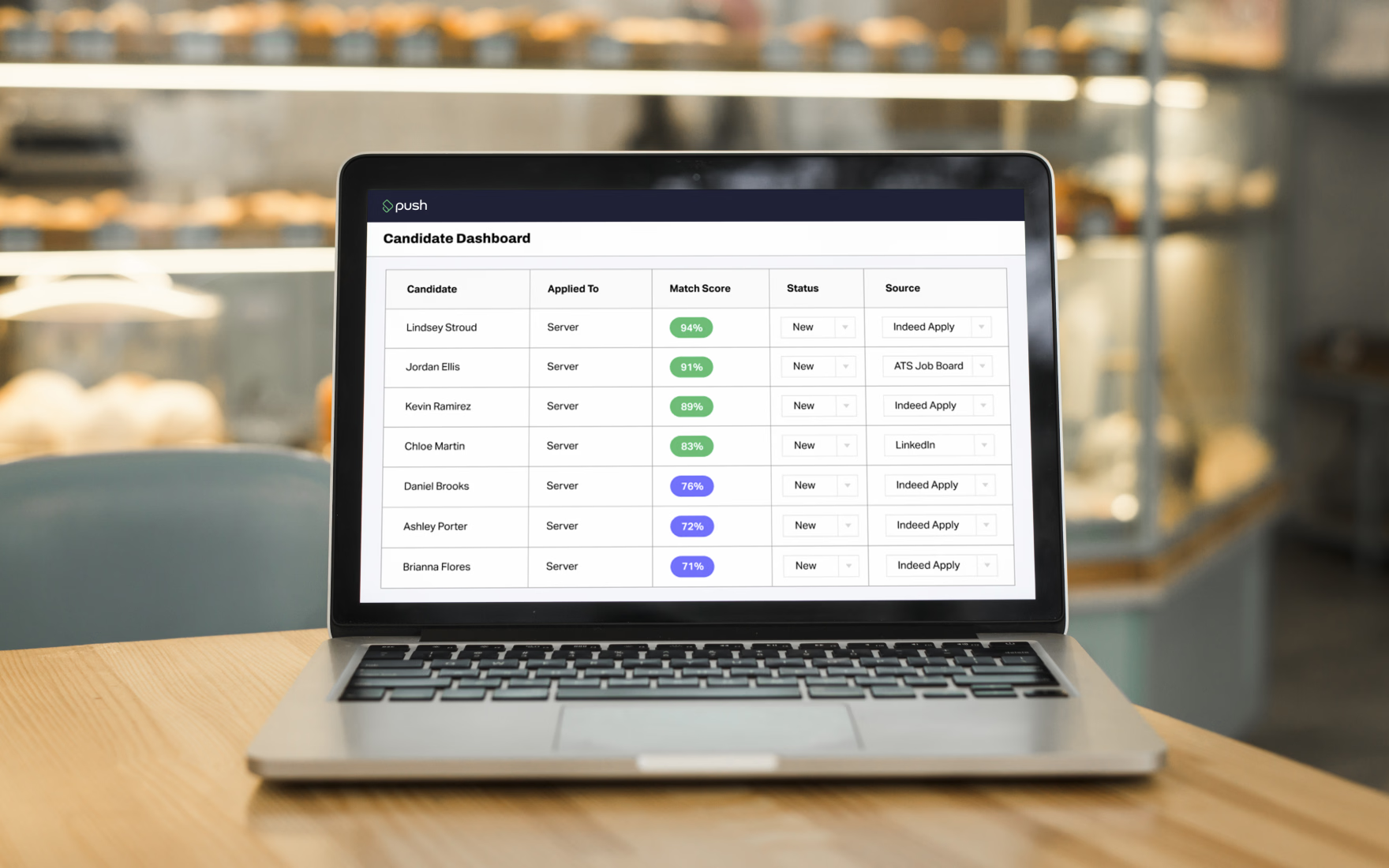
With platforms like Push Operations, restaurant owners can manage job postings, track candidates, and organize interviews from one dashboard. Integration with Push's scheduling and payroll ensures a seamless transition from recruitment to onboarding, minimizing administrative friction.
In a fast-moving industry where hours matter, automation transforms hiring from a paper-heavy process into a strategic advantage. It supports scalability, consistency, and performance transparency, ultimately yielding stronger, more engaged leadership teams.
What Are the Best Practices for Screening and Assessing Candidates?
Effective screening ensures the right fit not just for the role but also for the organization’s culture. The best results come from structured, data-informed approaches that standardize how applicants are evaluated.
Best practices for assessing general managers include:
- Structured interviews: Asking each candidate the same set of questions for reliable comparison.
- Reference checks: Validating leadership claims and management style through verified sources.
- Culture-fit analysis: Evaluating alignment with company values, service philosophy, and work ethic.
Restaurants can strengthen their pipelines through general manager recruitment strategies such as internal leadership tracks, referral programs, and proactive networking within industry associations.
Red Flags to Watch For
- Inconsistent career timelines or unclear achievements.
- Avoidance of accountability metrics during interviews.
- Limited understanding of financial or compliance-related responsibilities.
Well-defined screening practices reduce hiring risk and help secure managers who will contribute to long-term operational success.
How to Onboard a New General Manager Effectively
A well-designed onboarding program ensures that a new GM quickly becomes a productive and cultural asset. A well-structured and organized onboarding improves retention rates and accelerates performance. Best practice is to implement a 30-, 60-, and 90-day plan, which you and your new GM can review together on their first day.
A 30-, 60-, 90-day plan should include:
- 30 days: Orientation, technology training, and role shadowing.
- 60 days: Hands-on leadership in scheduling, budgeting, and vendor relations.
- 90 days: Full accountability for targets with ongoing mentorship.
Using digital platforms like Push Payroll and Push Time Tracking simplifies compliance, ensures timely onboarding tasks, and centralizes employee records. Combined with regular feedback sessions and defined goals, these systems create a supportive infrastructure for long-term success.
What Long-Term Strategies Help You Retain Great General Managers?
Retention begins after hiring. The most effective operators invest in leadership development, culture building, and growth opportunities. Research from Restaurant Business Online highlights that GM partnership or ownership programs are among the strongest retention drivers.
Career Growth Opportunities
Continuous training, mentoring, and leadership pipelines motivate GMs to grow with the brand, reducing turnover and strengthening loyalty.
Work-Life Balance and Sustainability
Flexible scheduling, wellness initiatives, and sustainable operations improve employee satisfaction and appeal to purpose-driven professionals. Offering programs like one guaranteed weekend off each month or participation in sustainability certifications can enhance both morale and brand reputation.
Retention is not just about pay — it is about building workplaces where talented leaders can envision a fulfilling long-term career.
Conclusion
In an industry defined by razor-thin margins and rapid change, knowing how to hire a general manager who can lead, inspire, and deliver results is a competitive necessity. From defining a clear job description and asking the right interview questions to leveraging technology and building strong onboarding systems, restaurants that approach GM hiring strategically position themselves for long-term growth.
Automation and data-driven tools now make it easier than ever to streamline hiring, improve retention, and elevate performance across every unit.
Ready to fire up operations? Book a demo with Push to see how workforce automation can help your restaurant attract, onboard, and retain top general management talent.