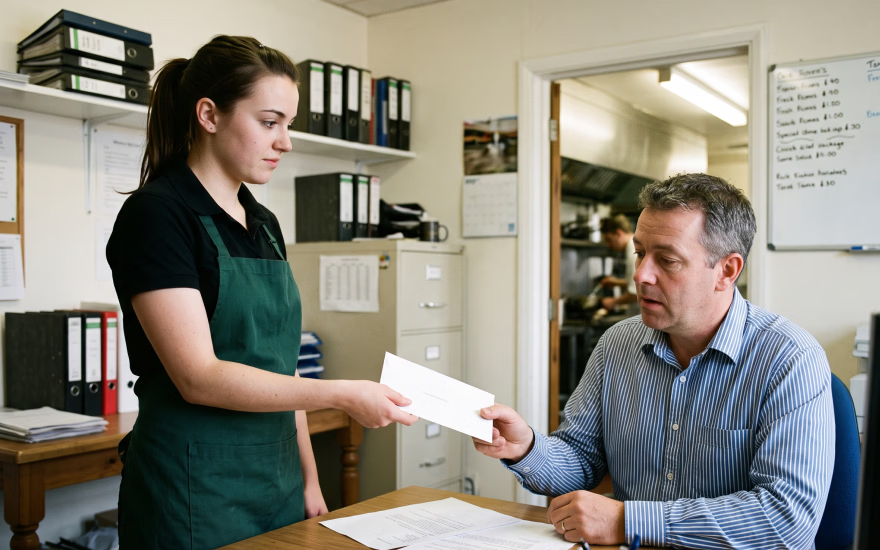
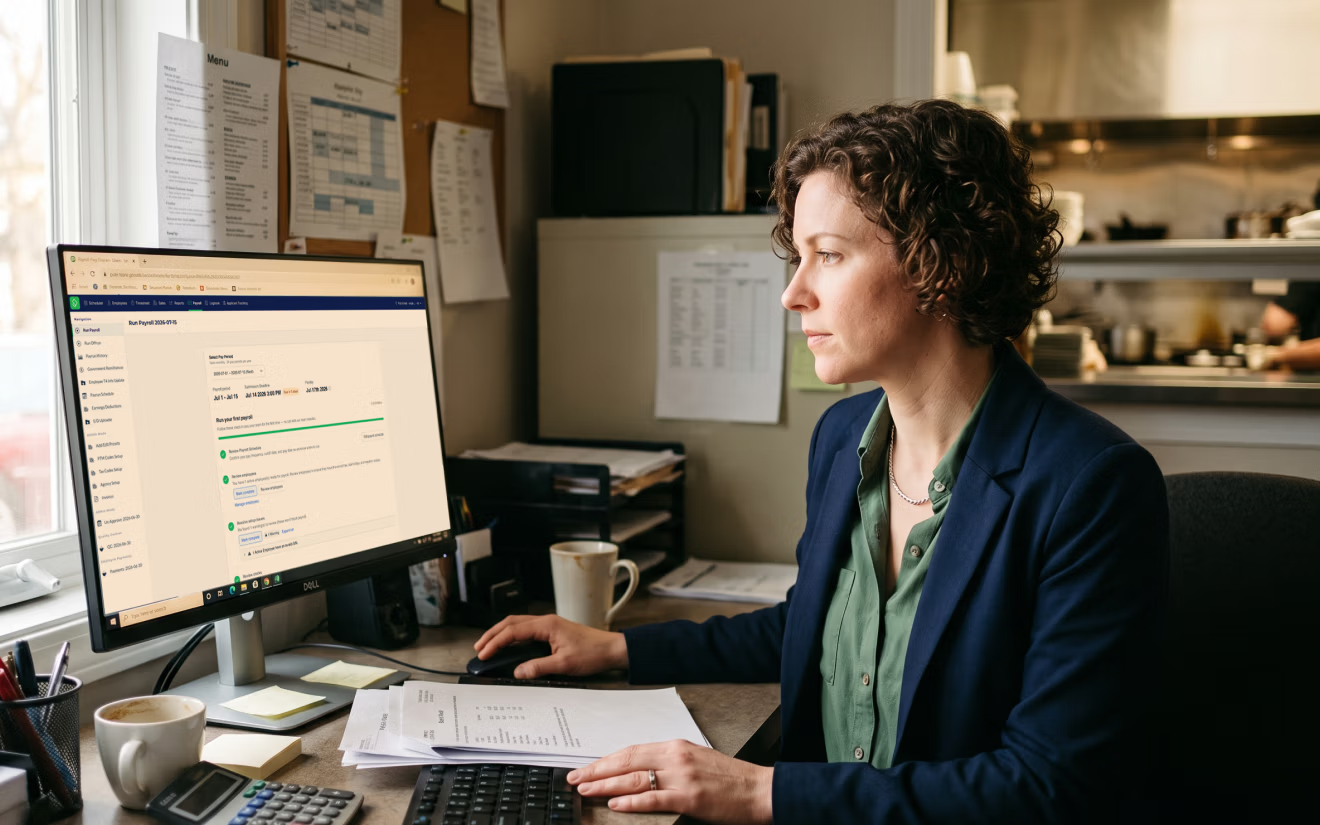
How to Simplify Restaurant Payroll: Compliance, Taxes, and Automation Strategies

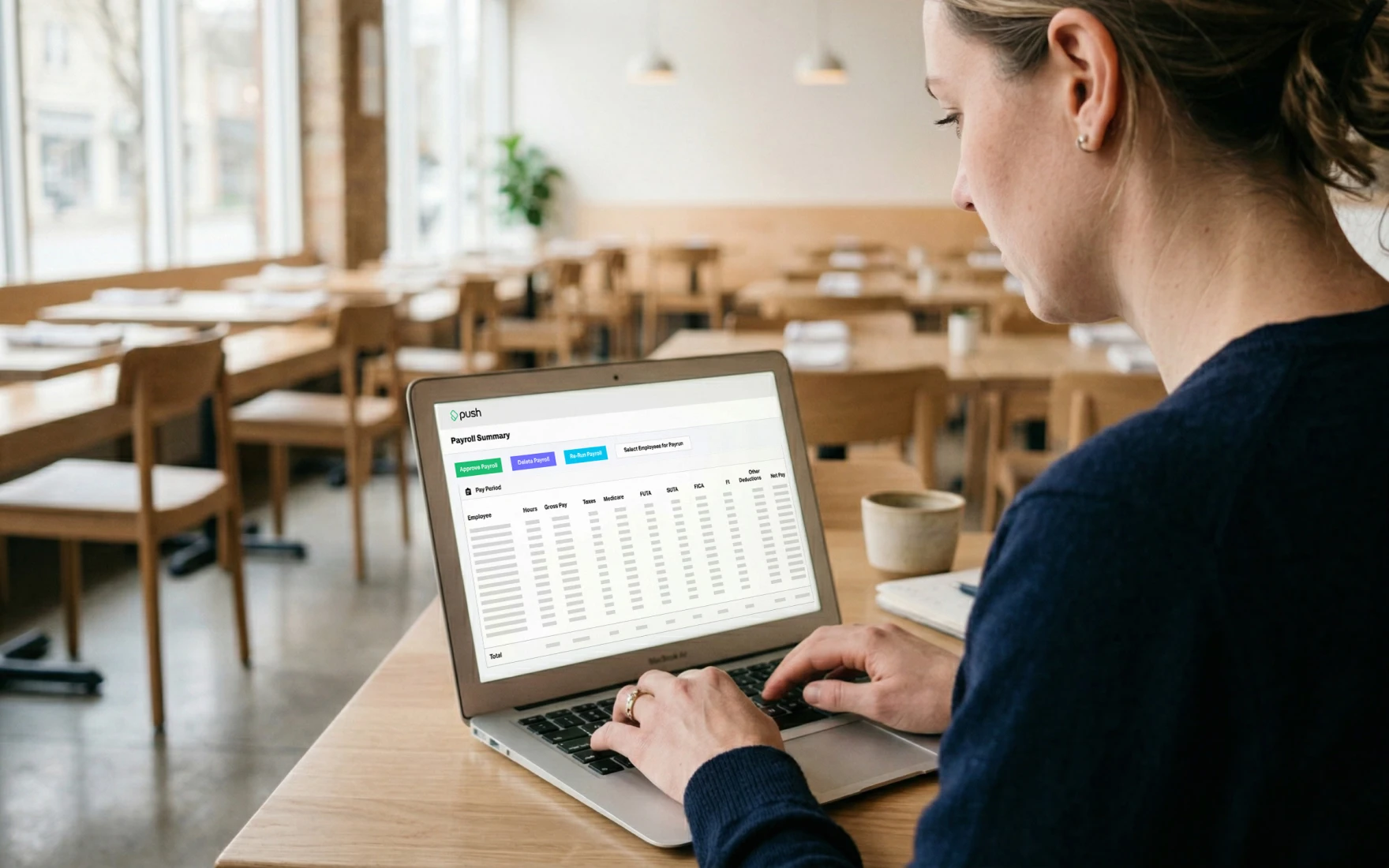
Payroll can be one of the most challenging operational parts of running a restaurant. Between fluctuating shifts, variable tips, and evolving labor laws, even small errors can add up to thousands of dollars in penalties or lost time. Efficient restaurant payroll management is more than a monthly task — it’s a critical function that underpins compliance, employee satisfaction, and financial stability. This guide explores how restaurant owners and HR managers can simplify payroll, manage compliance, and use automation to reduce stress while improving accuracy.
Why Restaurant Payroll Is More Complicated Than It Looks
Unlike other industries, restaurant payroll involves multilayered compensation structures — hourly wages, overtime, commissions, and tips — that must be tracked and reported accurately. Restaurant operators also navigate frequent scheduling changes and seasonal demand shifts that complicate wage calculations.
Tip reporting alone can become a compliance challenge. Under federal guidelines, employees must report tips equal to at least 8% of total receipts, and employers must ensure that reporting systems are accurate and transparent. Add in state-specific wage rules, overtime pay, and the IRS’s strict recordkeeping requirements, and manual processes quickly become unsustainable.
Modern payroll tools like Push Operations are built to handle that complexity by syncing time tracking, scheduling, and payroll data. By centralizing these operations, restaurant managers can ensure payroll accuracy even when weekly schedules — and tip totals — keep changing.
How Do You Process Payroll for a Restaurant Efficiently?
Running payroll for restaurants involves more than just cutting checks. It requires meticulous recordkeeping and precise calculations to ensure both compliance and staff satisfaction. The process typically includes:
- Collecting employee information: Securely record Social Security numbers, tax withholdings, and direct deposit details.
- Tracking hours and tips: Use integrated systems that cross-check clock-ins, schedules, and POS sales.
- Calculating taxes and deductions: Accurately withhold federal, state, and local taxes, alongside Social Security and Medicare contributions.
- Processing pay and filing taxes: Issue timely payments and submit required filings to avoid penalties.
Tools That Simplify Payroll Management
Automation helps minimize human error and administrative time. Platforms such as Push Payroll integrate with POS systems to automatically sync shift hours and tip data in real time. These integrations allow operators to complete pay runs with fewer manual adjustments, saving several hours per pay period while ensuring compliance.
What Are the Key Payroll Compliance Rules for Restaurants?
Compliance drives every payroll decision. Restaurant operators must adhere to both federal and state wage laws, tip credit rules, and recordkeeping standards. The Fair Labor Standards Act (FLSA) dictates the minimum wage, overtime eligibility, and guidelines for tipped employees.
Regular compliance audits are essential to avoid costly violations. For example:
- Minimum Wage and Tip Credit: Employers must ensure tipped employees earn at least the federal or state minimum wage after accounting for tips.
- Overtime Rules: Staff who work more than 40 hours per week must receive overtime pay at 1.5 times their regular rate.
- Recordkeeping: Detailed records of hours, wages, and tip pooling policies must be retained to meet Department of Labor requirements.
Staying Up to Date on Wage and Hour Laws
Restaurant labor laws vary by state and can change rapidly. Employers can subscribe to official updates from the National Restaurant Association or use automated compliance alerts built into software like Push Operations to ensure continuous alignment with legal standards.
How Should Restaurants Handle Tip Reporting and Tip Pooling?
Tips are central to restaurant income — and one of payroll’s biggest compliance challenges. The National Restaurant Association highlights that employees must report tips equaling at least 8% of total gross receipts, unless the employer can prove actual tips are lower.
Best Practices for Compliance
- Implement digital tip tracking: Sync POS systems with payroll software to automatically log tips by shift.
- Define clear tip pooling policies: Employers must communicate who is eligible for pooled tips and ensure distribution aligns with legal requirements.
- Reconcile reports regularly: Match reported tips against POS data to catch discrepancies before filings are due.
Avoiding Common Tip Reporting Errors
Common issues include delayed reporting, incorrect allocation among staff, or under-reporting to the IRS. Failure to report accurately can lead to audits and penalties. Integrated payroll solutions reduce these risks by capturing and verifying tip data automatically. Accuracy in tip reporting protects both the business and its employees.
What Are Common Payroll Mistakes in Restaurants — and How to Avoid Them?
Manual payroll processes leave ample room for human error, and in the restaurant business, that risk can multiply quickly. The National Restaurant Association identifies common mistakes such as:
- Misreporting overtime pay for hourly teams.
- Incorrect calculation of tipped employee wages.
- Missing payroll tax deadlines.
- Neglecting to adjust pay after schedule changes.
How to Prevent Payroll Penalties
- Conduct regular payroll audits to verify tip and overtime calculations.
- Use centralized HR and payroll data for better oversight.
- Leverage automation to reduce manual entries that often lead to miscalculations.
Automation through connected solutions like Push Operations allows restaurant teams to review and approve payroll data with transparency, reducing back-end frustrations and ensuring financial accuracy across locations.
What Do Restaurants Need to Know About Payroll Taxes?
Payroll taxes are a nonnegotiable part of restaurant operations. The IRS requires employers to withhold and remit federal income tax, Social Security, and Medicare contributions. Businesses also pay Federal Unemployment Tax (FUTA) and may owe additional state-level unemployment taxes.
Best Practices for Managing Payroll Taxes
- Automate withholdings: Use software that calculates these obligations automatically to avoid errors.
- Schedule deposits consistently: Set recurring reminders or enable automatic electronic transfer payments.
- Maintain digital records: Keep payroll and tax documentation for at least three years to comply with IRS rules.
Integrated platforms simplify tax reporting, helping operators manage varying tax types across multiple locations while maintaining compliance with accuracy and speed.
Which Payroll Solutions Are Best for Restaurants?
Choosing the right payroll system can make or break efficiency. Both Toast Payroll and Push Operations deliver strong integrations between POS, scheduling, and payroll functionalities. While Toast Payroll connects directly with Toast POS, Push Operations focuses on all-in-one restaurant workforce management — including scheduling, labor compliance, and analytics.
Choosing the Right Platform
- Integration capabilities: Seamless connection with POS, HR, and accounting systems.
- Compliance automation: Built-in alerts and legislative updates to prevent violations.
- Scalability: Flexibility for multi-location and growing teams.
- Accessibility: Cloud-based dashboards and mobile usability for managers on the go.
Selecting a system that centralizes payroll, compliance, and scheduling not only increases efficiency but also supports real-time decision-making — crucial in the fast-paced restaurant environment.
How Can Automation Transform Restaurant Payroll Management?
Automation is redefining payroll for restaurants. Instead of reconciling spreadsheets and paper timesheets, automated platforms collect and process real-time data from POS and scheduling software.
- Saved administrative time: Reduces manual entry and verification hours.
- Improved accuracy: Eliminates miscalculations in wages, hours, and taxes.
- Enhanced transparency: Provides employees with digital access to pay records and schedules.
- Audit readiness: Maintains clean, searchable records for inspections or filings.
Automation streamlines workflows, enabling management to focus on operations and guest experience rather than administrative details. For teams juggling rotating shifts, automation ensures payroll matches the restaurant’s dynamic pace without additional workload.
Why Accurate Payroll Builds Employee Satisfaction and Retention
Payroll mistakes don’t just frustrate back-office staff — they directly impact employee trust and morale. When paychecks are timely and correct, employees feel valued and secure. Consistent accuracy strengthens transparency between staff and management, fostering loyalty and reducing turnover.
Modern payroll systems with self-service features allow employees to view pay history, update personal information, and track hours — giving them autonomy and reducing HR queries. By creating a reliable payment structure, restaurants can build a culture where team members focus on service quality rather than payroll uncertainty.
Restaurant operators using integrated tools such as Push Operations often report smoother communication across departments and improved employee retention due to greater transparency in compensation.
How to Future-Proof Restaurant Payroll Operations
- Regularly auditing payroll and compliance data.
- Adopting flexible, cloud-based systems that scale as their business grows.
- Training staff on new technologies and payroll laws.
- Preparing early for legislative and tax changes.
- Implementing AI and automation into your workflows.
Staying proactive in compliance and efficiency safeguards both profit margins and workplace satisfaction. The right software system not only handles the technical side of payroll but also empowers management to make data-informed decisions and reduce administrative overhead.
Conclusion: Simplify Payroll, Strengthen Operations
Restaurant payroll will always be complex — but it does not have to be chaotic. With an automated, compliance-first approach, operators can eliminate manual errors, save time, and ensure both employees and regulators are satisfied. Platforms like Push Operations make it possible to manage everything from scheduling to pay runs in one integrated system.
Ready to automate your payroll and stay compliant year-round? Book a personalized demo with Push Operations to see how seamless restaurant payroll can be.
By simplifying payroll today, restaurant owners can set the table for smoother operations, happier employees, and stronger financial performance tomorrow.