States Are Easing Youth-Labor Laws Ahead of Summer Hiring: What Restaurant Operators Should Know


Summer is peak hiring season for restaurants, and teenagers fill a large share of those shifts. This year, several states changed the rules governing who you can hire, when they can work, and what you have to pay them — mostly in the direction of fewer restrictions. Four states loosened youth-employment rules ahead of the season, while Oregon moved to strengthen them. Here's what changed, state by state, with links to the official rules so you can read them for yourself.
A note before the details: youth-labor rules vary by state and by a worker's age, and they change quickly. What follows is a plain-language summary as of July 1, 2026, not a substitute for the official regulations or guidance from your state labor agency. Always confirm the current rules for your locations before you build a schedule.
The Federal Baseline
Every state rule sits on top of the federal Fair Labor Standards Act (FLSA), which sets the national floor for youth employment. Under federal rules, 14- and 15-year-olds can work limited hours — generally up to three hours on a school day and 18 in a school week, eight hours on a non-school day and 40 in a non-school week, and only between 7 a.m. and 7 p.m. (extended to 9 p.m. from June 1 through Labor Day). Sixteen- and 17-year-olds face no federal hour limits but are barred from hazardous occupations. The U.S. Department of Labor maintains a summary of federal and state child-labor standards and a plain-language YouthRules guide. Where a state rule is weaker than the federal floor, the federal rule still applies.

Indiana
Indiana has made two separate changes. Effective January 1, 2025, the state aligned its youth hours more closely with federal law: 16- and 17-year-olds may now work the same hours and days as adults with no parental-permission requirement, and 14- and 15-year-olds may work until 9 p.m. on any day between June 1 and Labor Day.
Separately, effective July 1, 2026, House Bill 1302 eliminates Indiana's Youth Employment System (YES) — the requirement that employers of five or more minors register those workers with the state. Indiana replaced traditional work permits with this registration system in 2020, and the new law removes that registration layer, so the state will no longer maintain a record of teen employment. The change is relevant to any Indiana operator who had been logging minors into the YES portal.
Nebraska
Nebraska enacted Legislative Bill 258, which creates a lower minimum wage for young workers. The state's voter-approved minimum wage is $15 an hour, but under LB 258, 14- and 15-year-olds are subject to a permanent youth minimum wage of $13.50, and 16- through 19-year-olds can be paid that same $13.50 rate during their first 90 days of employment as a training wage. The law, which takes effect July 17, 2026, also replaces inflation-indexed minimum-wage increases with a flat 1.75% annual increase beginning in 2027. For operators in Nebraska, that means an ongoing, distinct wage floor for the youngest workers and a separate training rate for new 16- to 19-year-old hires.
Washington
Washington's change is a mixed picture. House Bill 1121 expands the hours that 16- and 17-year-olds enrolled in approved work-based learning programs can work — from a cap of four hours a day and 20 a week up to eight hours a day and 48 a week — effective July 1, 2026. At the same time, the state added protections: House Bill 1644 requires a state health-and-safety consultation before a minor begins work under a student-learner variance and establishes tiered minimum penalties for child-labor violations — from about $100 for minor infractions up to a minimum of roughly $71,000 for a violation resulting in the serious injury or death of a minor. Washington operators using work-based learning placements get more scheduling flexibility but also new compliance steps.
West Virginia
West Virginia eliminated work permits for 14- and 15-year-olds through Senate Bill 427, effective July 11, 2025. In place of the traditional permit — which required school sign-off — employers must now obtain written consent from the minor's parent or guardian and an age certificate issued by the state Commissioner of Labor.
More recently, House Bill 4005 removed the list of hazardous occupations for minors from state code and loosened guardrails for minors enrolled in the state's youth-apprenticeship program. Because federal hazardous-occupation rules still apply, West Virginia operators need to be careful not to assume that a task dropped from state code is automatically permissible under federal law.
Oregon: Moving the Other Way
Oregon went in the opposite direction. House Bill 4013, signed in March 2026 and effective January 1, 2027, will write the FLSA's minor-work-hour standards (as of January 1, 2026) into state law, so Oregon's rules cannot fall below the federal floor even if federal standards are rolled back — while still allowing the state to adopt stricter limits. It builds on a 2024 law that raised the maximum civil penalty for child-labor violations to $10,000.
Why It Matters for Restaurants
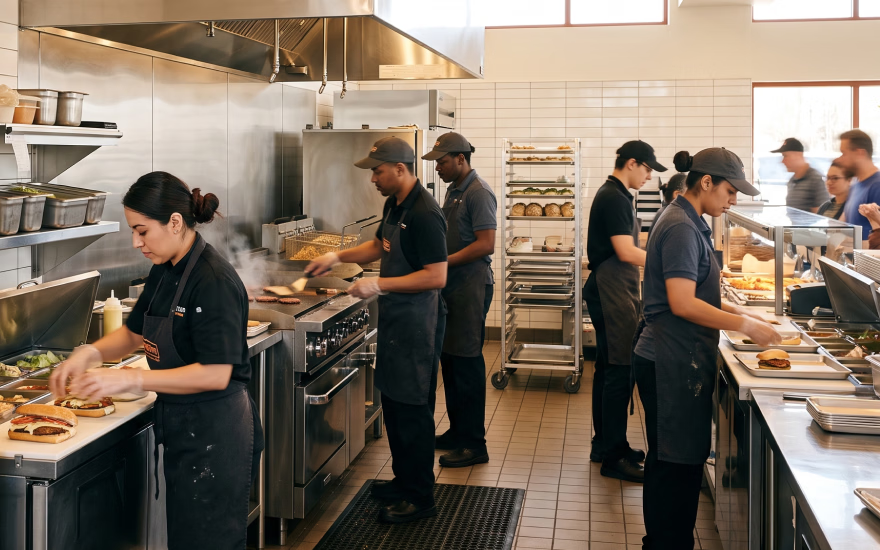
Restaurants and quick-service chains lean heavily on teen labor over the summer, which puts them squarely in the path of these changes. The bigger challenge is the patchwork: hour caps, permit paperwork, and wage tiers now differ meaningfully by state and by a worker's exact age. An operator with locations in more than one state — or one planning to grow — is effectively managing several rulebooks at once, and the penalties for getting it wrong are rising even in states that loosened other rules.
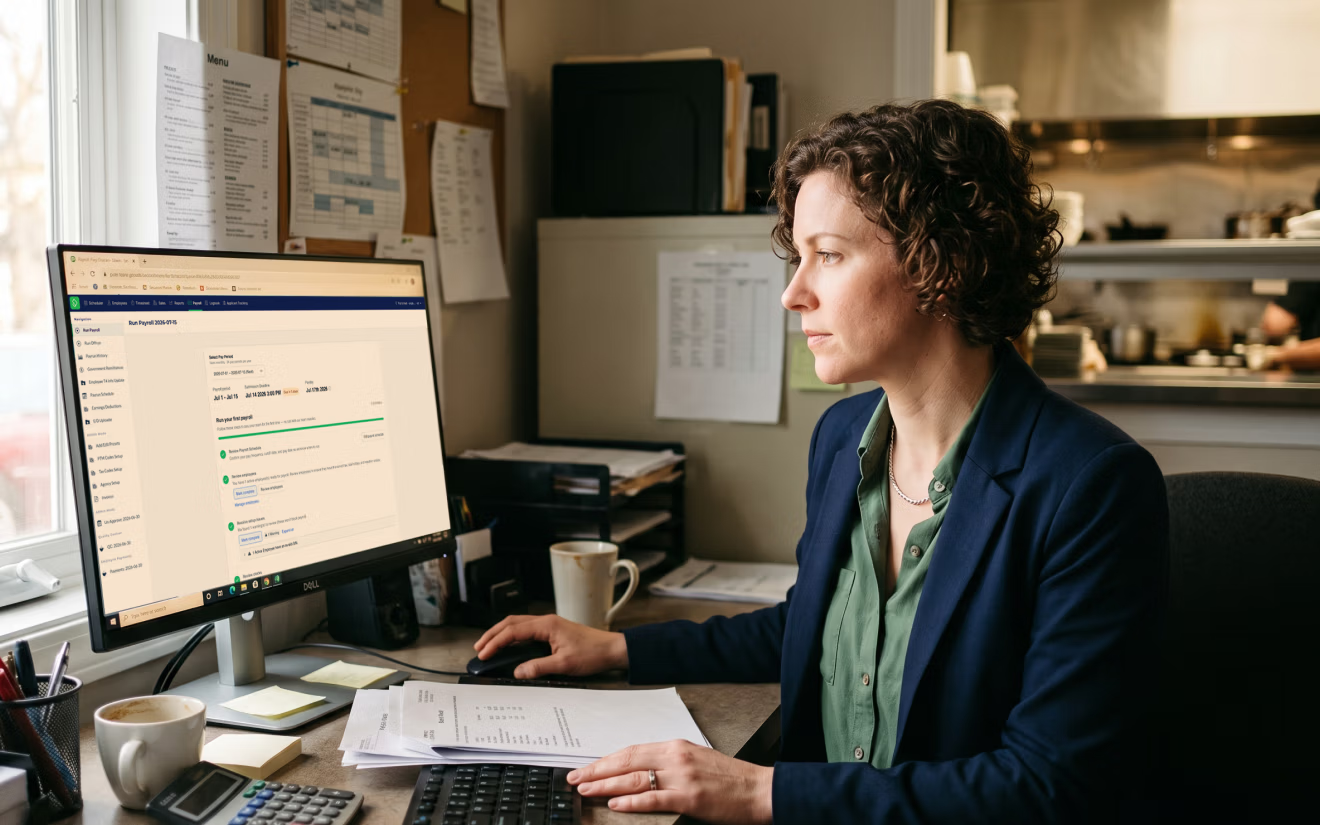
This is where the mechanics of scheduling and payroll matter. Building age-specific hour limits and wage tiers into how you schedule and pay teen staff reduces the odds of an accidental violation during your busiest stretch of the year. According to the Economic Policy Institute, at least 13 states introduced bills to weaken youth-labor protections in 2026 and four enacted them, so the patchwork is likely to keep shifting.

Frequently Asked Questions
Do State Youth-Labor Laws Override Federal Rules?
No. The FLSA sets a national floor. Where a state's rules are stricter than federal law, employers follow the state rule; where a state's rules are weaker, the federal rule still applies. You can review the federal standards through the U.S. Department of Labor's YouthRules resource.
Where Can I Find the Official Rules for My State?
Start with the U.S. Department of Labor's state child-labor summary, then check your state labor agency — for example, the Indiana Department of Labor or Oregon Bureau of Labor and Industries — for the current, binding rules that apply to your locations.